
The last two months have seen the anniversaries of the two worst civilian nuclear catastrophes in history.
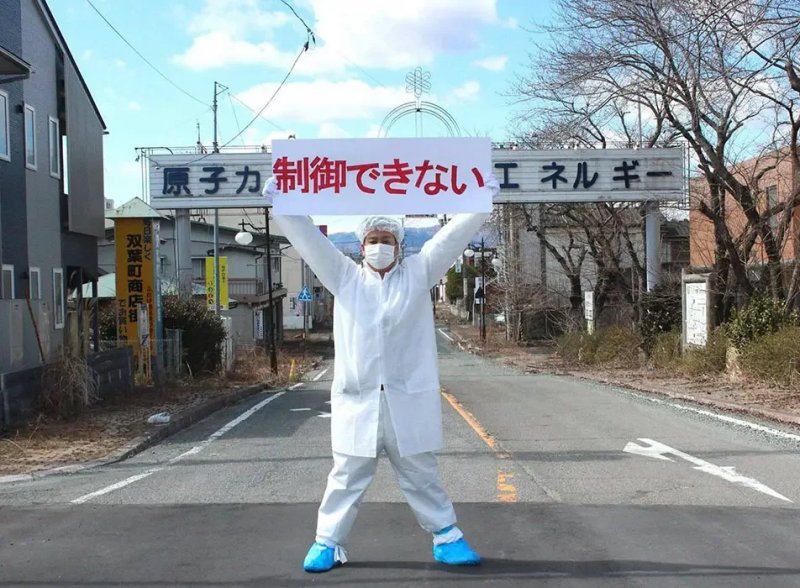
Indeed, as of Sunday, April 26, it has been 40 years since the Chernobyl disaster, which happened in the former Soviet Union. And last month, on March 11, it was 15 years since the Fukushima nuclear disaster, which happened in Japan, News.Az reports, citing The Bulletin.
Both disasters are remembered as cultural exceptions, either due to Soviet communism or to Japanese “groupism”—the latter representing the tendency to act as members of a group. While culture certainly played an important role in the governance of the Fukushima disaster, framing nuclear catastrophe as mere cultural exception is highly misleading. Doing so normalizes nuclear catastrophes by depicting them as mere accidents that arise from poor managerial cultures. Furthermore, it prevents these events from being framed as global threats that can happen anywhere in the world.
The cultural exceptionalism of nuclear accidents started with the 1986 Chernobyl disaster. While academics have demonstrated that the causes of this disaster are complex, a specific narrative that highlights Chernobyl as a purely Soviet accident continues to hold a grasp on our global imagination. Sonja Schmid, associate professor of Science, Technology, and Society at Virginia Tech, says that Chernobyl represented an important wake-up call for the nuclear lobby, alerting them to how a major nuclear disaster with global consequence was a possibility.
In response, members of the nuclear lobby stressed the notion of a so-called “safety culture,” claiming that Chernobyl was the result of a low safety culture associated with biased Soviet ideology. Rather than depicting nuclear technology as problematic, this notion represented nuclear accidents as the byproduct of Soviet culture. The counterpart was that a disaster like Chernobyl could not happen in the West, which had a safety culture untainted by communism.
In this context, Fukushima was a nuclear disaster that was never supposed to happen. Rising out of the radioactive ashes of World War II’s atomic bombings, Japan was the poster child for the Atoms for Peace Program, the US propaganda program dedicated to promoting the peaceful pursuits of nuclear energy. Far from Soviet managerial culture, Japan embodied the values of the post-war liberal world order that supposedly sustained an unparalleled nuclear safety culture. Fukushima crushed the myth that major nuclear accidents like Chernobyl could not happen outside the old Soviet Russia.
However, when the disaster happened, Fukushima rapidly became wrapped in yet another cultural explanation. For instance, in the executive summary of the Official Report of the Fukushima Nuclear Accident Independent Investigation Commission, which was a commission set up by the Diet of Japan to investigate the causes of the disaster, the Chairman of the Report famously reported that Fukushima was a disaster “Made in Japan.” The report went on to stress that the causes of this disaster were found in the “ingrained conventions of Japanese culture: our reflexive obedience; our reluctance to question authority; our devotion to ‘sticking with the program’; our groupism; and our insularity.”
While the Japanese version of the Report does not contain mentions of a disaster “Made in Japan,” the cultural explanation of the English-based report was rapidly mobilized by proponents of nuclear energy. This explanation gained momentum by blaming Japanese culture itself, rather than nuclear infrastructure. By stating that Japanese cultural traits had caused Fukushima, this narrative aimed to show that nuclear accidents are preventable with the proper safety culture.
What was once deemed unimaginable quickly became perceived as a disaster that was preventable in a kind of post-Nostradamus fashion. Much like what happened for the Soviets, this narrative argues that it was no surprise that the disaster happened in Japan. After all, weren’t the Japanese prone to group thinking? This surely explains their misfortune!
In my book, Radioactive Governance: The Politics of Revitalization in Post-Fukushima Japan, I encountered many Japanese scientists who similarly stressed these cultural explanations. For instance, experts associated with radioprotection domains explained to me that “Japanese only move when they have an order from above.” Others further stressed that Japanese culture does “not encourage debates,” which they believed had created an uncritical consensus around nuclear safety.
Throughout my research, I realized that these scientists’ self-orientalizing discourse should not be taken at face value: It was also a way for scientists to indirectly critique those who were responsible for overseeing how this disaster was handled. Indeed, speaking about the cultural causes of Fukushima enabled scientists to carefully navigate a controversial issue and to avoid pointing fingers at specific political elites or organizations, which could have resulted in repercussions. Yet, members of the nuclear lobby took this cultural narrative at face value because it conveniently took pressure off their industry.
In his study of nuclear weapons, anthropologist Hugh Gusterson argues for the presence of what has been termed a “nuclear orientalism” in nuclear security, which divides the world between nations that can be trusted with nuclear weapons and those that cannot. A similar case of nuclear orientalism is present in the case of nuclear catastrophes, which framed accidents as culturally unique by resorting to nation-state stereotypes that edge into borderline racism. While Soviet citizens were described as unprofessional and biased by communism, Japanese citizens are now caricatured as sheep prone to groupism and unable to decide in times of crisis. The narrative of safety culture thereby transforms nuclear safety into a mere local issue: Nuclear “disasters” are Soviet or Japanese accidents—never transcultural catastrophes of a global nature.
Within this imaginary world, nuclear power is not a technology associated with a global threat, but one that is local in nature if mobilized by a “bad” safety culture. While cultural factors should not be discarded from the study of nuclear disasters, we should carefully examine what kinds of industries are best served by the strategic mobilization of these cultural narratives.