
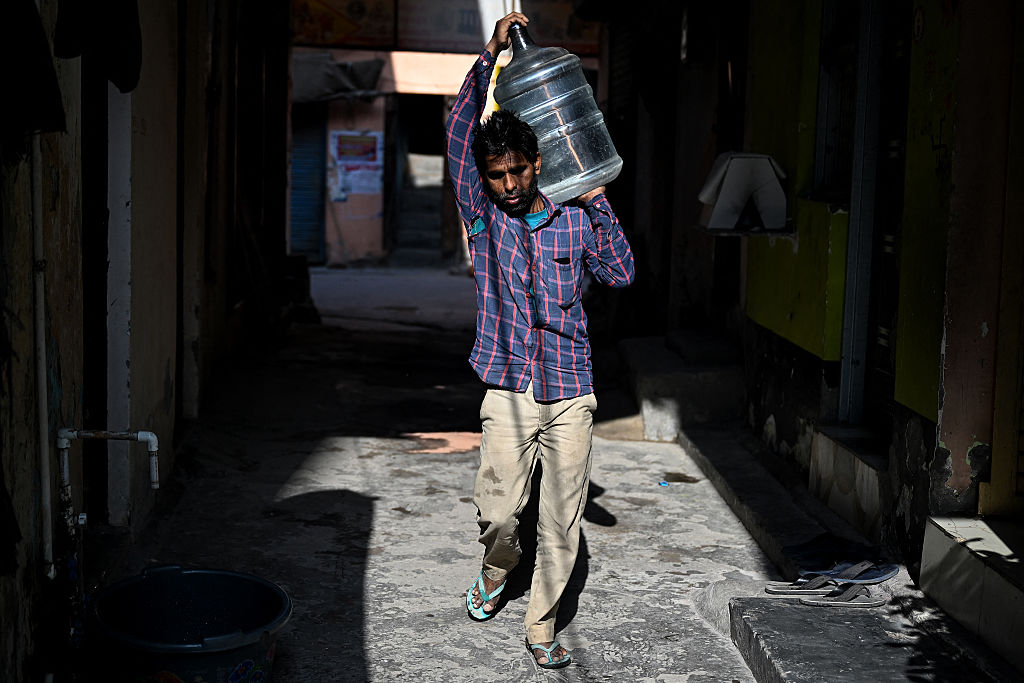
While the journey home is the climax of Homebound, the circumstances leading up to this point are equally central. Shoaib is Muslim and Chandan is Dalit; both of their families are poor, struggling, and reliant on the young men acquiring work.
Soaib’s father suffers from serious health problems and can’t work, and Chandan’s mother faces caste discrimination while toiling as a cook at a local school. These circumstances inform the series of events and choices that culminate in the pair taking jobs in a textile factory in the city, and their eventual return home during the lockdown.
Shoaib and Chandan’s stories represent the intersection of caste and religion with class under India’s current Hindu supremacist government. Their migration to the city happens relatively late in the film. Throughout the first half, their dreams of moving up within the system and obtaining state jobs are repeatedly crushed by reminders of their outsider status, which come from colleagues, superiors, and the very structures within which they are applying for jobs.
Despite not passing the police entrance exam, which both men take at the beginning of the film, Shoaib does manage to secure a “respectable” job in sales. Chandan’s father initially plans to take the textile factory job, while Chandan, having passed the police exam, waits for his appointment letter to no avail. Finally, after becoming disillusioned with the process, he decides to take the factory job in place of his father.
Sick of tolerating constant Islamophobia from his colleagues and superiors, Shoaib eventually resigns from his sales job. After showing up at Chandan’s house and crying on his shoulder in one of several heartbreaking scenes between the pair, Shoaib joins Chandan working at the textile factory, which is the option of last resort for both of them.
The film carefully traces how class, caste, and religious discrimination effectively force the two men into precarious low-wage labor. They have barely started the jobs when the factory shuts down for an indefinite amount of time, once the lockdown is announced.
Viewers can feel the transience of such jobs through watching montages of Chandan on video calls with his parents and sister. They think they will be finally able to start work on building a bigger house with the help of the money Chandan is sending them, but then the lockdown begins, and their collective sense of hopefulness swiftly collapses.