
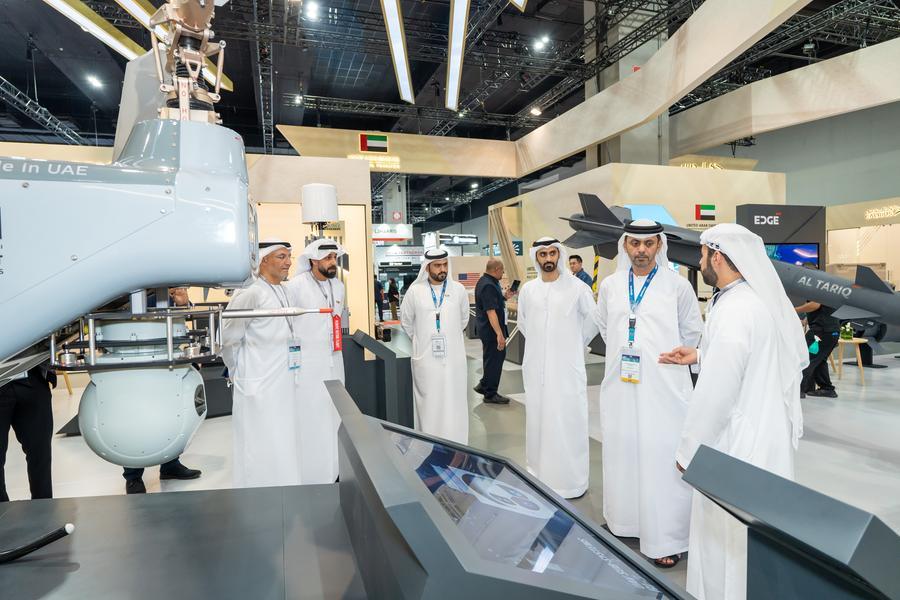
- The pavilion attracted significant global attention at DSA 2026, welcoming 6,645 visitors across the four-day event and showcasing the nation’s advanced defence capabilities
- The pavilion’s successful participation in DSA 2026 underscored its role as a premier platform for international defence cooperation
- The pavilion hosted high-profile delegations from 21 countries, reinforcing the UAE’s position as a global leader in defence innovation
Abu Dhabi, UAE / Kuala Lumpur, Malaysia: The United Arab Emirates National Pavilion concluded its participation in the Defence Services Asia Exhibition and Conference (DSA) 2026 on a high note, capping four days of exceptional engagement, strategic partnerships, and global collaboration at the Malaysia International Trade and Exhibition Centre (MITEC) in Kuala Lumpur.
Organised by ADNEC Group, a Modon company, and supported by the UAE Ministry of Defence (MOD) and Tawazun Council for Defence Enablement, the pavilion drew significant attention from participating international defence and security organisations, highlighting the UAE’s commitment to fostering cross-border partnerships and advancing the global defence industry.
The pavilion welcomed over 1,400 visitors on the event’s fourth and final day, bringing the cumulative four-day total to 6,645 visitors, including senior government officials, high-ranking military leaders, and key decision-makers from leading international companies.
Among the most distinguished visitors to the pavilion on day four were His Royal Highness Raja Ja’afar ibni Almarhum Raja Muda Musa, the Crown Prince of Perak; His Excellency Mubarak Saeed Ahmed Burshaid Aldhaheri, the UAE Ambassador to Malaysia; His Excellency Sheikh Abbas bin Ibrahim Al Harthy, Ambassador of Oman to Malaysia; and Major General Tawfik Mokhtar, Egypt’s Minister of Interior.
Over the exhibition’s four days, the pavilion received high-level delegations from 21 countries, including official delegations from Malaysia, the US, Oman, Australia, Egypt, and Fiji on day four, further consolidating its role as a leading platform for cross-border cooperation and strategic dialogue in the global defence sector.
Throughout the final day, the pavilion facilitated 49 high-impact meetings between participating Emirati defence companies and senior representatives of key international organisations, exploring avenues for collaboration and long-term partnership opportunities.
Across the four days, the pavilion hosted a total of 285 meetings, setting a new benchmark for strategic engagement and reinforcing the UAE’s position as a trusted partner across key regional and global defence markets.
Over four days, leading Emirati defence and security companies, including EDGE Group, Calidus, Resource Industries, and ASIS Boats, have presented their latest, multi-domain defence innovations, spanning unmanned systems, robotics, artificial intelligence (AI), cybersecurity, aerial and land systems, and maritime defence, drawing sustained interest from visiting delegations and positioning the UAE as a centre of excellence in next-generation defence manufacturing and technology development.
The United Arab Emirates National Pavilion served as a gateway for the global defence community to engage with the UAE’s leading companies and explore their innovative solutions.
About Modon:
Modon is an international holding company, headquartered in Abu Dhabi, United Arab Emirates, and listed on the Abu Dhabi Securities Exchange (ADX). We are at the forefront of urban innovation, creating iconic designs and experiences that continually surpass expectations. Our primary business sectors include real estate, hospitality, asset management, investments, events, and tourism. Our goal is to deliver long-term, sustainable value, laying the foundations for intelligent, connected living.
About ADNEC Group:
ADNEC Group, part of Modon Holding, is renowned for its rich legacy and diverse business operations and stands as a formidable force in global business and leisure tourism. The Group is a leader in managing and developing international strategic assets and contributes to the sustainable growth of Abu Dhabi’s economy.
ADNEC Group’s diverse business clusters span Venues, Events, F&B, Services, Tourism and Media. The Group operates the ADNEC Centre Abu Dhabi, the largest event venue in the MENA region and ADNEC Centre Al Ain, as well as the Business Design Centre and ExCeL London in the United Kingdom.
Capital Events, the events management arm of ADNEC Group, is the leading organiser of some of the world’s most iconic events across strategic industry sectors, including Defence and Security, Maritime Lifestyle, Media, Food & Beverage and Technology. Through its growing portfolio, Capital Events plays a crucial role in supporting Abu Dhabi to achieve its growth objectives as a global hub for business and leisure tourism.
ADNEC Group’s Services cluster includes its subsidiary Capital 360 Event Experiences, which provides distinguished event experiences to its clients and stakeholders. The Group also launched Capital Protocol in 2023, which provides a specialised VIP protocol service which is operated by its Service cluster.
ADNEC Group F&B cluster consists of Capital Catering and Royal Catering Services, which caters to numerous sectors including aviation, healthcare, defence, energy, business and industry, and event venues.
Tourism 365, the Group’s tourism arm, delivers tailored tourism services and operates Capital Holidays, a fast-growing tour operator with a global footprint across the UAE, Saudi Arabia, the UK and Germany.
Additionally, twofour54, a key player in Abu Dhabi’s sustainable media and film industry, is part of ADNEC Group’s diversified portfolio, further reinforcing its role in advancing the emirate’s creative economy.
Recognised internationally for its commitment to excellence, innovation, and sustainability, ADNEC Group has garnered numerous awards, solidifying its status as a leader in the industry.
For media enquiries, please contact: ADNEC@Apcoworldwide.com
Fatin Elkhalil
Senior Account Manager
APCO
Level 4, Unit C40-T2-04-0402, YAS Creative HUB, YAS Island
Abu Dhabi, United Arab Emirates
(m) +971 55 543 2671
felkhalil@apcoworldwide.com