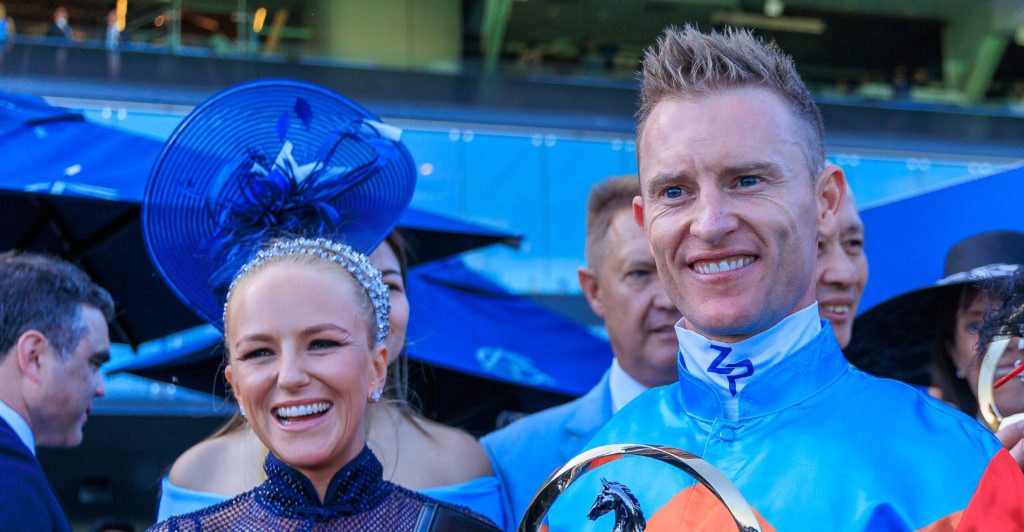
ZAC PURTON walks past a custom-built trophy cabinet – though the word cabinet undersells it. It is more like the wing of a small museum: a series of thick shelves taking out an entire side of the dining room wall in his Racecourse Gardens apartment.
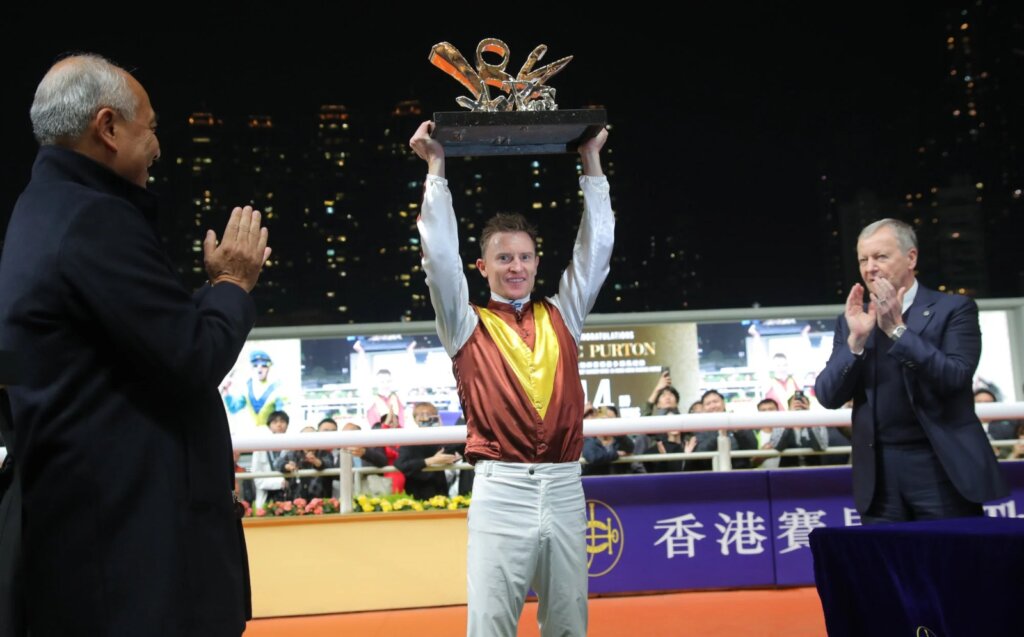
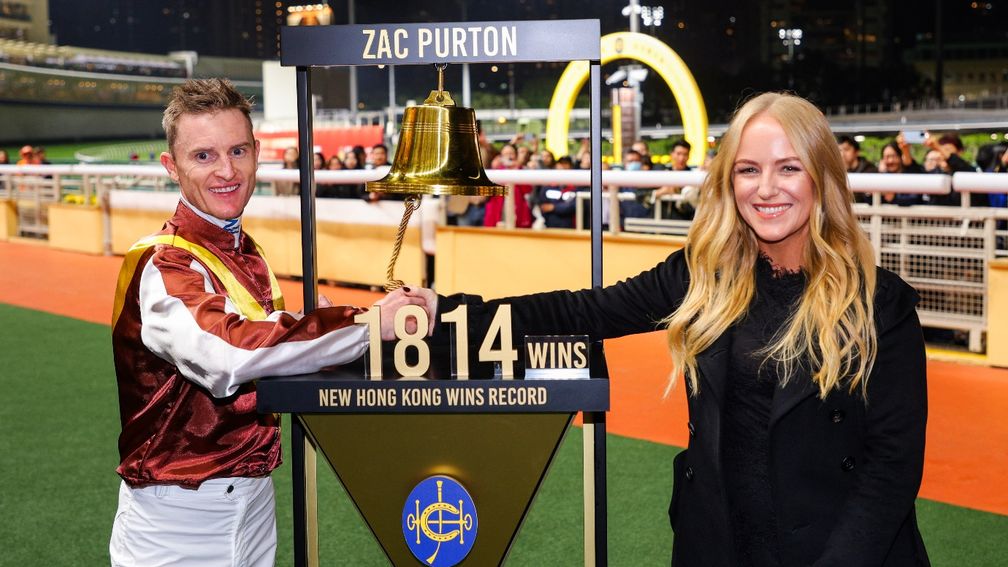
The shelves need to be strong. They carry the spoils of 18 years in the city. Nine jockeys’ championship trophies sit centrally. A special trophy for breaking Douglas Whyte’s all-time record for most wins in Hong Kong. Group 1 mementos from across Asia. And the most recent addition – a special touch – a hand-painted poster of Ka Ying Rising drawn by daughter Roxy.
Purton is at ease, he has just ridden Ka Ying Rising in a barrier trial – the all-conquering sprinter was preparing for what would be a record-extending 19th consecutive victory. He takes a seat on the sofa in front of the old trophy cabinet, and it is easy to think that it has always been like this – the self-proclaimed, and undisputed, King of Hong Kong racing. But in front of Purton on the coffee table are two racebooks that tell a different story: one of adversity, challenge, and a Hong Kong career that nearly wasn’t.
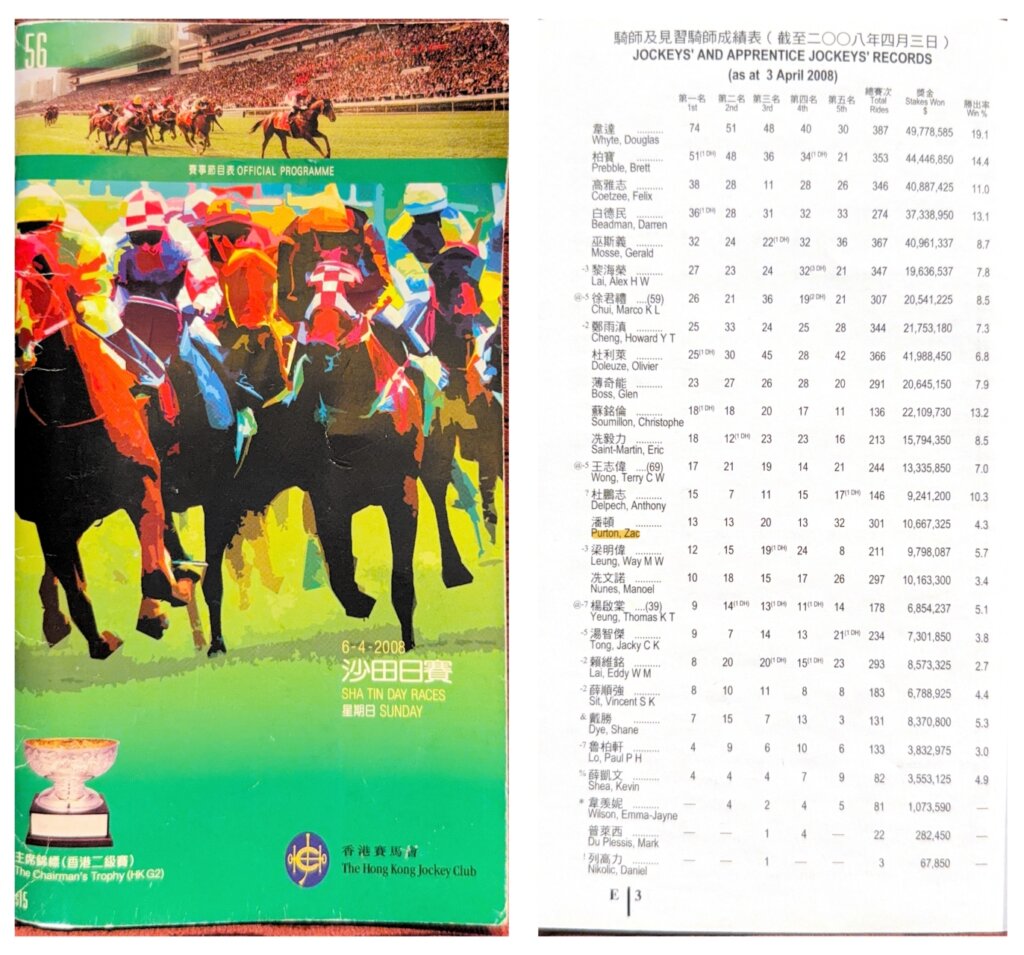
One racebook is from the week we sat down for this interview – the 56th meeting of the 2025/26 season. Purton is again the runaway leader in the championship, his 87 wins at this stage more than double the nearest jockey.
The other is from 56 meetings into his rookie season, and it provides a snapshot of the struggles of a 23-year-old a long way from home and floundering in a scene where a cohort of world-class riders dominated.
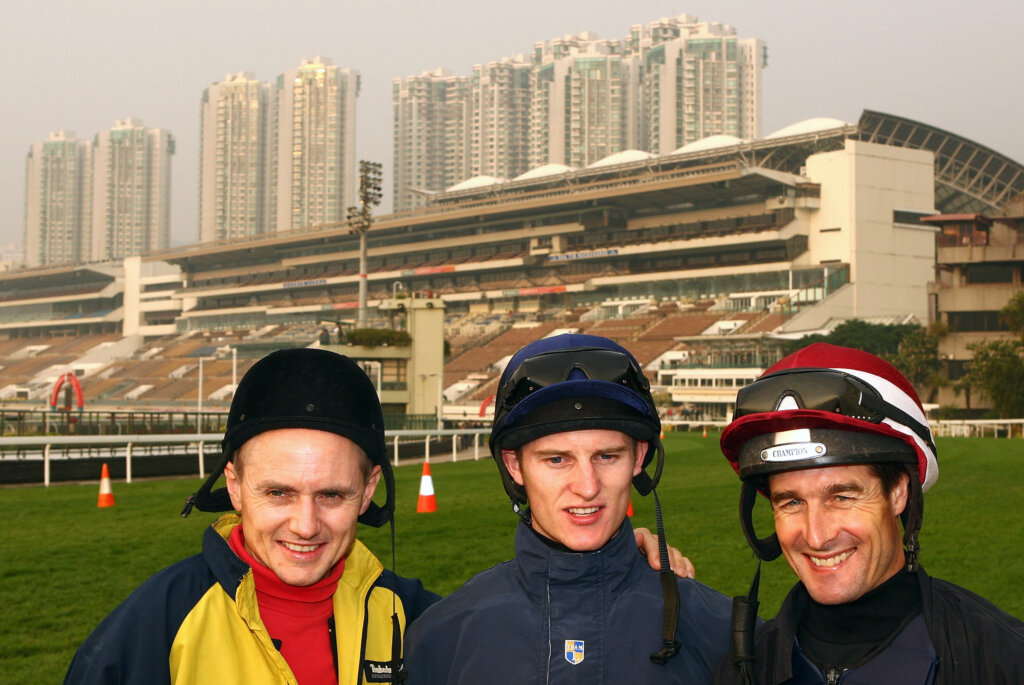
“Let me guess – 12 wins,” Purton says, before flicking the page to the jockeys’ championship table. He is close. But the numbers tell only one part of the story – 13 wins from 301 rides, a strike rate of 4.3 per cent, the lowest of any jockey on a star-laden roster. Another part of the story is the names themselves. Douglas Whyte sits atop with 74 winners. Brett Prebble is chasing hard. Felix Coetzee. Darren Beadman. Gerald Mosse. Then there are the visitors: Christophe Soumillon, Olivier Peslier, Shane Dye – who had departed earlier that season.
Purton runs his finger down the page and exhales.
“People don’t understand. Look at the list of jockeys that were here at that time. Whyte, Coetzee, Beadman, Mosse, Doleuze, Boss, Soumillon, Saint-Martin, Delpech, Nunes, Dye. It’s a solid list. And those jockeys, it’s not just their reputation or their ability – they had great connections with the owners and the trainers. Why are they going to put some kid on that they’ve never seen ride? Someone they don’t know? Why would they put him on, over someone that’s delivered for them time and time again?”
It is a reasonable question. And one that took Purton years to answer.
The Room He Walked Into
Shane Dye was one of those names on the page. A superstar from New Zealand’s Matamata via Sydney that carried a rockstar swagger and celebrity status. He was second in the championship in Hong Kong – battling with Whyte – and since retirement has followed the scene closely as a punter; he knows the ecosystem as well as anyone. He was also one of the established riders whose presence made Purton’s early years so difficult.
Dye’s assessment of Purton is blunt, generous and revealing all at once.
“Zac wasn’t born to be a jockey. Shane Dye was born to be a jockey. James McDonald was born to be a jockey. Zac wasn’t. He’s made himself good. He was never a superstar. He’s ended up a superstar through hard work and determination,” Dye says.
It is a distinction that matters. In a sport that fetishises and rewards natural talent – the prodigy apprentices put on pathways to greatness, the kids who can do it all before they can shave – Purton’s story is different. Sure, he won the senior Brisbane premiership as an apprentice, but he was a long way behind Darren Beadman in Sydney, and when he landed in Hong Kong, he had none of the aura that the established riders carried. He was raw material in a room full of finished products.
The Education Of Losing
What is fascinating about those early challenges is what they forged in Purton – the iron will we see today is a direct result of the defeats, of bitter disappointment and failure.
“In life, you learn far more in defeat than you do in victory,” he says. “When things are going good, you can be a little bit complacent or you struggle to learn and grow. But when things aren’t going well, that’s when you’ve got to work out how to be successful. Even now, I probably remember more of my defeats than I do my victories. Because the defeats hurt more.”
“It instilled that hunger in me to grind every day. I didn’t get anything handed to me at all.”
Grinding, for a jockey in Hong Kong, is a specific kind of pain. You turn up every morning to ride trackwork. You ride the horses in trials. You ride them in races. And then, as soon as they are ready to win, you get replaced by someone with better connections.
“It’s heartbreaking … And that happened to me time and time and time again.”
Purton pauses – then adds that what compounds the challenge of being at the wrong end of the championship standings is that you are riding horses with very little chance.
“It’s very, very hard to look good on a horse that’s going backwards. You feel more tired than the horse, because it’s giving you nothing.
“What the standings don’t tell you is the starting price of all those horses I was having to ride. I was pushing around horses that just weren’t competitive.”
Phuket
There was a moment, early on, when it nearly ended.
Purton and his wife Nicole took a holiday to Phuket during a break in the season. They had originally come to Hong Kong for six months. Sitting by the pool, the opportunities drying up, Purton turned to Nicole.
“I said to her, ‘I’m not getting any opportunities. I think it’s time we go home.’”
Nicole laughed.
“She said, ‘Why? I’m having so much fun. I think you should just stay a bit longer.’ And I was like, okay, whatever you want.”
Purton smiles at the memory. Nicole was naive to the depth of the struggle, he says – oblivious to what was really going on. But that was the point.
“She thought I was doing well and just needed more opportunities. She was right.”
Shane Dye, unsolicited, makes the same point.
“Nicole Purton has a lot to do with it. She’s the strength. If Zac had got his way, he would have left Hong Kong early. She made him stay. She’s huge for him. More than people realise.”
Nicole Purton, the daughter of Hall of Fame jockey Jim Cassidy, had grown up around racing and understood the rhythms of a career better than she perhaps knew. Her optimism kept Purton in Hong Kong. Without it, there are no records, no championships, no breaking of Whyte’s record. Just a talented kid from Coffs Harbour who gave it a crack and went home.
The Men Who Took His Rides
The reprieve gave Purton something he had not had before: time. Time to watch, to study, to learn from the men who were taking his rides.
“The great thing about riding against those jockeys week in, week out was the opportunity to watch them, study them, and learn. They came from different parts of the world, so they were all a little bit different. But they all had these traits that I was able to watch and study.”
Purton talks about each with the specificity of someone who was paying close attention – in the race itself, not just on the replay screen.
Gerald Mosse had a beautiful and unique style to the way he rode. Where Australian jockeys forced horses into position, Mosse was unconcerned about where he sat – and that was often three-wide. He found a rhythm with the horse, got them breathing, got them flowing. For a young rider schooled in the urgency of Australian racing, it looked alien.
“You go from a place in Australia where you’re sort of forcing horses into a position quite often, whereas he wasn’t worried about where he was. He was just finding a rhythm with the horse. He was more about getting them to breathe. He was a lovely, patient rider.”
Eric Saint-Martin was similar – a long rein, getting horses to relax, always wanting to arrive on the line at the last possible moment. “It’s like he was a movie star that loved the dramatic finish,” Purton says.
Felix Coetzee left the deepest tactical mark. Purton calls him probably the best front-running rider he has ever seen.
“Felix had a great clock in his head. The mistake a lot of jockeys make when they lead is they try to go too slow. They choke the horses down, they get them out of rhythm. Whereas he would get them in a lovely rhythm – he might be running on standard time, sometimes even inside standard, but the horse would keep finding for him. There’s a real art to riding leaders. A lot of jockeys get it wrong because they try to strangle them. He was brilliant.”
And then Christophe Soumillon – three stints in Hong Kong across those years and, in Purton’s words, phenomenal. It was more than ability. Soumillon carried a presence.
“In the jockeys’ room, you knew he was there because of the way he held himself. He didn’t take any prisoners. If something was upsetting him, you knew about it. That fiery side – but that’s the competitor in him.”
Purton was studying them all. Not just their technique but their composure, their tactical instincts, the subtleties you could only feel in the trenches beside them. He was being made, one race – one defeat – at a time.
Ten Wins in A Month
The turning point for Purton arrived through another rider’s misfortune.
At the back end of that first season, Glen Boss had been riding for trainer Ricky Yiu. The relationship soured. Yiu came to Purton and asked if he would like to do more riding for him. Purton had nobody to ride for. He said yes. He rode 10 winners in that final month.
“If you ride 10 winners in a month in Hong Kong, you’re absolutely flying. We have 10 months in the season. Ten winners every month is 100 for the season. There’s only been three jockeys in history to ride 100 or more in a season. So that’s a good barometer of a successful month.”
But momentum in Hong Kong doesn’t carry the way it does elsewhere. Purton came back for his second season and found himself starting from scratch.
“It wasn’t as if the second season was like, bang, here we are, away. I came back and it’s like I had to start at the start again and grind again.”
What the Yiu door cracked open, though, was something more lasting than one hot month. Purton became one of the few Western jockeys before him to build genuine relationships with the Chinese trainers. It was born out of necessity – the expat trainers weren’t giving him opportunities – but what started as survival became something more productive. He formed partnerships with Yiu, Danny Shum, Dennis Yip, and Francis Lui, riding for them when others overlooked them and growing together.
“Danny Shum’s a great example. For years and years I told everyone how good I thought he was. He’d gone through a rough patch, his numbers were down, and he was climbing his way back up. But for me, he was a brilliant trainer to ride for. He knew his horses inside out. His horses always turned up. It’s only been since Romantic Warrior that everyone now respects what he can do. But for me, he’s always been that trainer. People just didn’t see it at the time.”
The relationship with Lui is instructive in a different way. Purton doesn’t ride a huge amount for Lui day-to-day – Lui waits late to declare runners and by then Purton is generally booked. But when it mattered most, when Lui was going for the trainers’ championship, he put Purton on everything. Purton got him over the line.
It speaks to one of the less visible skills that separate the great jockeys from the merely talented: the ability to navigate a system that rewards trust and punishes disloyalty.
Endless
Purton is reflective when the conversation turns to the psychological demands of riding in Hong Kong – demands that have broken others.
“The criticism comes from everywhere. The stewards, constantly asking questions. The newspapers and commentators. Social media. The trainers, the owners. Every time their horse doesn’t come in, they’ve got to blame someone. Most of the time it’s the jockey.
“It’s endless. It really, really is. So you need to build up resilience. And ultimately, you’ve got to learn to park it aside. You’ve got to be confident in your ability, your processes. You’ve got to back yourself. You can’t be swayed by any outside influences.”
It is the quality that Dye admires most. In a sport where jockeys hedge and equivocate – talking up $2 favourites they know have no chance, keeping punters, trainers and owners happy with empty optimism – Purton says what he thinks.
“He’s opinionated, which I love,” Dye says. “He’s one of the only jockeys I actually take what they say seriously, because what he says is how it is. He can be riding a $2 favourite and he’ll get on TV and say, ‘I don’t like it, because of this and that.’ Whereas any other jockey would say, ‘Great chance.’ But in the back of their mind, they know something and they won’t say it. Zac says it how it is. And it’s great for the sport.”
That same hardness has changed the room, too. The jockeys’ room is, by Purton’s account, the most harmonious it has been during his time in Hong Kong. Part of that is generational – younger faces, a changing of the guard. Part of it is deliberate. Purton organises the golf days and the boat trips, brings the room together in a way that didn’t happen when he was the outsider. The kid who walked into a fractured room is now the one trying to keep it whole.
He has also played the role of advocate for improved safety and better facilities – earning a begrudging respect from the rivals he beats week-in, week-out, for his willingness to speak up in the semi-regular jockeys’ meetings with officials.
The Other Side
For all the trophies behind him, Purton says he probably remembers more of his defeats than his victories. He compares it to baseball – even the best hitter fails 70 per cent of the time and gets into the Hall of Fame. Jockeys are the same. The defeats hurt more, but they teach more. For Purton, they became fuel.
It is a mindset that took him from 13 winners in his first 56 meetings to the greatest career in Hong Kong racing history. From the lowest strike rate on a page full of legends to the man who outlasted and outperformed them all. And it is a mindset that has bred an unexpected empathy in him – because he is now the jockey on the other side of the equation, the one who gets the call to replace someone else.
“I’m in the position now where I am the one that’s the beneficiary of someone else doing all the work. And I see the looks on their faces and how hard it is for them. I know exactly how they feel. I’ve been there.”
Sometimes he will go to a young jockey and tell them directly that he has been asked to ride their horse. Not because he has to. Because he remembers what it was like to sit there waiting, hoping, not knowing – missing out on other rides in the meantime.
“A lot of the time they’re not taking other rides because they’re hanging off, waiting, hoping. It’s actually better to be told, ‘You’re not on it.’ No problem. Move on. Find another ride. But when you’re sitting there waiting for something that’s already gone, you miss out again.”
On the coffee table, the two racebooks sit side by side. One from 2008 and one from 2026. The same meeting number, the same sport, the same man. Everything else has changed.
Nicole was right. He just needed more opportunities. ∎