
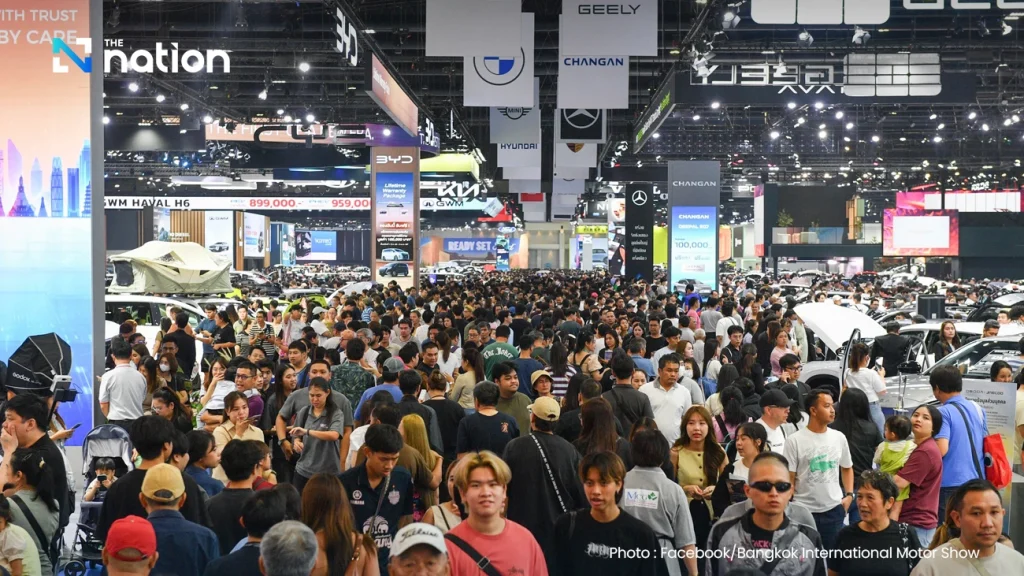

The research house also warned that some orders could still be cancelled if more attractive new models are launched or if delivery times prove too long. That means the headline booking figure, while striking, still overstates the market’s likely real sales outcome.
The bigger challenge is capturing the economic gain
SCB EIC said the more important question now is not whether EV demand is rising, but how much of that boom Thailand can convert into domestic economic value. It warned that the current upturn is relying increasingly on imported vehicles, limiting the benefit to local value added even as sales rise.
That, in turn, leaves pressure on policymakers to move faster. SCB EIC said Thailand still needs to strengthen domestic parts supply, expand charging infrastructure and improve related services such as insurance, while accelerating investment in local EV manufacturing and helping Thai component makers move deeper into the EV supply chain.
Overall, the message from Motor Show 2026 is clear: Thailand’s auto market is no longer simply recovering. It is being reorganised around EVs. The next phase will depend less on booking momentum than on whether Thailand can build an industrial ecosystem strong enough to keep more of that transition at home.