
‘Please rethink. Tidiness is extremely old fashioned. It’s not 21st century enlightened thinking’
A video featuring a Cornwall councillor and cabinet member defending the local authority’s decision to scrap its ban on using a significant wildlife risk pesticide as a way to control weeds has sparked backlash.
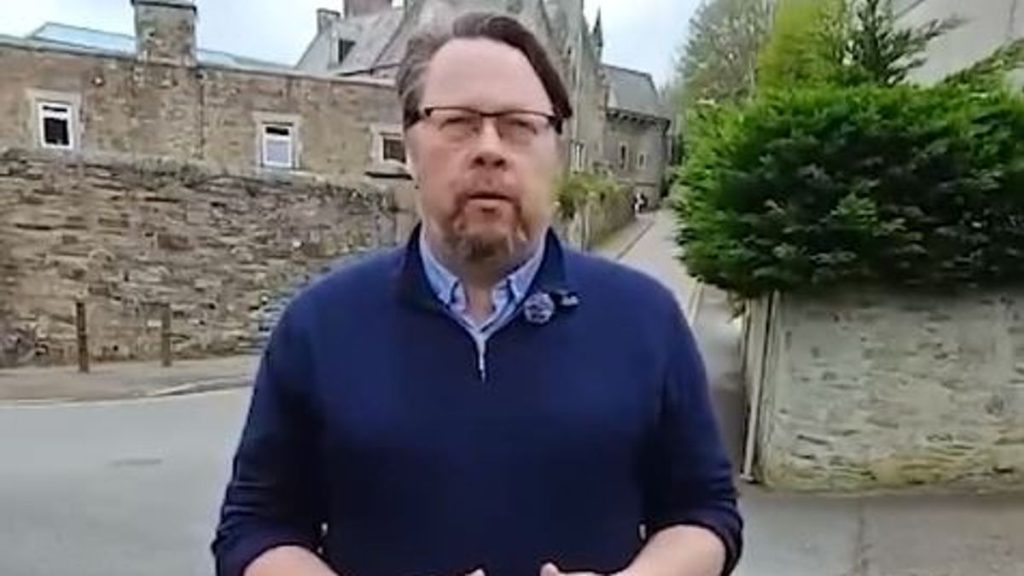
In a video posted by Cornwall Council on its Facebook account, Cllr Dan Rogerson, cabinet member for transport, explained plans for weed management on some of Cornwall’s roads and pavements including the use of glyphosate weedkillers.
Chemicals have not been used by Cornwall Council for a decade but it said the targeted application of glyphosate would begin again from next month.
The U-turn on glyphosate use has caused a lot of anger and consternation among members of the public, as well as local town and parish councils over fears that the controversial pesticide could be damaging to the environment and people’s and pets’ health.
According to the Pesticide Action Network Europe campaign group, glyphosates-based herbicides are toxic to bees in many ways including by making bee colonies more vulnerable to disease and other harmful effects and disturbing the development of bee brood.
The weed killer has been known to have an impact on bees’ reproduction success and also disrupts the foraging abilities and navigation which in turns weakens bee colonies’ potential to survive.
Despite those concerns, Cornwall Council said it was the most effective way of tackling weeds to protect roads and pavements.
The council stopped the routine maintenance of weeds on highways in 2013 and in 2016 ceased using glyphosate on public land it looks after. However, the authority has now decided to resume using the chemical on highways and footpaths.
In the video featuring Cllr Rogerson, he said he received a huge amount of complaints from residents about weeds growing along the kerb line and on pavements and the footway “making areas look unsightly.”
He said that in the last three years Cornwall Council has received about 2,000 such complaints from people. He said that as well as looking untidy, footpaths and pavements overgrown with weed attracts litter, adding: “There it’s the damage that it’s doing as well. If weeds are growing unabated they are getting up into the pavement, into the kerb line, and that will ultimately cause damage to the footway and causes trip hazards.”
He added: “Our trial here in Cornwall with the trial is to improve the problem by using a controlled drop application method which takes glyphosate chemicals which is for sale in supermarkets and DIY shops that people use at home, diluting it one to 40 with water so it is a very diluted application and then doing a drop application so there is no drift and we are not broad spraying it.
“That approach seems to work very well. We have seen other councils try things like vinegar, burning them, mechanical removal, and we thing this option is something we should have in our arsenal to tackle the problem.”
The U-turn on the use of the glyphosate chemicals has been criticised by members of the public, towns and parish councils all over Cornwall.
A number of councillors have condemned the move, describing it as “a complete U-turn” on the the council’s decision to stop the use of glyphosate ten years ago.
CornwallLive has already reported how Redruth Town Council is calling on all town and parish councils throughout Cornwall to back its petition against the unitary authority’s bid to start using glyphosate weedkiller again on its land within Cornwall’s parishes.
Cornwall Wildlife Trust, Cornwall’s local wildlife charity, has now written formally to Cornwall Council requesting that the plans are delayed and that the current opt-out deadlines are extended and replaced with a timetable that better supports local consultation and due diligence.
Below Cllr Rogerson’s video, local residents and groups have expressed their concern over the impact on public health and the environment it could have.
One member of the public wrote: “For 13 years, Cornwall Council hasn’t maintained this properly, and it’s been allowed to deteriorate. Now it suddenly needs fixing, and the proposed solution is to reintroduce chemicals.
“At the same time, Town and Parish Councils have been given what feels like a Hobson’s choice, either accept the use of glyphosate, or take on the responsibility themselves, with significant cost implications for local residents.
“If councils don’t opt out, it can then be framed as local support for the decision, when in reality many simply don’t have a viable alternative within the time or funding available.”
Another added: “Native wild plants are supporting our bees, butterflies, hoverflies, moths and other beneficial insects and their larvae as food plants and for pollen and nectar.
“A weed is simply a plant seen to be in the wrong place, and plants in the wrong place can be dealt with sympathetically by cheap means, or just kept in place. Bare walls and bare pavements are not necessarily more beautiful than those covered in flowers.
“Bees and other pollinators do us good. Glyphosate is now a known poison and I do not want it anywhere near my front garden nor my fruit and veg, nor my dog’s nose, nor places that wildlife will visit – nor near people, for that matter. Please rethink. Tidiness is extremely old fashioned. It’s not 21st century enlightened thinking.”
Another resident added: “Dan, no matter how you dress it up with reports or ‘best practice’ claims, spraying glyphosate is not the answer for Cornwall’s verges, pavements and highways.
“If you truly care about our environment, our pollinators, and our children’s health, put the chemicals down and use your hands, or better still, support the local teams who are already willing to do the hard, honest work without poisoning our land.”
One resident summed up the mood: “Weeds don’t hurt anybody and they’re beneficial to wildlife – glysophate is harmful to bees, wildlife and pets. It would be more beneficial to sort the bloody potholes out.”
Now four of Cornwall’s six MPs have also criticised the council U-turn.
Noah Law, Labour MP for St Austell and Newquay laid into Cornwall Council saying it wants to reintroduce carcinogenic pesticides. He said: “Cornwall Council, in their clearly infinite galaxy-brained wisdom, are trying to reintroduce carcinogenic toxins back into their weed clearing schedule.
“Glyphosates are dangerous chemicals with proven links to neurological issues in humans, as well as the devastation of pollinator populations. They stick around in watercourses for years, all whilst destabilising ecosystems. Despite Cornwall Council’s own policies having changed in 2016 on glyphosate usage, they’re now trying to bring them back en masse, and under the cover of night.
“We all know Cornwall Council has a problem digging up weeds. We all know it needs to be sorted. But not like this. I’m calling on the Lib Dem and Independent administration at Cornwall Council to do the job they were elected to do, without reintroducing these forever chemicals.”
Jayne Kirkham, Labour MP for Truro and Falmouth also took to Facebook and called on a rethink. She said: “There are real concerns, not only about the environmental and health implications of bringing glyphosate back into use, but also about the way this has been handled.
“Town and parish councils were given just a few weeks to decide whether to opt in or opt out of glyphosate spraying in their areas. For many councils, that simply isn’t enough time to meet and make an informed decision. Opting out would also mean those councils becoming responsible for clearing weeds themselves, at significant cost, and at a point in the year when budgets have already been set and agreed.
“This effectively leaves many town and parish councils with very little choice for the next year. That does not feel like genuine partnership working with our local communities. There has also been a lack of clarity about exactly where glyphosate will be used.
“It would make far more sense for the council’s leaders to pause this decision and carry out proper engagement with town and parish councils, rather than rushing it through. I have written along with the other Labour MPs to Cornwall Council asking them to call a halt to the decision.”
In a joint statement, Lib Dem MPs Andrew George for St Ives and Ben Maguire for North Cornwall added: “While it is currently legal in the UK, we believe glyphosate usage should be minimised.
“And we acknowledge that there are still some circumstances where the most effective method of controlling the most seriously invasive non-native species, such as Japanese Knotweed, is difficult to achieve without syringe injected herbicide, but feel that decisions regarding the justifiable control of weeds on pavements etc to protect the integrity and safety of these important assets needs to follow a proper exploration of the facts and with sufficient time to properly consult.”
Want the latest Cornwall breaking news and top stories first? Click here to join CornwallLive on WhatsApp and we’ll send breaking news and top stories directly to your phone. We also treat our community members to special offers, promotions, and adverts from us and our partners. If you don’t like our community, you can check out any time you like. If you’re curious, you can read our Privacy Notice