
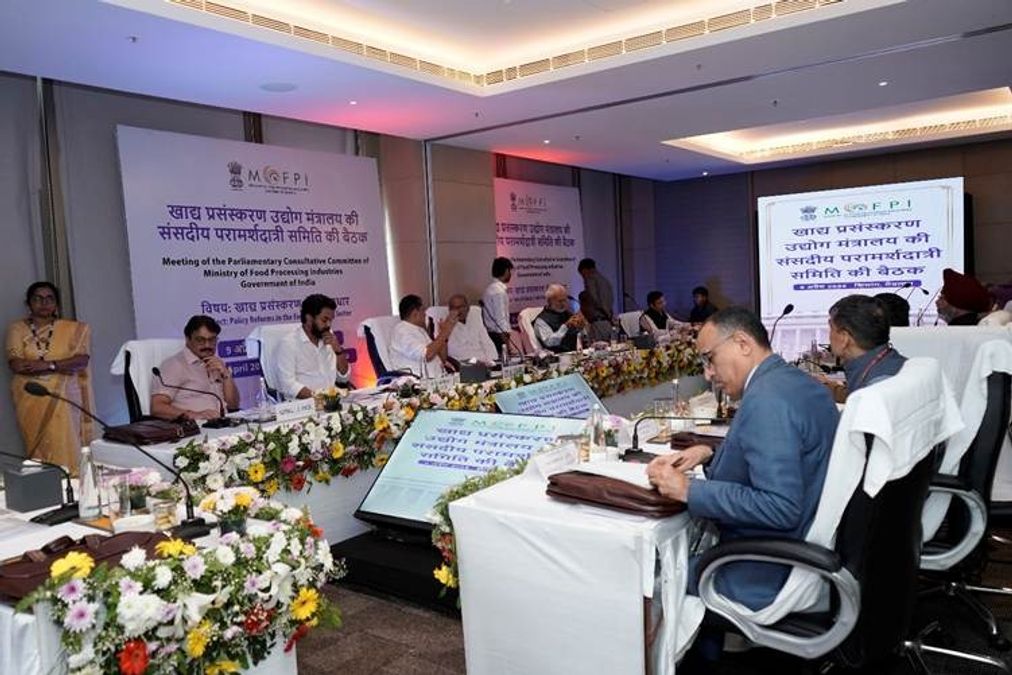
Parliamentary Consultative Committee and NIFTEM Council discussions highlight infrastructure, innovation and industry alignment
Key Highlights:
- MoFPI holds Parliamentary Consultative Committee meeting in Shillong
- NIFTEM Council discusses research and capacity building
- Focus on reducing post-harvest losses and boosting value addition
- Emphasis on infrastructure, finance access and technology adoption
- Push for inter-ministerial coordination and ease of doing business
- Strengthening institutional support for food processing ecosystem
The Ministry of Food Processing Industries (MoFPI) convened the Parliamentary Consultative Committee meeting followed by the NIFTEM Council meeting in Shillong, reviewing the progress of the food processing sector and discussing future policy priorities.
The meetings brought together Members of Parliament, senior ministry officials and stakeholders to assess ongoing reforms and explore measures to strengthen the sector. A detailed presentation on current initiatives and proposed policy interventions was shared, followed by suggestions on improving outreach and implementation.
Discussions during the NIFTEM Council meeting focused on capacity building, research and aligning institutional frameworks with industry requirements. Members deliberated on strengthening the food processing ecosystem and leveraging emerging opportunities across value-added food segments.
The ministry emphasized the critical role of food processing in reducing post-harvest losses, enhancing value addition and improving farmer income. Key challenges identified included infrastructure gaps, access to finance and technological constraints, with a call for coordinated efforts to address them.
The discussions also highlighted the importance of improving ease of doing business through better inter-ministerial coordination, streamlined regulations and policy support. The meeting underlined the need to promote innovation, entrepreneurship and a stronger perception of processed food among consumers.
MoFPI reiterated its commitment to accelerating sectoral growth through policy support, institutional strengthening and collaborative approaches. The initiatives are expected to enhance supply chain efficiency, boost value-added food production and create opportunities across hospitality, food service and retail sectors.