
Close Menu
Simply Invest Asia
  • Home
  • About us
  • Explore industries/sectors
    • Automobile
    • Aviation
    • Banking
    • Biotechnology
    • Chemical & Fertilizer
    • Entertainment and Media
    • Food Processing
    • Healthcare
    • Iron and Steel
    • Leather
    • Mining
    • Oil and Gas
    • Pharmaceutical
  • Explore by countries
    • China
    • Dubai / UAE
    • Hong Kong
    • India
    • Indonesia
    • Japan
    • Malaysia
  • Explore cities
    • Bangkok
    • Beijing
    • Chongqing
    • Delhi
    • Dubai
    • Guangzhou
    • Jakarta
    • Kuala Lumpur
  • Why Asia
Facebook X (Twitter) Instagram Threads
Trending:
  • Saudi Pavilion Draws Large Turnout at Kuala Lumpur International Book Fair – وكالة الأنباء السعودية
  • A Look At First International Bank of Israel’s Valuation After Softer Q1 Earnings And Dividend Announcement
  • UAS-B launches new UG programmes in Natural farming, Forestry and Biotechnology
  • Malaysia requires social media age checks barring under-16 accounts – CTV News
  • Wet Pet Food Market in Middle East | Report – IndexBox
  • Indonesia Offers 0% Income Tax for Exporters Keeping Export Proceeds in Domestic Banks
  • West Coast town exploring community options for residential healthcare
  • The 2026 AdmiralBet ABA League Finals Series to Start in Dubai : ABA League
  • Northern Metropolis takes center stage in Hong Kong’s five-year plan
  • New luxury cruise charter unlocks Japan beyond the usual hotspots: Travel Weekly Asia
  • This NN Studio apartment in Jakarta looks like a NY penthouse
  • India’s Maritime Insurance Pool to facilitate uninterrupted maritime insurance coverage
  • Dubai return to home arena for ABA League Finals vs Partizan
  • China mine collapse kills five, days after deadly Shanxi blast
  • Hong Kong Customs seizes suspected cannabis buds at airport (with photo)
  • Ryanair Captain Suffers Medical Incapacitation, Forcing Diversion to Bologna
  • Workstation dedicated to Nobel laureate unveiled at CQUPT
  • Vacuums & Floor Care Market in Indonesia | Report – IndexBox
Sunday, May 31
Facebook X (Twitter) Instagram
Simply Invest Asia
  • Home
  • About us
  • Explore industries/sectors
    • Automobile
    • Aviation
    • Banking
    • Biotechnology
    • Chemical & Fertilizer
    • Entertainment and Media
    • Food Processing
    • Healthcare
    • Iron and Steel
    • Leather
    • Mining
    • Oil and Gas
    • Pharmaceutical
  • Explore by countries
    • China
    • Dubai / UAE
    • Hong Kong
    • India
    • Indonesia
    • Japan
    • Malaysia
  • Explore cities
    • Bangkok
    • Beijing
    • Chongqing
    • Delhi
    • Dubai
    • Guangzhou
    • Jakarta
    • Kuala Lumpur
  • Why Asia
Simply Invest Asia
Home»Explore industries/sectors»Oil and Gas»Will oil prices ever truly go back to ‘normal’?
Oil and Gas

Will oil prices ever truly go back to ‘normal’?

By IslaApril 15, 20265 Mins Read
Share
Facebook Twitter Pinterest Threads Bluesky Copy Link


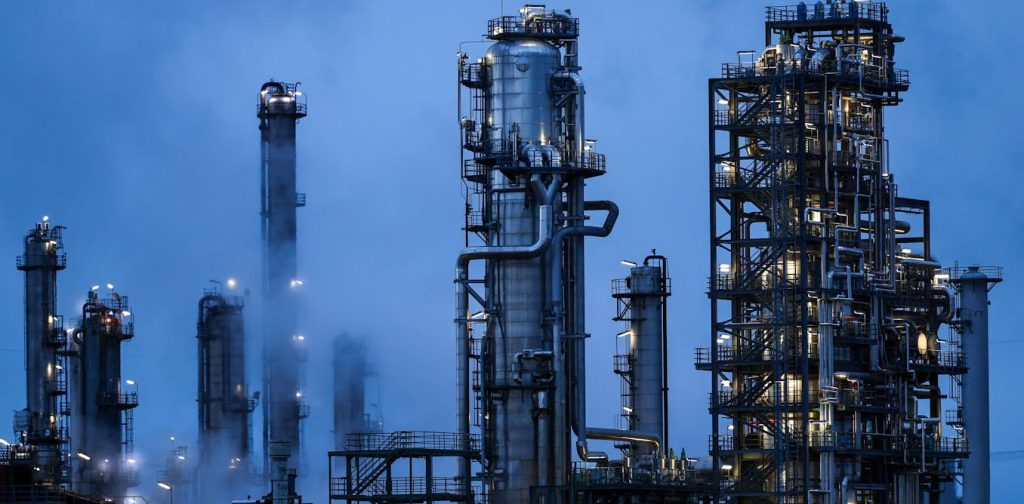
The fallout from war between the United States, Israel and Iran has dominated global oil markets. And not just because the Strait of Hormuz, which normally carries about 20% of global oil and gas, remains effectively closed to shipping traffic.

Deep uncertainty about how long the disruption will continue has added a persistent “risk premium” – an extra cost built into oil prices to account for the risk of disrupted supply.

Rising insurance costs, reduced ship traffic and longer transit routes avoiding the Middle East have all added further friction to global oil supply chains.

An optimist might say this will all be sorted out quickly and soon enough we will be back to “normal”. And oil prices have retreated back below US$100 per barrel this week, on renewed hopes of a peace deal.

But they’re still elevated. Before war broke out in the Middle East, benchmark oil prices had hovered in the range of US$70–80 a barrel since 2023. That’s near where they’ve sat, on average, in “normal” times for much of the past two decades.

But what if there is no way back to “normal”? What if the fundamental challenge now isn’t the short-term disruption in supply, but the realisation that the days of cheap oil may have come to an end?

Oil’s invisible reach

Higher oil prices have a ripple effect that typically starts at the fuel pump. Petrol, diesel and jet fuel are top of mind. Driving to work, moving goods and travelling all become more expensive.

Many fertilisers, too, are petrochemical products. That means farming around the world is exposed to a shock.

But the list of goods that rely on oil and gas goes far beyond fuel and fertiliser. According to the US Department of Energy, petrochemicals (derived from oil and gas) are involved in the manufacturing of more than 6,000 everyday products.

Assorted pharmaceutical pills

Petrochemicals are used in the manufacturing of many pharmaceutical products.
Polina Tankilevitch/Pexels

In many cases, this is because petrochemicals are a key input in the production of plastic. But other products on the list may be surprising, such as aspirin, dishwashing liquid, toothpaste and dyes.

Building materials used in construction warrant a special mention. Asphalt, insulation, paint, pipes, membranes, fittings and other composite materials are mostly oil byproducts. Manufacturing bricks and many ceramic products is also gas-intensive.

Add transporting it all to the construction site, and the oil crisis becomes another headwind to housing affordability.

Is this the end of cheap oil?

In 1999, an article in The Economist quoted Don Huberts, who was then head of Shell Hydrogen at oil company Royal Dutch/Shell:

The stone age did not end because the world ran out of stones, and the oil age will not end because we run out of oil.

True enough, but what about cheap oil? Can that come to an end?

The world has faced many oil shocks before, some for geopolitical reasons, others due to concerns demand would outstrip supply.

But almost every time analysts predicted the world was about to run out of oil, price hikes were met with new discoveries, technological improvements and oil substitution.

Companies such as Chevron have pioneered new techniques, such as deepwater drilling.

Extracting oil from shale through fracking unlocked new supplies, especially in the US. This helped the US become the world’s largest producer of crude oil in the late 2010s.

This time, however, production facilities across the Middle East have suffered major damage, which may take years to repair. The central question is no longer whether oil exists in the ground, but whether it can be supplied cheaply, reliably and at scale again.

Just in time vs just in case

Until 2020, global economies largely operated in “just-in-time” mode. You only take what you need, when you need it, assuming it will always be there for you. This system works efficiently – and is cheap – until something goes wrong.

Lessons from the pandemic brought back the idea of “just in case”, particularly as the war in Ukraine caused further disruption.

“Just in case” means that you keep more than you need, so if someone closes the tap, you can keep all else running. However, this creates new costs.

To keep more oil and gas than you need, you don’t just have to pay for the extra stock. Countries also have to build new storage and infrastructure, and pay more in insurance.

You refine your management to make sure it all works properly, so that the extra cost added is part of a larger contingency plan. But someone must foot this bill.

Oil and gas storage at Grays in the United Kingdom.

An oil and gas storage facility at Grays in the United Kingdom.
Neil Hall/EPA

How the world will have to adapt

The end of cheap oil does not mean the end of oil use. It means higher costs embedded throughout daily life.

Pressure on governments to subsidise fuel, expand stockpiles and intervene in markets can mean larger budget deficits. Households will have less money left for non-essentials as the cost of living bites even harder.

We will adapt, as we are already beginning to see in the current crisis. There are signs people around the world are travelling less, using more public transport and electrifying cars and homes.

Industries may invest more in efficiency and green energy not out of environmental idealism, but cost necessity.

But there may still be a rocky road ahead, and we may never get back to “normal”. Adaptation does not end oil dependence; it reshapes it. The challenge is managing a world in which oil remains essential, but is no longer cheap, stable or politically neutral.


Source link

Related Posts

Iran restores gas production at three offshore platforms in South Pars gas field

May 31, 2026

Swinney steps up calls to end ‘Westminster rip-off’ over energy

May 30, 2026

This Jersey Oil and Gas Insider Increased Their Holding In The Last Year

May 30, 2026
Add A Comment
Leave A Reply Cancel Reply

Top Posts

Abandoned malls, whispers of nuclear war and young foreigners detained. This is what’s REALLY going on in Dubai… and the chilling warning one taxi driver gave to the Mail’s IAN BIRRELL

April 11, 2026

Dubai food conglomerate IFFCO set to go into provisional liquidation – Financial Times

May 3, 2026

Asian Angle | Why Japan-China ties can benefit from promoting people-to-people exchanges

May 3, 2026
Don't Miss

Saudi Pavilion Draws Large Turnout at Kuala Lumpur International Book Fair – وكالة الأنباء السعودية

By IslaMay 31, 2026

Saudi Pavilion Draws Large Turnout at Kuala Lumpur International Book Fair وكالة الأنباء السعودية Source link

A Look At First International Bank of Israel’s Valuation After Softer Q1 Earnings And Dividend Announcement

May 31, 2026

UAS-B launches new UG programmes in Natural farming, Forestry and Biotechnology

May 31, 2026

Malaysia requires social media age checks barring under-16 accounts – CTV News

May 31, 2026
SUBSCRIBE TO OUR NEWSLETTER

Get our latest downloads and information first. Complete the form below to subscribe to our weekly newsletter.


I consent to being contacted via telephone and/or email and I consent to my data being stored in accordance with European GDPR regulations and agree to the terms of use and privacy policy.

Stay In Touch
  • Facebook
  • YouTube
  • TikTok
  • WhatsApp
  • Twitter
  • Instagram
Top Trending

Dubai return to home arena for ABA League Finals vs Partizan

By IslaMay 31, 2026

China mine collapse kills five, days after deadly Shanxi blast

By IslaMay 31, 2026

Hong Kong Customs seizes suspected cannabis buds at airport (with photo)

By IslaMay 31, 2026
Most Popular

Indian music legend Asha Bhosle dies aged 92 | Asha Bhosle

April 12, 2026

6,000 Rescue Cats, Firefly Displays, and S$3.60 Entry

April 9, 2026

India voices anger after Trump shares comments calling it a ‘hellhole’ | India

April 24, 2026
Our Picks

Our time at in New Delhi.

May 31, 2026

India dispatch: Supreme Court weighs anti-terror law as activist enters sixth year jailed without trial – JURIST

May 26, 2026

West Coast town exploring community options for residential healthcare

May 31, 2026
SUBSCRIBE TO OUR NEWSLETTER

Get our latest downloads and information first. Complete the form below to subscribe to our weekly newsletter.


I consent to being contacted via telephone and/or email and I consent to my data being stored in accordance with European GDPR regulations and agree to the terms of use and privacy policy.

© 2026 Simply Invest Asia.
  • Get In Touch
  • Cookie Policy
  • Privacy policy
  • Terms & Conditions

Type above and press Enter to search. Press Esc to cancel.

SUBSCRIBE TO OUR NEWSLETTER

Get our latest downloads and information first.

Complete the form below to subscribe to our weekly newsletter.


I consent to being contacted via telephone and/or email and I consent to my data being stored in accordance with European GDPR regulations and agree to the terms of use and privacy policy.