
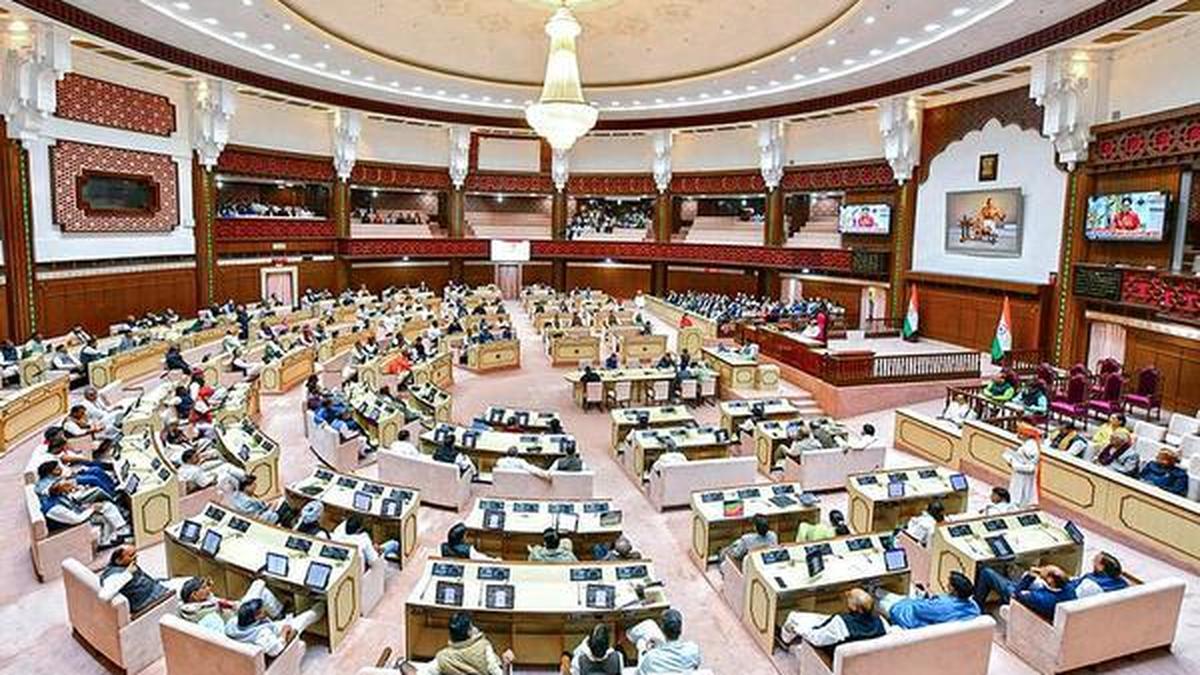
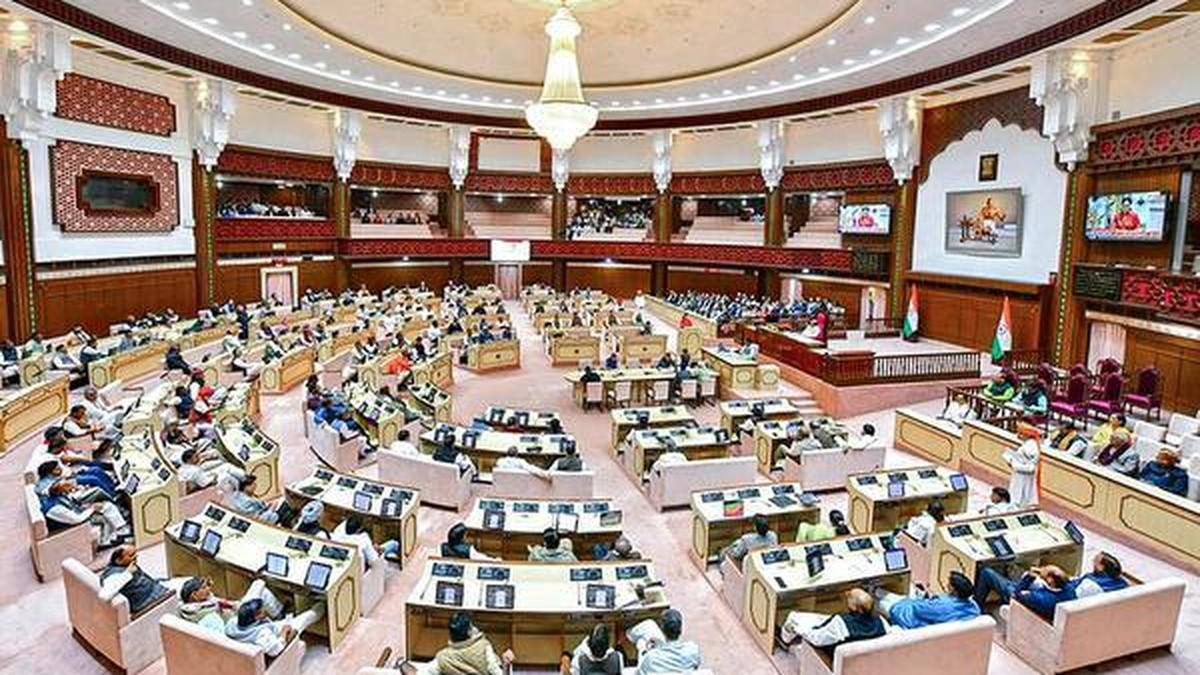
The Rajasthan Prohibition of Transfer of Immovable Property in Disturbed Areas Bill was passed by the Rajasthan Legislative Assembly on March 6
| Photo Credit: ANI
The story so far:
The Rajasthan Prohibition of Transfer of Immovable Property in Disturbed Areas Bill was passed by the Rajasthan Legislative Assembly on March 6 in a voice vote. The Bill seeks to regulate property transactions in areas that the government declares as “disturbed”. However, the legislation has sparked debate over its constitutional validity, potential misuse, and its broader social and economic implications.
What does the Bill propose?
Under the proposed law, Section 3(1,2) states that the State government may declare any area within the State as a ‘disturbed area’ if it considers that communal violence, riots, or public disorder exist or are likely to occur.
According to Section 5(1,2), once a locality is notified, any transfer of immovable property, including land, houses or commercial establishments, would require prior approval from the District Magistrate or Collector. This restriction applies to transfers by sale, gift, exchange, lease, etc. Property transactions carried out without such permission would be treated as legally invalid. Section 7 empowers the District Magistrate or Collector to conduct an inquiry to determine whether the proposed transfer is voluntary and genuine, or whether it involves coercion, intimidation or a distress sale.
Under Section 9, the law also provides penalties for property transfers carried out without the required permission. Section 10 includes provisions aimed at protecting tenants from forced or unlawful eviction in such sensitive areas. Violations of the Act (Section 12) are treated as cognisable and non-bailable offences, punishable with three to five years of imprisonment and a fine.
How does the Gujarat model compare?
The Rajasthan Bill draws comparisons with the Gujarat Disturbed Areas Act, which has its origins in a 1986 ordinance passed after severe communal riots in Ahmedabad. The law was first enacted in 1991.
It was later strengthened through amendments in 2020. The law was introduced to prevent distress sales of property by minorities who, after repeated communal riots in cities such as Ahmedabad and Vadodara, felt compelled to leave their neighbourhoods and sell property at low prices. It is observed that once areas become identified with a particular community, administrative scrutiny of cross-community property transactions may make such exchanges more difficult.
In Ahmedabad, a large share of the Muslim population is concentrated in Juhapura, often described as the largest Muslim ghetto in western Ahmedabad, limiting the community’s geographical spread. While the law was originally meant to avoid distress sales and ghettoisation of communities, the application of the law has created an exact opposite effect of communal segregation of urban spaces. In the context of the 2020 amendments, the then Chief Minister Vijay Rupani said publicly that the intent of the law was to ensure that Hindus and Muslims remain within their own areas and do not exchange property.”
What are the legal and constitutional implications?
Even though the right to property was removed as a fundamental right by the 44th Amendment to the Constitution in 1978, it remains protected under Article 300A, which states that no person can be deprived of property except by authority of law. The proposed legislation provides such authority by requiring government approval before property in notified “disturbed areas” can be transferred.
The Bill has also drawn attention in relation to Article 14, which guarantees equality before the law. Legal observers note that if the provisions disproportionately affect certain neighbourhoods or communities, the law could face scrutiny on grounds of arbitrary classification or discrimination.
What are the Opposition’s concerns?
Congress questioned the Bill’s communal bias. Moreover, real estate transactions in notified areas could slow down because each transfer would require administrative approval from district authorities. They also point out that vague terms such as “disturbed area” or “demographic imbalance” may leave room for broad administrative discretion. There are also concerns about the arbitrary classification of disturbed areas, the ghettoisation of communities, potential discrimination in government services, and the distortion of representation. As a result, the policy, though intended to prevent forced displacement, has been criticised for institutionalising residential separation and communal polarisation, while reinforcing existing communal boundaries in housing markets rather than promoting integration.
(Saee Pande is a freelance writer with a focus on politics, current affairs, international relations, and geopolitics)
Published – March 16, 2026 08:30 am IST