
For businesses considering solar installations, understanding the regulatory landscape is critical, and it is key to determine whether planning permission for solar PV panels is required
At the beginning of 2024, a review led by the Departments for Energy Security and Net Zero (DESNZ), Levelling Up, Housing and Communities (DLUHC), and Media and Sport identified planning rules for solar PV panels as a key barrier to broader adoption.
This guide provides a detailed overview of planning permission requirements, focusing on commercial and industrial contexts, to help property owners and energy managers navigate the process effectively.
What is planning permission for solar PV panels?
In many cases, solar PV panels installed at commercial and residential properties benefits from ‘permitted development rights’, which allow projects to proceed without formal planning approval. This has been the case since late 2023, at which time the government also removed the 1MW capacity restriction, which required businesses to apply for planning permission if its solar panels were to generate over 1MW of electricity.
These rights are subject to specific conditions and limitations, particularly for commercial properties. Understanding when planning permission applies for solar PV is essential to avoid delays, fines, or the need to remove non-compliant installations.
Do solar PV panels fall under permitted development?
Permitted development rights are granted under the Town and Country Planning (General Permitted Development) (England) Order 2015, allowing certain developments to proceed without a formal application.
For commercial properties, permitted development rights apply to rooftop solar PV systems that meet the following conditions:
-
The panels do not exceed one metre above the highest part of the roof (excluding chimneys).
-
The installation does not extend beyond the roof’s edge.
-
The system is not installed on a listed building or within a conservation area where it would affect the building’s character.
Ground-mounted solar PV systems may also qualify for permitted development if they meet size and location restrictions. However, larger arrays or installations in sensitive areas often require full planning permission for solar PV panels.
When do solar PV panels need planning permission?
Key situations where planning permission is needed for solar PV installations include:
-
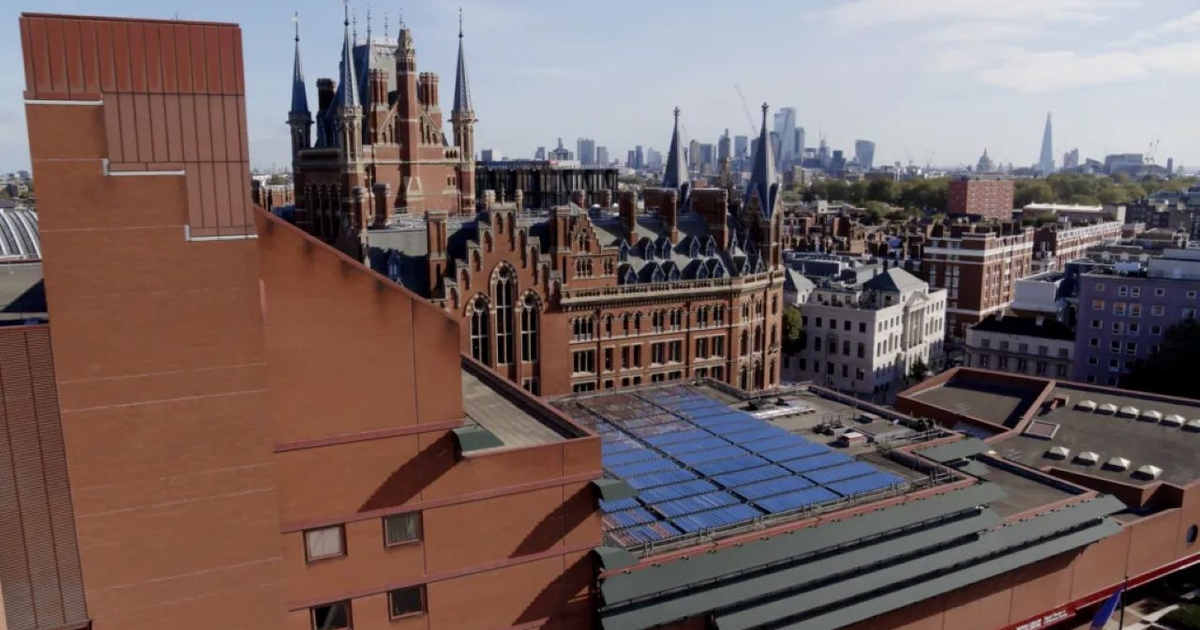
Listed buildings: Any solar installation on or near a listed building requires planning permission to preserve its historical character. Many listed buildings in the UK have solar installed on their rooftop, like the British Library and York Minster.
-
Conservation areas: Installations visible from public spaces in conservation areas typically need approval.
-
Ground-mounted systems: Arrays exceeding nine square meters or three meters in height require planning permission.
-
Roofline limits: Panels that extend more than one meter above the roofline or beyond the roof’s edge need approval.
-
Large-scale installations: Commercial systems exceeding 50kW capacity often require planning permission due to their size and potential impact.
By conducting a site-specific assessment, businesses can determine whether their project falls within these categories.
Planning permission for rooftop solar PV systems
Rooftop solar PV systems are the most common choice for commercial properties, offering a space-efficient way to generate renewable energy. While many rooftop installations fall under permitted development, for businesses planning large-scale rooftop systems, consulting with local planning authorities (LPAs) early in the process is advisable to confirm compliance with solar PV planning permission regulations.
Planning rules for ground-mounted solar PV
Ground-mounted solar PV systems are often used for larger commercial projects. For example, the Ford Motor Company’s UK headquarters last year commissioned a 5.2MWp solar PV array to meet 10% of Dunton’s total annual electricity demand.
Ground-mounted systems often involve more complex planning applications, including environmental impact assessments (EIAs) and consultations with local stakeholders. Typically, these are undertaken by developers or service providers in cases where the installation is large enough to warrant it. Many companies offer these installations at no upfront cost, charging the business for use of the clean energy generated instead.
Solar PV planning considerations for commercial buildings
Commercial and industrial properties face unique challenges when planning solar PV installations. Key factors to consider include:
-
Building height: Taller buildings may require additional structural assessments to ensure rooftop systems are safe and compliant.
-
Neighbouring properties: Installations must not overshadow or cause glare for nearby buildings.
-
Grid infrastructure: Connecting large systems to the grid may require upgrades or additional permissions from the distribution network operator (DNO).
-
Fire safety: Compliance with fire safety regulations is critical, particularly for rooftop systems on industrial sites.
-
Local authority scrutiny: Commercial projects often face greater scrutiny from LPAs, especially in urban areas or near protected sites.
By addressing these factors early, businesses can streamline the planning process and avoid potential obstacles.
How the solar PV planning application process works
The planning application process for solar PV panels involves several steps, which can vary depending on the project’s complexity. A typical process includes:
-
Pre-application checks: Consult with the LPA to confirm whether planning permission is required for solar PV panles and identify any site-specific issues.
-
Document submission: Prepare and submit required documents, including site plans, design details, and environmental assessments.
-
Decision timelines: LPAs aim to decide within 8 weeks for standard applications or 13 weeks for larger projects.
-
Common delays: Delays often occur due to incomplete applications, objections from neighbours, or additional information requests.
Engaging a planning consultant or solar developer with experience in commercial projects can help ensure a smooth application process.
Navigating solar PV planning permission successfully
Understanding the planning permission requirements for solar PV panels is essential for commercial property owners and developers. While many installations benefit from permitted development rights, larger or more complex projects often require formal approval.
By conducting pre-application checks, addressing site-specific considerations, and avoiding common mistakes, businesses can navigate the planning process with confidence.
For more detailed guidance, consult your local planning authority or a qualified solar developer. Early planning and due diligence are key to unlocking the benefits of solar energy while ensuring compliance with regulatory requirements.