
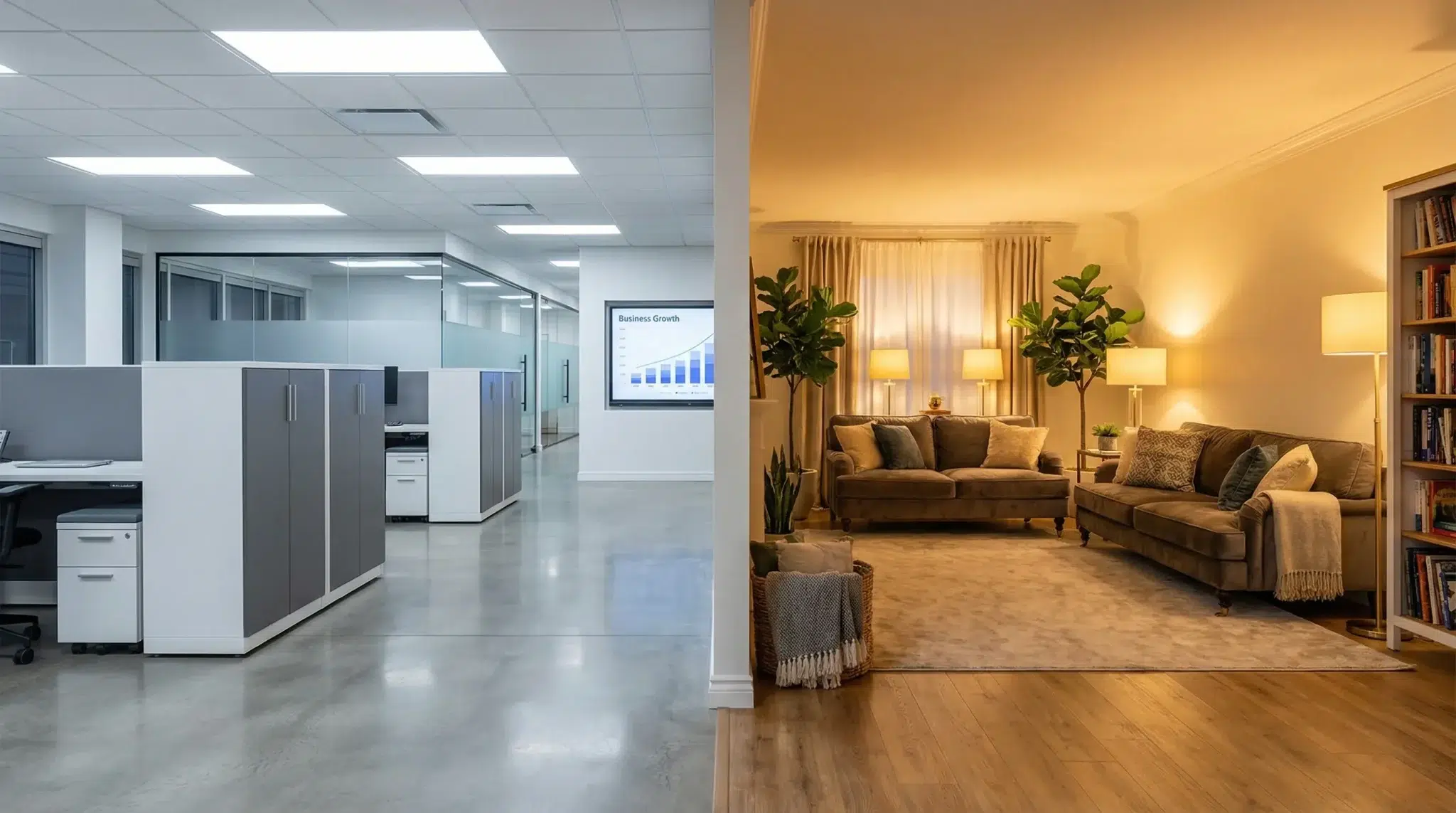
Interior design isn’t the same for every space. Homes and offices have different needs, and the trends that work in one might not work in the other. Residential spaces focus on comfort, personal style, and making people feel at ease. Commercial spaces, like offices, hotels, or stores, need to balance style with functionality, durability, and the way people move through them.
For property owners, understanding these differences is important. Choosing the wrong approach can make a space uncomfortable, inefficient, or even costly to maintain. By knowing the latest trends in both residential and commercial interiors, owners can make smart decisions that fit the purpose of each space.
In this guide, we’ll look at the key interior trends for commercial and residential properties.
1. Functionality vs. Comfort
One of the biggest differences between commercial and residential interiors is the focus on functionality versus comfort. In commercial spaces like offices, hotels, or stores, design is often about efficiency. Furniture, layouts, and décor are chosen to support workflows, customer interactions, and employee productivity. Open layouts, clear signage, and durable materials are common because they make the space work well for many people.
As Dan Close, Founder and CEO of BuyingHomes, said, “Residential spaces prioritize comfort and personal style. Living rooms, bedrooms, and kitchens are designed to make people feel relaxed and at home. Sofas are plush, chairs are cozy, and layouts encourage easy movement but also create intimate spaces.”
Homeowners often choose colors, textures, and décor that reflect their personality rather than strict functionality.
2. Color Palettes and Finishes
Color and finish choices vary widely between commercial and residential interiors. In commercial spaces, colors are often neutral, professional, or aligned with a brand. Think muted grays, whites, and browns, or signature brand colors for offices and stores. Finishes are chosen for durability and ease of cleaning. Polished concrete floors, laminated surfaces, and scratch-resistant furniture are common because they handle high traffic and constant use.
Tyler Fallon, CEO of Casa, an AI-powered Home Advisor, says, “A kitchen, living room, or entryway works best when materials fit daily routines as well as visual style. Surfaces that look attractive but also handle regular wear tend to create better long-term results for homeowners.”
In residential interiors, homeowners have more freedom to explore warm, inviting, or bold colors. Living rooms might feature soft pastels, accent walls, or patterned wallpapers. Finishes are often chosen for aesthetic appeal rather than pure durability—think wood, soft fabrics, or decorative tiles. Homeowners can focus on textures and visual warmth that make spaces feel cozy and personal.
Property owners should recognize these differences when designing for commercial or residential use. A bright red wall might energize a home kitchen but feel overwhelming in an office meeting room. Durable surfaces may be essential for a hotel lobby but unnecessary for a private bedroom.
Raj Dosanjh, CEO of Rentround, notes, “Neutral colors and practical finishes often work better in rental spaces because they appeal to more tenants and are easier to maintain over time. Good design still matters, but durability and broad appeal usually have a bigger impact on long-term performance.”
3. Technology Integration
Technology serves different purposes in commercial and residential interiors. In commercial spaces, the focus is on efficiency, productivity, and security. Offices often feature smart lighting, AV systems, security cameras, and automated climate control. Retail spaces may use digital signage or interactive displays to engage customers. Technology in these settings is designed to streamline work, monitor activity, and improve service for large groups of people.
In residential spaces, technology is primarily about comfort and convenience. Smart home devices—like thermostats, lighting systems, or voice-controlled assistants—allow homeowners to control their environment easily. Security cameras, smart locks, and energy monitoring tools provide safety, convenience, and cost savings. The goal is to enhance daily life rather than manage high traffic or multiple users.
As Edward Tian, CEO of GPTZero, notes, “Technology should reflect the needs of the space. In commercial properties, it’s about efficiency and productivity. In residential homes, it’s about comfort, ease, and making everyday life smoother. Property owners who align tech with the purpose of the space create environments that truly work for their users.”
Property owners should carefully consider these priorities. Commercial tech often integrates with building-wide systems and must support many users at once. Residential tech is smaller in scale but focuses on personal experience, convenience, and safety. Choosing the right approach ensures technology enhances the function and feel of any space.
4. Furniture and Layouts
Furniture and layout are critical areas where commercial and residential spaces differ. In commercial interiors, furniture is often modular, ergonomic, and designed to support collaboration. Offices might use adjustable desks, group tables, or movable partitions to accommodate changing teams.
Tariq Attia, Founder of IW Capital — EIS Investment, adds, “Companies often think carefully about how space supports productivity, flexibility, and long-term use. Layout choices that allow teams to adapt and work efficiently can add real value, especially in business environments where needs change over time.”
Retail or hospitality spaces focus on flow and circulation to make it easy for people to move and interact. Residential furniture emphasizes comfort, style, and personalization. Sofas are soft, chairs may be recliners, and tables are designed for family meals or gatherings. Layouts often prioritize coziness and convenience over maximum efficiency.
People choose furniture that reflects their tastes and lifestyle rather than standardized functionality.
Hybrid spaces, such as co-living apartments or shared offices, may combine elements of both. In such cases, understanding the user’s needs—whether productivity or relaxation—is key.
Elisa Roels, Realtor, Owner and President, Broker in Charge of Cape Fear Realty Group, says, “Property owners must consider how people will use the space when selecting furniture and arranging layouts. Proper planning ensures that commercial interiors support activity while residential spaces feel inviting, functional, and comfortable for daily living.”
5. Sustainability and Eco-Friendly Design
Sustainability is increasingly important in both commercial and residential design, but the approach differs. In commercial interiors, sustainability often centers on durability, energy efficiency, and low-maintenance materials. Offices, hotels, and retail spaces need furniture and finishes that last while helping reduce long-term operating costs. Recycled materials, energy-efficient lighting, water-saving fixtures, and systems that lower power use are all common choices.
Kirstie Hall, CMO at Fursonafy, said, “Sustainability tends to have the strongest impact when it is built into everyday use rather than treated as a surface-level feature. Materials, layouts, and systems that reduce waste while still supporting comfort and performance usually create the best long-term results.”
Residential sustainability often places more attention on health, comfort, and daily living. Homeowners may choose natural materials, non-toxic paints, indoor plants, or sustainable furniture that feels safe and comfortable over time.
Energy efficiency still matters, but many decisions also reflect concerns about indoor air quality, warmth, and personal well-being. Reclaimed wood, bamboo, and eco-friendly fabrics are popular because they combine function with a softer, more personal feel.

“People usually want home environments that feel healthy, calm, and comfortable over the long term. Sustainable materials often appeal because they support that experience while also offering a more thoughtful approach to design and everyday living,” shares Ashley Durmo, CEO of Chalet.
Property owners should align sustainable strategies with the purpose of the space. Commercial settings benefit from materials that can handle frequent use and reduce operating costs, while residential spaces often prioritize comfort, safety, and overall quality of life.
6. Lighting Trends
Lighting is another area where commercial and residential interiors differ. Commercial spaces prioritize uniform, task-focused, and energy-efficient lighting. Offices use bright, evenly distributed lighting to keep employees alert and productive, while retail stores and showrooms focus on accent lights that highlight products without creating glare. Lighting is planned to support activity rather than mood.
Residential interiors, in contrast, emphasize layered, mood-enhancing lighting. Homes often combine ceiling lights, lamps, and accent lights to create warmth and comfort. Dimmers, warm bulbs, and decorative fixtures help set a relaxed or inviting atmosphere, while lighting can also highlight artwork, décor, or architectural features.
Sam Williams, E-commerce Manager at Tiletopia, shares, “The way a space is lit can completely change how it is perceived. Balanced, focused lighting draws attention to key areas and details, while softer, layered illumination makes spaces feel inviting and highlights what truly matters.”
Property owners need to consider the function of each space. Offices require clear, functional lighting, while homes benefit from flexible, softer lighting. Selecting the right type and placement of lights enhances usability and shapes the atmosphere to suit each setting.
7. Design for Well-Being
Design for well-being is becoming a priority in both commercial and residential interiors, but the focus differs. In commercial spaces, this includes wellness rooms, quiet zones, ergonomic workstations, and biophilic elements like plants or natural light. The goal is to improve employee health, reduce stress, and boost productivity.
Residential spaces, in contrast, emphasize creating relaxing, restorative environments. Cozy corners, natural light, indoor plants, and calming colors help homeowners unwind. Spaces are designed to support mental health, comfort, and daily routines rather than efficiency.
“A well-designed space considers both function and comfort. Proper installations — from roofing to interior elements — impact light, airflow, and overall comfort, which in turn influences how people feel and interact with their environment,” says LJ Tabango, Founder & CEO of Leak Experts USA.
Property owners should recognize these differences. Commercial design supports many people at once, while residential design is personal and restorative. Thoughtful design, combined with quality installations, enhances physical and mental well-being in every space.
Conclusion
Commercial and residential interiors have different goals, and understanding these differences is important for property owners. Offices and stores focus on efficiency, durability, and functionality, while homes focus on comfort, personal style, and creating a welcoming environment. Color choices, furniture, lighting, technology, and sustainability all need to match the purpose of the space.
By paying attention to these trends, property owners can make smart decisions that improve both the look and the usability of their spaces. Whether it’s choosing ergonomic furniture for an office or cozy, layered lighting for a home, the right design supports comfort, productivity, and well-being.