
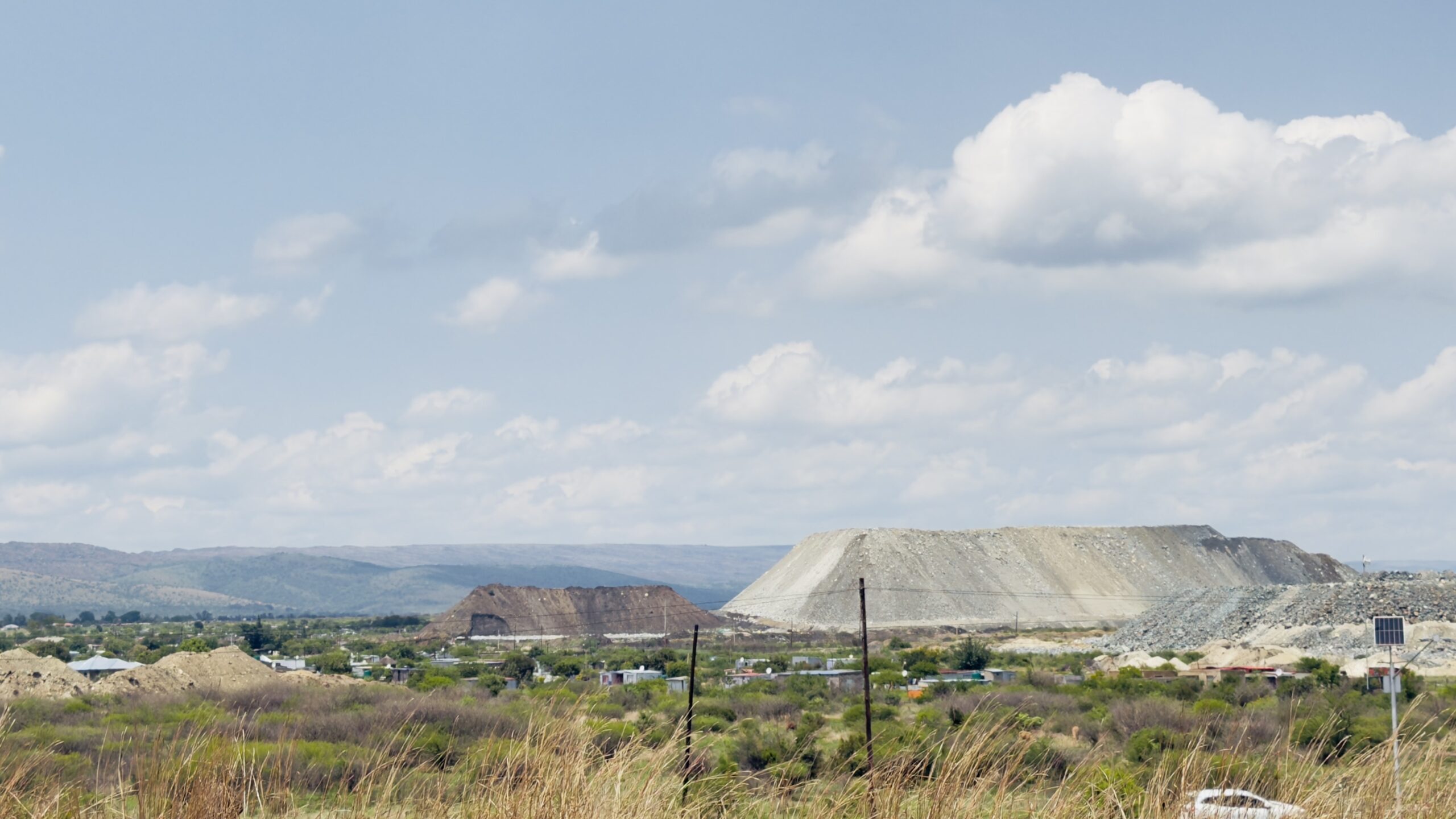
Besides the dust that cloaks pathways, windowsills and gardens, the towering grey heaps of discarded rock are another unwelcome reminder of the platinum mine next door to the South African township of Chaneng.
In and around the city of Rustenburg, the low-grade platinum ore that has made South Africa the world’s top producer of the silvery metal creates massive waste piled in large rocky heaps known as tailings. For every tonne of metal extracted, hundreds of tonnes of waste rock is left behind in huge piles.
The transition to cleaner energy system is expected to push up global demand for platinum group metals (PGM) – which include palladium and other precious metals, as well as platinum. They are used in hydrogen-related technologies such as fuel cells and electrolysers that split water molecules as well as in hybrid cars that need catalytic converters to curb pollution.
To secure supplies, mining companies are starting to make use of what was once considered waste.
Efforts to green lithium extraction face scrutiny over water use
Reprocessing mine tailings using new technology can be a more sustainable form of producing minerals and metals needed for the energy transition because it is expected to reduce the size of existing waste heaps and boost output without the need to open new mines, which can cause more environmental destruction and community displacement.
“Tailings reprocessing offers genuine benefits, reducing pressure for new mining [and] addressing existing environmental liabilities,” said Mathikoza Dube, an expert on critical minerals based in Rustenburg.
“It offers the world a pathway to secure supplies of energy transition minerals while remediating waste that’s contaminated communities for generations,” Dube added, cautioning it is not a “magic solution” and should be approached in a way that ensures local communities benefit.
In Chaneng, where the tailings dumps loom over backyards, residents are wary.
“Same theft in new clothes”
They fear the plan to reprocess mining tailings at the neighbouring mine – operated by South African platinum miner Sibanye-Stillwater – is being dressed up as sustainable when in reality it will mean more contamination, blasting, dust and no end to their community’s problems.
Despite decades of mining, unemployment in the area remains high, many people say they never received compensation for the loss of their agricultural land and most households still lack access to basic sanitation infrastructure.
Water testing carried out by SRK Consulting in 2009 found elevated nitrate levels exceeding World Health Organization guidelines in community boreholes, and health practitioners document dramatic increases in respiratory diseases.
“Now they want to dig up the waste piles and call it progress? Show us the ownership papers. Show us the rehabilitation plan. Otherwise, it’s the same theft in new clothes,” said Johannes Kgomo, a community leader.
South Africa’s mining legislation requires that 26% of mining assets are held by historically disadvantaged people including Black South Africans, and Chaneng residents are demanding a stake of 15% to 30% in any tailings operation on their land, allowing them to have a say in how the business is run.
They say that should be granted to them as compensation for the health and environmental problems they have endured as a result of the mine.
The community is also demanding comprehensive water testing and treatment, adequately resourced clinics with respiratory specialists, compensation for destroyed agricultural land, infrastructure repair and long-term health monitoring.
“We are not asking for handouts,” said Gideon Chitanga of the National Union of Mineworkers, which often takes the side of local communities in disputes with companies.
“These people have already paid with their health, their water, their land. That contamination, that suffering – that is their investment. Now they want returns and decision-making power,” Chitanga added.
A spokesperson for Sibanye-Stillwater declined to comment.
A mining industry source, who asked not to be identified, said conversations with community members were ongoing.
“Nobody disputes these communities have suffered. The question is how to structure ownership in a way that’s legally sound, financially viable, and genuinely empowering,” the source said.

New technology boosts metal recovery in waste
New reprocessing technology has made it economically viable to extract platinum group metals from tailings, and several operations are already underway in South Africa’s platinum mining belt, around the city of Rustenburg.
Sibanye-Stillwater already operates multiple retreatment facilities, processing thousands of tonnes of waste ore monthly.
Another South African miner Tharisa processes chromite from PGM tailings commercially. Chromite is used to obtain chromium, a metal used in the manufacture of wind turbines and some energy storage batteries.
“Historical tailings facilities contain economically viable concentrations that were unrecoverable with older technology,” said Leo Vonopartis from the University of the Witwatersrand’s BUGEMET research programme, which studies the geology of South Africa’s Bushveld Complex mining belt.
Tailings in the area around Rustenburg can contain up to 2.5 grammes per tonne of combined platinum, palladium and rhodium – along with chromite. Vanadium, cobalt and rare earth elements have also been found.
At current prices, which have rallied this year, it is worth extracting the rare metals, despite the challenges.
Breaking with the cycle of extraction and injustice
“The technology exists. The economics work. The question is whether we can structure these projects to genuinely benefit the people who have paid mining’s costs,” a spokesperson for one mining company said, asking not to be named.
Without that, local expert Dube said, the reprocessing of tailings is scarcely better than other forms of mining.
“Reprocessing tailings does not erase the damage that created them. If it is structured as extraction by another name – where companies profit and communities remain marginalised – we have just found a new way to perpetuate old injustices.”
Australia’s COP31 Co-President vows to fight alongside Pacific for a fossil fuel transition
Gesturing toward the tailings dam visible from her yard, Noxolo Mthembu recalls the days when her vegetable patch used to feed the family.
“We used to grow spinach, tomatoes, pumpkins,” she told Climate Home News. “Now nothing grows. The dust kills everything. My children have asthma. My husband died of lung disease at 54.”
Like many of her neighbours, she says any new cycle of mining activity – this time in the name of the clean energy transition – must not repeat the past.
“Show me the ownership papers with our names. Show me the water treatment plant. Show me the clinic with enough staff. Then I will believe this time is different.”