
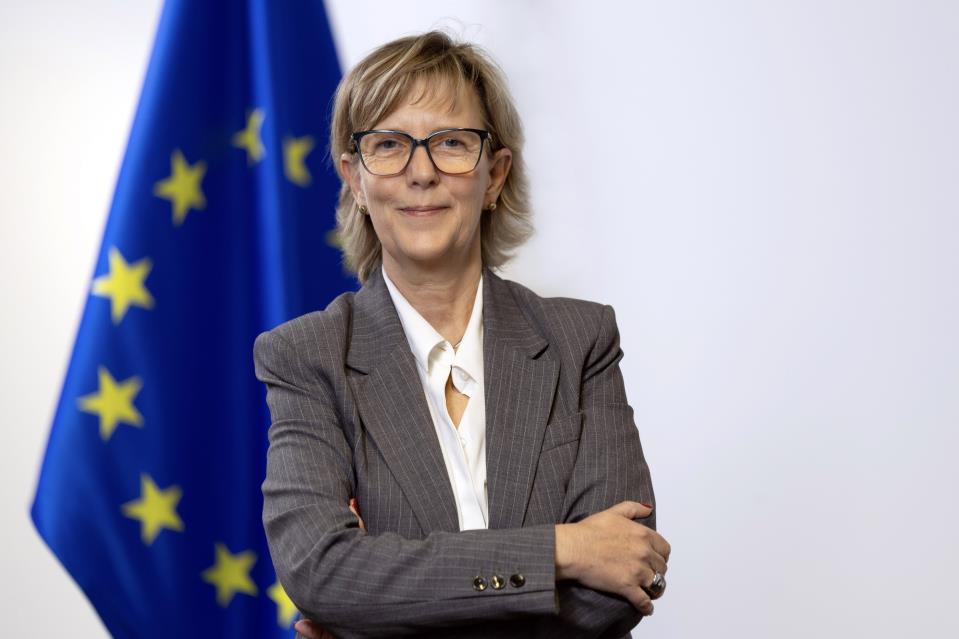
Europeans are among the world’s most diligent savers, yet many remain hesitant when it comes to investing. According to EU Commissioner for Financial Services and the Savings and Investments Union Maria Luís Albuquerque, this caution is not about a lack of money, but a lack of trust, understanding and access.
“Engagement with capital markets depends on two things: trust and access,” Albuquerque tells The Malta Independent. “People need to understand risk and the relationship between risk and return, but they also need opportunities that feel safe, simple and within reach.”
To address this, the European Commission last year launched its first-ever European Financial Literacy Strategy, aimed at equipping citizens with practical skills – from managing household budgets and using credit responsibly, to making informed choices about saving and investing.
But education alone will not change behaviour, Albuquerque argues. That is why the Commission has also recommended the introduction of Savings and Investment Accounts (SIAs) across Member States where they do not yet exist.
These accounts would function much like ordinary bank accounts, but with a crucial difference: citizens could invest directly in shares, bonds or funds, without minimum thresholds. “If you only have €10, you can invest €10,” she says. The accounts would be simple, transparent and ideally supported by tax incentives, while leaving people fully in control of their money.
While acknowledging that investing always carries risk, Albuquerque stresses that diversification and a medium- to long-term horizon can help citizens build wealth over time – unlike savings left entirely in bank accounts, which often lose value due to inflation.
Europe’s focus on mobilising savings is not only about individual financial security, but also about meeting the continent’s wider investment needs. From energy and transport infrastructure to defence, artificial intelligence and clean industry, Europe faces enormous funding demands – and public money alone will not be enough.
“If we develop a more integrated, more efficient financial market, citizens benefit directly from higher returns and indirectly from a stronger European economy,” Albuquerque explains. “One where businesses grow, innovate and create better jobs.”
For younger generations, who face rising living costs, housing challenges and uncertainty about retirement, early engagement with saving and investing can be particularly powerful. Even small, regular investments made early in life can have a significant long-term impact, she notes, especially when it comes to pensions.
This is why the Commission has also put forward a supplementary pensions package, encouraging measures such as pension tracking systems, national pension dashboards and auto-enrolment schemes. Public pensions, Albuquerque stresses, will remain the backbone of Europe’s welfare systems – but they cannot shoulder future pressures alone.
Financial literacy, she adds, does not need to be complicated. “It starts with understanding how to make the best out of the money you have – how to manage a household budget, how to use credit without getting into debt, how to choose the right mortgage, and how to invest savings with a level of risk you are comfortable with.”
Europe’s social model, often seen as a brake on growth, is in fact one of its greatest strengths, Albuquerque says – provided it is supported by a dynamic economy. If even a small share of household savings were invested in the real economy, it could unlock growth, innovation and jobs across the continent.
Smaller financial markets, including Malta’s, also have an important role to play. While local ecosystems will remain vital, deeper integration can give businesses access to larger pools of capital without losing their local roots. Smaller jurisdictions, she notes, often show greater agility and openness to innovation.
Ultimately, Albuquerque hopes to change how Europeans view finance itself. “After 2008, financial markets were seen mainly as part of the problem,” she says. “Today, they must be part of the solution.”
In a world marked by geopolitical uncertainty and rapid economic change, she believes that well-functioning, integrated capital markets are no longer optional. “They are essential – for Europe’s growth, resilience and the financial security of its citizens.”