
(To get this story in your inbox, subscribe to the TIME CO2 Leadership Report newsletter here.)
It’s been a long-standing investor assumption for decades: the electric utility sector acts as a ballast in a well-balanced portfolio. Investor-owned utilities are generally less volatile than companies in other sectors, and they tend to generate consistent profits, which they return to shareholders via dividends.
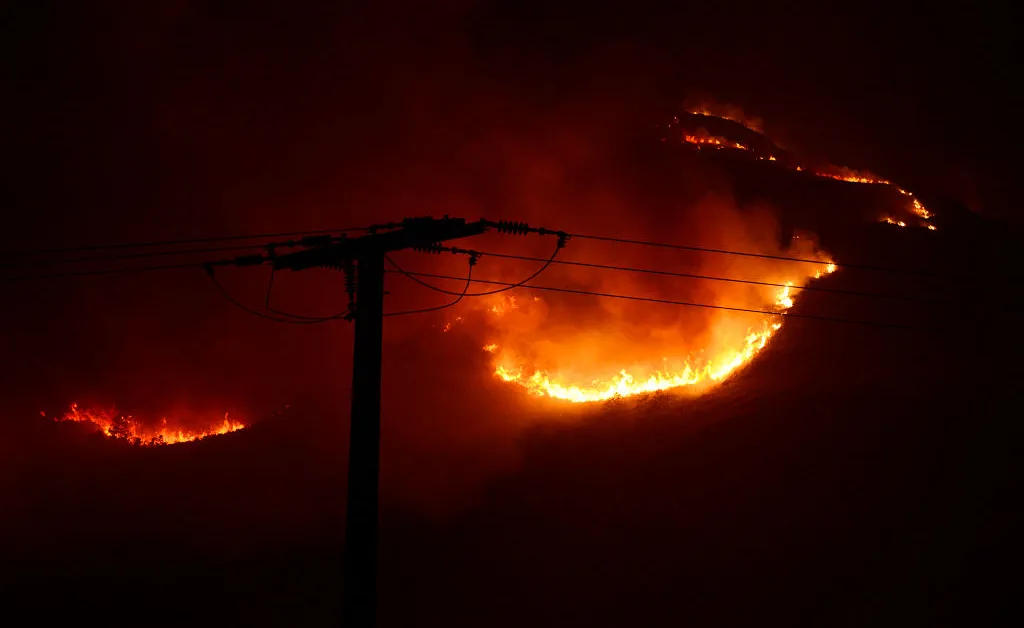
The Maui wildfires, which killed more than 100 people and caused billions in damages, are the latest in a string of similar catastrophes to test that assumption. The cause of the devastating inferno in Hawaii remains under investigation, but residents have suggested that the local utility’s power lines may have come into contact with dry vegetation, sparking the fire. If that turns out to be the case, Hawaiian Electric Industries may be held liable for billions in damages, a sum that could wipe out equity investors in potential bankruptcy proceedings. As of Aug. 24, the company’s stock was down nearly 70% from a month ago and ratings agencies have downgraded the company to junk status.
This wouldn’t be the first time that a wildfire has financially devastated a utility. In 2019, Pacific Gas & Electric, a utility that provides electricity for much of California, declared bankruptcy after being held liable for $30 billion in wildfire damages caused by the company’s powerlines. In June, Colorado officials released a report laying at least partial blame on Xcel Energy, a Colorado electric utility, for fires that destroyed more than 1,000 homes in Boulder County in 2021. The company has since said that it faces at least eight lawsuits stemming from the fire and that the potential damages could exceed what its insurance will cover.
Other utilities in wildfire zones are disclosing similar risks. Edison International, which provides electricity to much of Southern California, noted in a regulatory filing this year that it is working to reduce the risk of fires caused by its equipment but that insurance may not be sufficient to cover the costs of such events. Similarly, Berkshire Hathaway Energy Company, another west-coast operator, said in a December regulatory filing that its financial performance also depends on reducing the risk of and effectively insuring against potential wildfires caused by its infrastructure.
Read more: Commercial Real Estate is in Trouble. Climate Change Is Part of the Problem
This growing risk for utilities is concerning for investors. The sector in the U.S. has a total market cap of more than $1.5 trillion, according to data from Fidelity, and is a component of many pensions and retirement accounts. (California pension funds CalPERS and CalSTRS both lost tens of millions of dollars in the PG&E bankruptcy, for example).
But there are broader lessons to draw for both investors and companies. For investors, the utility sector’s climate woes should serve as a reminder that climate change will challenge long held assumptions about risk and return. Agriculture, energy, and insurance, for example, all face steep climate-related risks. That’s not to say that these sectors will become uninvestable. To the contrary, companies in these industries will require capital to adjust to climate change. But it does mean investors should think of these sectors and how to assess their potential risk and return a little differently.
Businesses across all sectors can take lessons from utilities’ recent experience. For years, as wildfire risk grew, utility companies moved slowly to implement adaptation plans that would cut their risk. Taking a short term view, it’s easy to understand why. Such measures—like burying power lines underground or installing stronger poles—are costly and can disrupt operations. But those short-term costs pale in comparison to the long-term cost of the wildfires we’re seeing today and will continue in the coming years. Across sectors, executives would be well served to look at their operations and ask: what climate risk should I be adapting to right now? It may save them in the long run.