
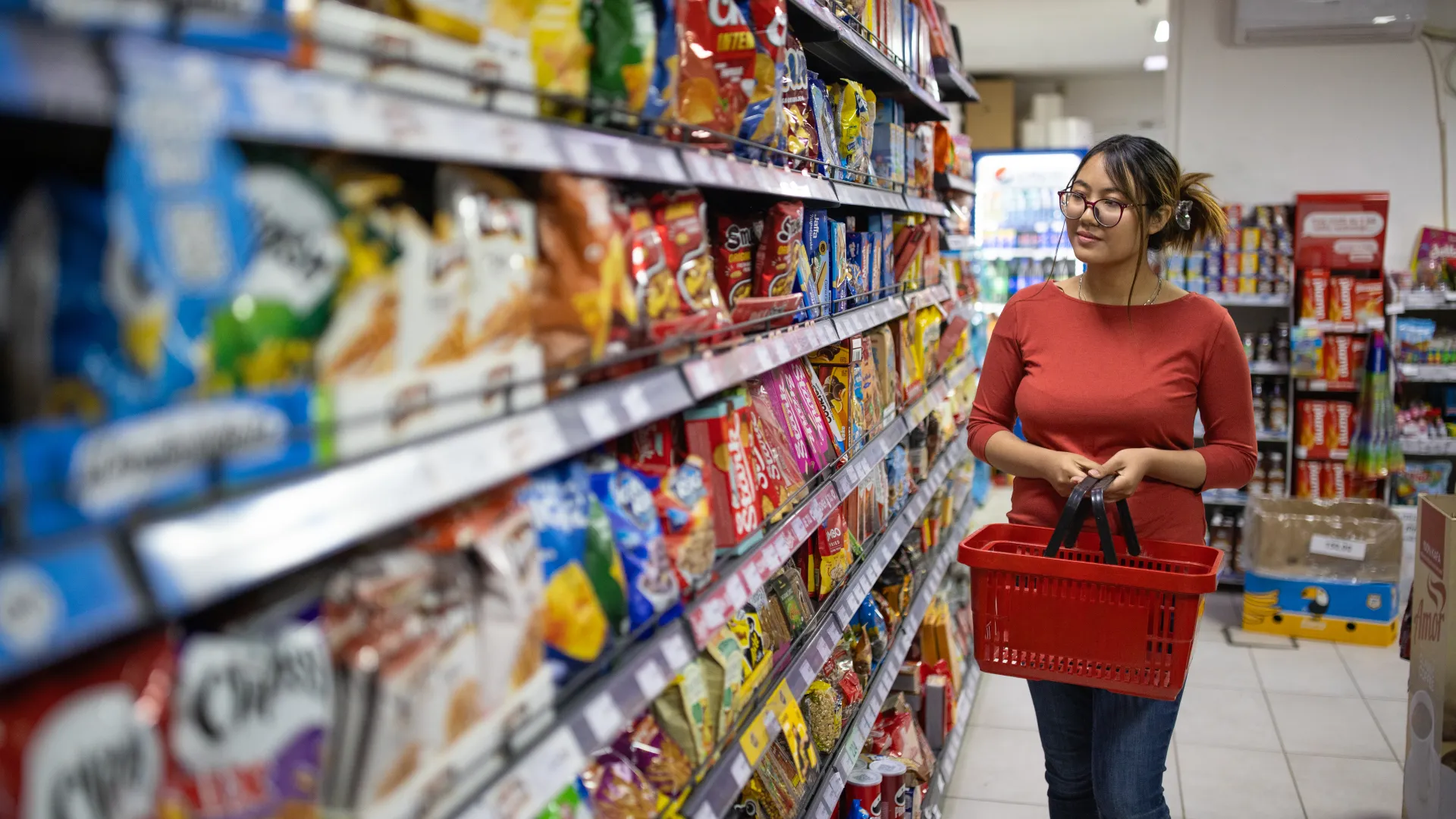
HOUSEHOLDS are still battling rising grocery costs as food inflation remains stubbornly high.
Food and non-alcoholic drinks rose at a rate of 4.9% in October, according to official figures released by the Office for National Statistics (ONS) today.


This was up from 4.5% in September – despite a dip in overall inflation.
It means a basket of groceries that cost £100 a year ago now costs £104.90 – and prices are continuing to go up.
Many supermarket essentials are among the hardest hit by increases, putting a huge strain on families at the checkout.
Beef and veal is seeing the most dramatic increase in price, soaring at a rate of 27% in the year to October.


The price of chocolate is also rising rapidly, at a rate of 17.5%.
Many classic festive chocolates, from Cadbury Roses to Quality Street and Terry’s Chocolate Orange, are shrinking while getting more expensive.
Dairy staples are also surging in price, with whole milk rising 15.5% and butter by 14.3%.
Coffee is soaring by 14.2%, while jam and confectionary is rising by 11.9%.
But it’s not all doom and gloom, as some food items have fallen in price in the last year.
Olive oil has seen the fastest drop at 15.4%, while the cost of flour is falling at a rate of 6.2%.
Other products dropping in price include rice, pizza, frozen seafood and sugar and honey.
The Food and Drink Federation (FDF) said “pressed” food and drinks companies have “no choice but to increase prices”.
Chief executive Karen Betts said: “It’s very concerning to see food price inflation continue to rise, particularly as we approach Christmas.
“Food and drink manufacturers are paying nearly 40% more for ingredients and energy than they were in January 2020, as well as bearing a range of newer regulatory costs, like new packaging taxes and increases to employer national insurance.”
HOW TO SAVE ON GROCERY COSTS NOW
Despite food costs continuing to soar, there are still ways you can make savings on your grocery bills.
Here are six things you can do right now that will ease the pressure at the supermarket checkout.
Hunt for bargains
There are still lots of great deals to be found in the supermarket.
Look out for yellow-sticker bargains, especially on more expensive items like meat and fish, the next time you’re doing your food shop.
These are discounted items that are close to their sell-by date, and you can save money by planning your meals around these or freezing them to have later.
The times when supermarkets discount items varies depending on the retailer, but many reduce them early in the morning or in the evening.
Make sure you’re signed up to loyalty schemes like Sainsbury’s Nectar and Tesco Clubcard, which give you decent discounts on a range of items.
‘Downshift’ to own brand
There are huge savings to be found from supermarkets’ own-brand lines, instead of shopping from premium brands.
You might have to look more closely to find these cheaper products – they are often strategically placed higher or lower on the shelves than the more expensive brands.
We recently found shoppers spend £500 extra a year by not looking at the bottom shelf.
‘I got £15 free shopping by ordering online and it was so easy’

The Sun’s senior consumer reporter Blathnaid Corless shares how doing her grocery shop online has helped save serious cash.
You can read more of her top tips here.
Supermarkets regularly offer discounts and vouchers exclusively for online orders.
Some also offer money off for new customers to try and attract more shoppers.
Not only can this save you even more on your groceries, it’s also a good reason to try out different supermarket deliveries to see which you prefer.
For example, I recently got £15 off my Morrisons online delivery through my Amazon Prime account.
Ocado also offers 25% off your first order and three months of unlimited free deliveries.
To find these, you can check supermarket websites and sign up to their email lists for exclusive offers.
You can also use websites like VoucherCodes or moneysavingexpert.com, which regularly post the latest deals.
I also find it incredibly easy to use my loyalty cards when I’m shopping online.
I often get my groceries delivered from Sainsbury’s, and I’ve linked my Nectar card to my online account so I automatically get points when I shop.
My discounted “Nectar prices” also automatically appear when I’m shopping, so I can easily compare prices and I know exactly how much I’m saving.
Switch to a cheaper supermarket
Not all supermarkets are equal when it comes to prices, and it may be worth changing up where you do your food shop to save some cash.
According to consumer group Which?, Lidl was the cheapest supermarket to shop at in October.
A basket of 70 items costs £120.38 from the budget grocer – the cheapest price of all the major UK supermarkets.
It was closely followed by Aldi, then Asda, Tesco, Morrisons and Sainsbury’s.
Use secret supermarket codes
There are secret codes hidden all over supermarkets that could save you cash and help make your food last longer.
These can tell you when offers are about to end, when an item is about to be reduced, and even help you find the freshest produce on shelves.
We’ve rounded up all the secret supermarket codes and mysterious labels here.
Shop in the world foods aisle
Many people skip the world foods aisle in big supermarkets, but you could find the ingredients on your shopping list for a lot less compared to other parts of the store.
Items like spices, chillies and rice can often be found for cheaper – and in larger sizes – from this section.


Which? previously found a jar of Sainsbury’s paprika powder was £1.10 for a 44g jar – £2.50 per 100g.
However, in the world foods aisle, a 400g bag of Natco paprika was £2.20 – just 55p per 100g and £1.95 less per 100g than the own brand paprika.