
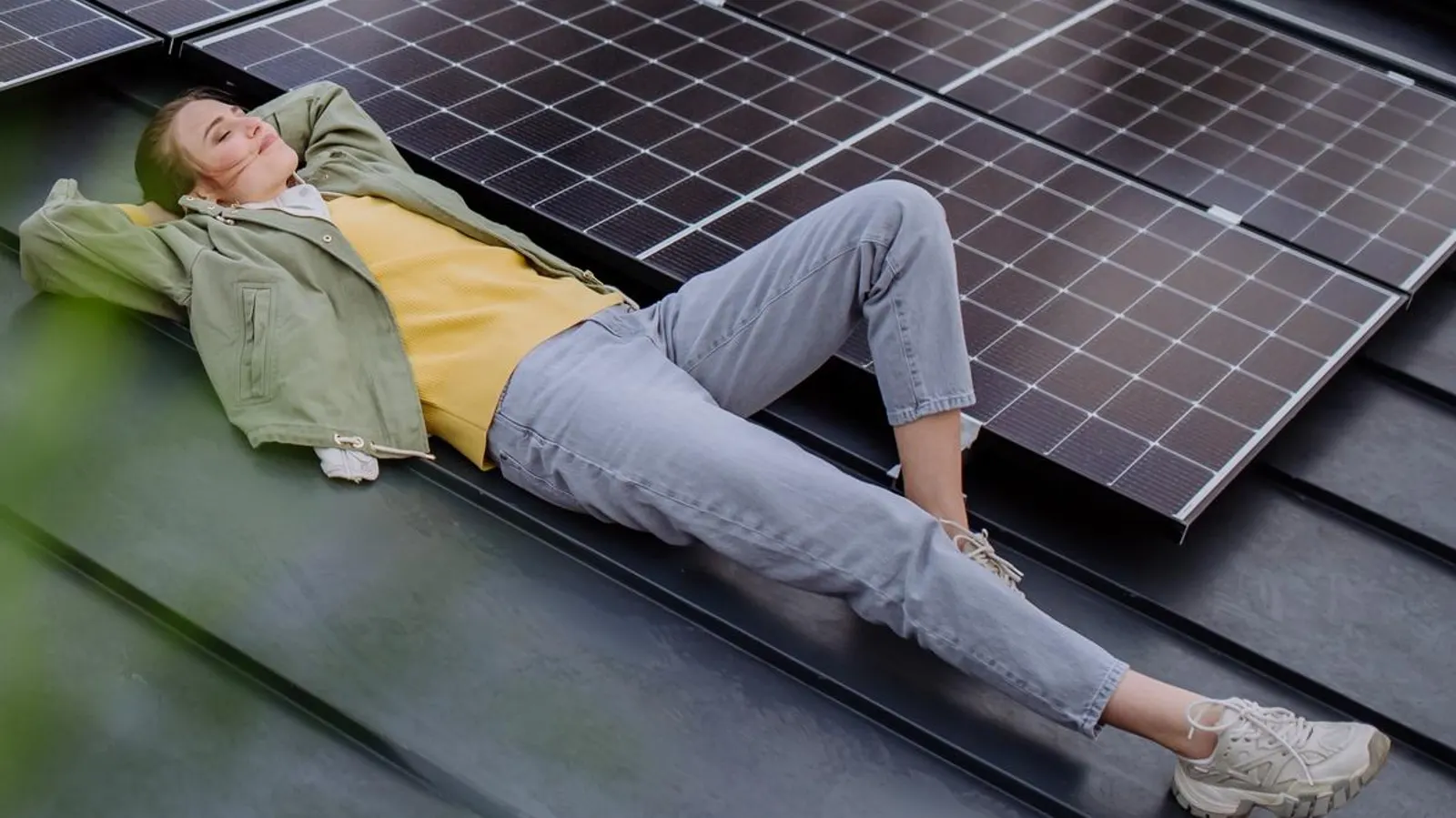

Happy woman resting on the rooftop with solar panels, enjoying a sustainable lifestyle.
getty
Solar energy systems now provide the least expensive electricity in history. Period. Solar energy costs are so low, you can save real money on a rooftop system if you live in a sunny part of the country – but even everyone in not-so-sunny Michigan would save money with solar rather than buying it from their electric utility. Solar is so cheap you can use solar to subsidize heat pumps and warm (and cool) your home for less money than natural gas in many areas. Solar is such a good deal that when the full value of solar is added up – grid-tied solar owners are actually subsidizing their non-solar neighbors. With electricity prices rising faster than inflation (or even 2X as fast now), you can think of solar as a giant hedge against inflation. Bottom line: If you have any kind of savings you should invest in solar. Unfortunately, not everyone has easy access to capital to buy solar especially for their whole roof– where you are essentially buying all of your electricity for 25 years. Thus, even when solar is a good deal the majority of Americans and especially the working class find that it is out of reach. For many people, it is still difficult to invest in solar. Renters, apartment dwellers, those with unsuitable roofs (e.g., shaded), or no upfront cash are cut out of the rooftop solar market. The average American moves more than 11 times over their lifetime, and more than a third of Americans rent housing, which makes a 25-year investment in a rooftop solar system challenging. How can these people take part in the solar energy revolution and all the money savings that come with it? Enter “plug-in solar” to save the day.
Plug-in Solar
Plug-in solar panels (also known as plug-and-play solar) connect directly to a standard home outlet, allowing solar energy to flow into your home’s electrical circuit and reduce the electricity you draw from the grid. Plug-in solar systems are affordable (you buy one solar panel at a time for a few hundred dollars) and portable solar electric systems that directly tie into the electrical grid. They can be installed on a porch or backyard by an average person with no training, and they can be transported from home to home in case you move or rent. While plug-and-play solar does not normally cover a household’s entire energy needs the way many rooftop solar systems do, plug-and-play solar does cut down on the grid electricity used. The number of panels needed depends on the person and home – a single person living in a small place might need four, while a family in a big house might need 40 to cover all their needs. Countries like the United Kingdom, the Netherlands, and Switzerland already encourage plug-and-play solar. In Europe they are often balcony solar systems. Consumers can buy modules and install them in small quantities, providing up to 1 kW of power per circuit.
These plug-and-play systems are prohibited in some states in the U.S. because of outdated federal, state, and regional regulations. These encompass, for example, arbitrary fees or paperwork that make it harder for people to get permission to install these solar systems, and help utilities retain their monopoly on energy generation. Some utilities interpret the regulations to not allow distributed generation at all. Many of these regulations were put in place long before modern inverters (which allow solar electricity to safely feed back to the grid) existed, and so local utilities are largely responsible for interpreting them, despite the inherent conflict of interest to maintain their monopolies.
This leads to an intricate web of confusing rules. Even if it is legal for you to install a plug-in solar system, your neighbor across the street who is serviced by a different utility may not be able to, while your parents living in a different city may be able to only after paying hundreds of dollars in arbitrary fees. It all depends on the utility, and customers currently have to check which rules apply to them. This patchwork of regulations and interpretations limits the solar industries’ rate of growth. These systems are safe according to an exhaustive technical/safety analysis of the relevant regulations of plug-and-play solar in the U.S. and found no valid technical concerns for this patchwork of rules. More recently UL has taken a swipe at this to make it safe and easy for all Americans.
Plug-in solar balcony.
dpa/picture alliance via Getty Images
Plug-In Solar Can Save Americans Billions
These efforts have been paying off. Plug-in solar is now legal in some U.S. areas and they are available for sale on online retailers from solar companies and even Amazon. The average customer can expect to noticeably shave down their electric bill – what the electric utilities call load shedding. If plug-in solar catches on a study estimated the potential savings for consumers could save American consumers approximately $13 billion a year in utility costs.