
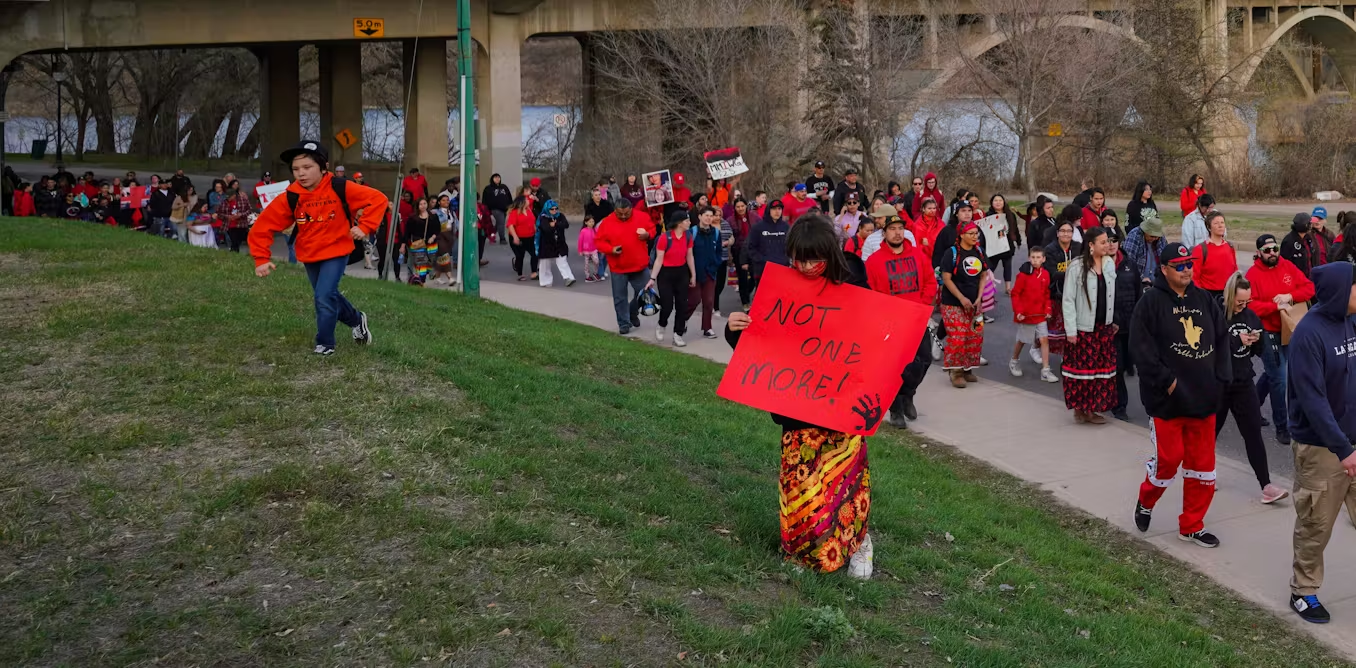
In the vast expanse of Canada’s diverse landscapes, a critical issue persists, impacting the lives of Indigenous Peoples: the lack of safe and accessible transportation.
This challenge is not merely about mobility. Intertwined with this narrative is alarming rates of missing and murdered Indigenous women, girls and two-spirit, lesbian, gay, bisexual, transgender, queer, questioning, intersex, asexual and all other sexual orientations and genders (MMIWG2SLGBTQQIA+ or MMMIWG2S+).
The Reclaiming Power and Place (RPP) report released in 2019 by the National Inquiry into Missing and Murdered Indigenous Women and Girls shone a spotlight onto the pervasive violence and vulnerabilities disproportionately affecting Indigenous women, girls and two-spirit individuals. Among its 231 Calls for Justice was the call to immediately tackle limited mobility in rural and remote areas.
A new report, Improving the Intercommunity Mobility of First Nation Peoples in Canada, responds to this call.
I authored this report with my collaborators, Alexandra Nychuk, André Moreau, Dale Arcand-Morin and Deanna Starr. We are research fellows and part of an all-Indigenous task force with Action Canada, an independent, non-partisan and non-profit organization and charity.
Alongside the Public Policy Forum, Action Canada delivers a 10-month leadership program that aims to enhance emerging leaders’ understanding of the country and public policy choices for the future. Our group is tackling the problem of MMMIWG2S+ and mobility because we see this as a pervasive issue — and we think the potential exists to influence real change.
Read more:
Canada needs a national public transportation system — here’s why

THE CANADIAN PRESS/Sean Kilpatrick
Profound impacts
A lack of mobility and transportation has a profound impact on the safety of Indigenous women and girls.
Transportation, or a lack of it, is a symbol of historical injustices. It is a continuation of the colonial legacy that sought to expropriate Indigenous Peoples from land partly by constraining their abilities to move freely.
In the case of First Nations communities, this is a structural issue. It’s deeply rooted in policies that threaten First Nations’ inherent rights. The lack of transportation has far-reaching consequences, affecting access to essential services, economic opportunities, social-cultural ties and educational pursuits.
Termination of Greyhound service
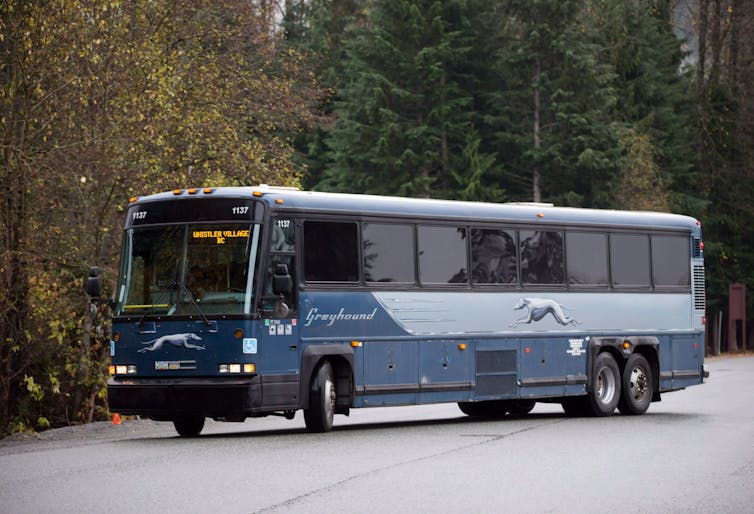
The termination of Greyhound Canada that served communities for nearly a century was a turning point.
When the company closed, it cited financial losses and declining ridership. The closure left many rural and remote areas without a convenient and affordable transportation option.
Read more:
Canada needs a national public transportation system — here’s why
It also affected vulnerable and marginalized communities, notably Indigenous populations, exacerbating social and economic disparities.
One might wonder: Why is the absence of transportation a social justice issue? The answer lies in recognizing transportation as a fundamental right. When people are denied transportation and mobility, they are denied access to health care, education, employment opportunities and the basic ability to move safely from point A to point B.
THE CANADIAN PRESS/Darryl Dyck
The impact is particularly severe for Indigenous communities. Historical policies like the Pass System restricted mobility and hindered Indigenous Peoples’ economic participation, leaving lasting scars on the social fabric.
Heightened vulnerability
The absence of reliable and accessible transportation options exacerbates challenges related to MMMIWG2S+.
The vulnerability of Indigenous women and girls is heightened, rendering them more susceptible to exploitation and violence. Limited mobility options impedes their ability to access support services, escape dangerous situations or seek refuge in times of crisis.
The lack of transportation further complicates the timely response of authorities and the conduct of thorough investigations, perpetuating a climate of impunity.
Mobility justice, Indigenous agency
The RPP report emphasizes the importance of “mobility justice,” a concept rooted in the belief that governments have a responsibility to provide adequate transportation so that all communities can access a safe, reliable and equitable transportation system. Governments have a responsibility to provide adequate transportation.
An innovative example comes from Powell River, B.C., where the Zunga Bus, an app-based, on-demand transportation service, offers door-to-door service based on rider requests.
While this service was recently threatened with being discontinued, it has sought to address safety concerns associated with inadequate transportation.
Indigenous-run services
Importantly, the paradigm shift towards mobility justice calls for recognizing Indigenous agency and sovereignty. It also calls for countering paternalistic approaches imposed on Indigenous communities.
In Manitoba, the Keewatin Railway Company (KRC), owned by three partner Nations (Mathias Colomb Cree Nation, Tataskweyak Cree Nation and the War Lake First Nation), stands as a beacon of hope. Following the closure of a mine, the Nations collaborated to improve mobility in their communities. With support from the Government of Canada, KRC established a sustainable transportation line, creating jobs and boosting the local economy.
As different levels of government discuss rail and other modes of transport, the success story of the Keewatin Railway Company underscores the importance of community-led and self-determined solutions. Such solutions align with the principles of the Truth and Reconciliation Commission of Canada’s report and the United Nations Declaration on the Rights of Indigenous Peoples.
Recommendations
To truly address this multifaceted issue, we propose recommendations that emphasize holistic action and recognize the lack of transportation as rooted in colonization.
These include:
-
aligning with the UN’s definition of sustainable transport, significantly investing in safe and affordable inter-community mobility, establishing measurable outcomes and conducting annual reviews to ensure progress.
-
addressing inadequate infrastructure. We propose targeted federal funding initiatives tailored for First Nation communities. This includes establishing a grant funding call to create, sustain and monitor public transit. Calls should be considered using a gender-based analysis “plus” approach (meaning considering intersectional factors such as disability, education, ethnicity, economic status, geography, language, race, religion and sexual orientation).
-
enhancing transportation data through a gender-based analysis plus approach, and conducting research led by community advocates. These are vital steps toward informed decision-making and appropriate funding allocations. Ikwe Safe Rides in Winnipeg is a community initiative, led by women volunteers, which provides Indigenous women and children with transportation by donation. But we must also question as a society whether safe mobility should be the responsibility of volunteers — or a public service with governmental responsibility.
Road to justice
The road to justice for First Nation communities in Canada requires a paradigm shift in how we perceive transportation. It is not just about moving people from one place to another; it is about restoring agency, dignity and safety.
By embracing community-led solutions rooted in principles of reconciliation and self-determination, we can build a road that leads to a more equitable and inclusive future for all Canadians.
It is time to break down barriers, build bridges and ensure that no one is left behind on the journey to justice.