
SHOPPERS are still feeling the squeeze as food and drink prices keep climbing, despite overall inflation holding steady.
New Office for National Statistics (ONS) figures reveal the price of food and non-alcoholic drinks are up 4.5% compared to last year – even though the UK’s overall inflation rate stayed at 3.8% in September.
That’s a slight improvement from last month’s food inflation rate of 5.1%, but a positive figure still means prices are climbing.
It means a basket of groceries that cost £100 a year ago now costs £104.50, leaving households feeling the strain at the checkout as everyday essentials become more expensive.
But not all supermarket staples are affected equally.
Some supermarket essentials are now up to 26% pricier than they were a year ago, while a handful of items have actually dropped in price.


So, which items are hitting your wallet the hardest, and what can you expect next?
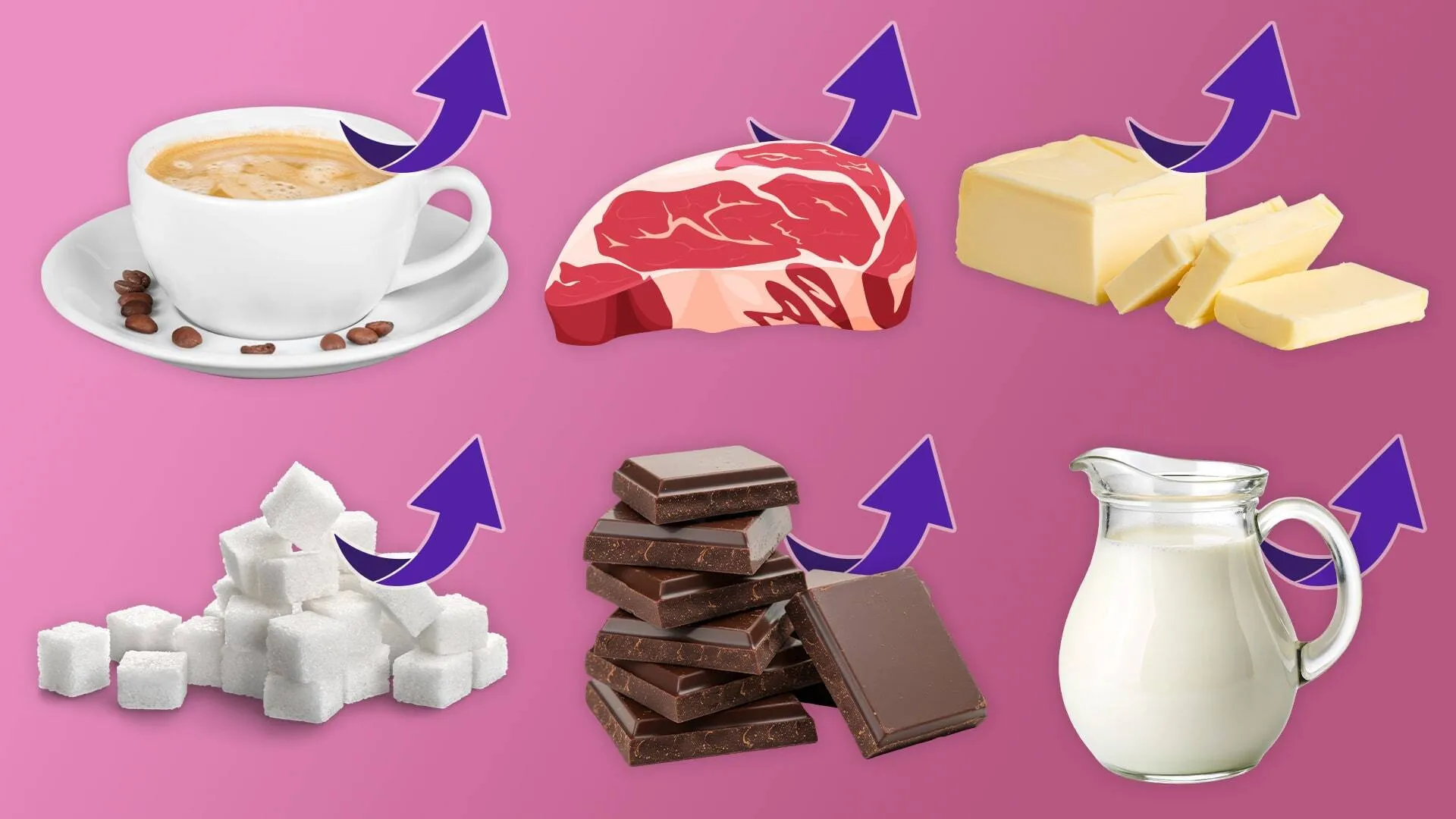
The most dramatic increase is on beef and veal, which has surged by a whopping 26.9%, while chocolate has also seen its cost climb by 18.1%.
Dairy staples have become much more expensive, as the price of butter has jumped by 17.5% and whole milk is up 12%.
Even popular drinks and treats haven’t escaped the squeeze, with coffee prices up 13.4% and sweets rising by 10.8% over the past year.
Lamb, ready meals, bakery products and soft drinks have also seen increases of at least 6% compared to last year.
You can find out how much your basket essentials have risen or fallen in price using our table below.
However, it is not all bad news, as some essential grocery items have become cheaper over the last twelve months.
The price of olive oil has fallen considerably by 15.4%.
Other pantry staples like flour, pasta, and rice have also seen modest price reductions, decreasing by 6.2%, 2.6%, and 1.5% respectively.
Industry bodies like the British Retail Consortium say rising prices are down to higher wages, increased national insurance contributions, and new packaging taxes, which have all added to the costs for retailers and suppliers.
The Food and Drink Federation also said food manufacturers were coming under pressure from greater business costs.
Will food prices continue to rise?
Economists think both CPI and food inflation will continue to remain at similar levels in the coming months.
Martin Sartorius, principal economist at the CBI, said: “Inflation came in lower than expected in September, bringing some relief to hard-pressed households, though it remains well above the Bank of England‘s 2% target.
“Price pressures should begin to slowly ease in the coming months, but we are unlikely to see a more substantial downshift in inflation until the first half of next year.
“Today’s downside surprise raises the possibility that a rate cut by the Bank of England‘s Monetary Policy Committee could be back on the table in November.”
How to save money on your food shop

Chief Consumer Reporter James Flanders reveals how you can save hundreds of pounds a year:
Odd boxes – plenty of retailers offer slightly misshapen fruit and veg or surplus food at a discounted price.
Lidl sells five kilos of fruit and veg for just £1.50 through its Waste Not scheme while Aldi shoppers can get Too Good to Go bags which contain £10 worth of all kinds of products for £3.30.
Sainsbury’s also sells £2 “Taste Me, Don’t Waste Me” fruit and veg boxes to help shoppers reduced food waste and save cash.
Food waste apps – food waste apps work by helping shops, cafes, restaurants and other businesses shift stock that is due to go out of date and passing it on to members of the public.
Some of the most notable ones include Too Good to Go and Olio.
Too Good to Go’s app is free to sign up to and is used by millions of people across the UK, letting users buy food at a discount.
Olio works similarly, except users can collect both food and other household items for free from neighbours and businesses.
Yellow sticker bargains – yellow sticker bargains, sometimes orange and red in certain supermarkets, are a great way of getting food on the cheap.
But what time to head out to get the best deals varies depending on the retailer. You can see the best times for each supermarket here.
Super cheap bargains – sign up to bargain hunter Facebook groups like Extreme Couponing and Bargains UK where shoppers regularly post hauls they’ve found on the cheap, including food finds.
“Downshift” – you will almost always save money going for a supermarket’s own-brand economy lines rather than premium brands.
The move to lower-tier ranges, also known as “downshifting” and hailed by consumer expert Martin Lewis, could save you hundreds of pounds a year on your food shop.
What’s the cheapest supermarket for groceries?
According to the latest analysis by consumer experts Which?, Aldi was crowned the cheapest supermarket in September.
A typical basket of 71 items at Aldi cost £122.77, just beating Lidl at £123.95.
The basket included a mix of branded and own-label products like Birds Eye peas, Hovis bread, milk and butter.
Tesco was the third cheapest for shoppers with a Clubcard, coming in at £135.64, while those without a Clubcard paid £138.66 for the same items.


Asda followed closely at £136.98.
At the other end of the scale, Waitrose was the most expensive for the same shop at £167.19, even pricier than online grocer Ocado, which charged £154.08.
How to compare prices to get the best deal
JUST because something is on offer, or is part of a sale, it doesn’t mean it’s always a good deal.
There are plenty of comparison websites out there that’ll check prices for you – so don’t be left paying more than you have to.
Most of them work by comparing the prices across hundreds of retailers.
Here are some that we recommend:
- Google Shopping is a tool that lets users search for and compare prices for products across the web. Simply type in keywords, or a product number, to bring up search results.
- Price Spy logs the history of how much something costs from over 3,000 different retailers, including Argos, Amazon, eBay and the supermarkets. Once you select an individual product you can quickly compare which stores have the best price and which have it in stock.
- Idealo is another website that lets you compare prices between retailers. All shoppers need to do is search for the item they need and the website will rank them from the cheapest to the most expensive one.
- CamelCamelCamel only works on goods being sold on Amazon. To use it, type in the URL of the product you want to check the price of.