
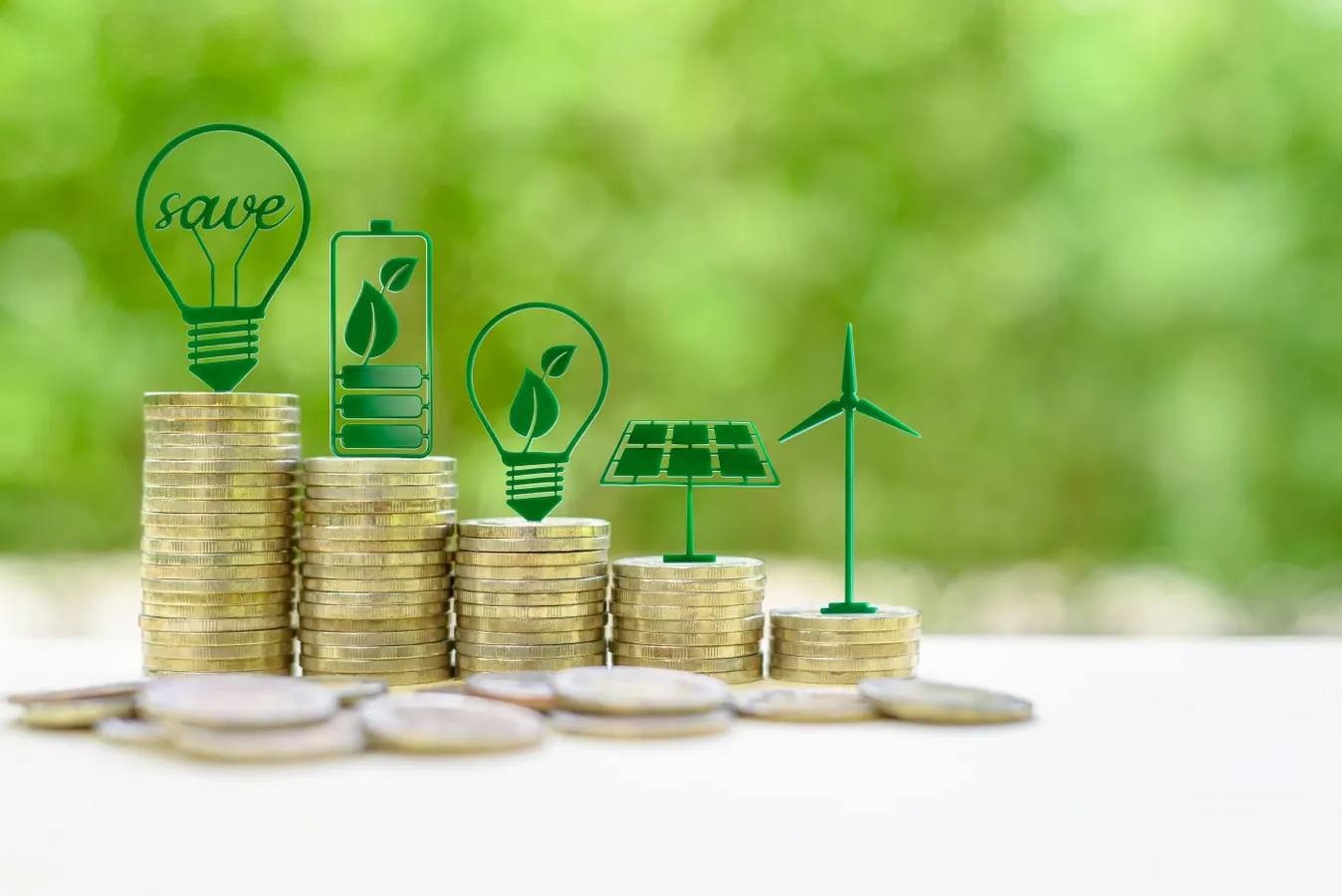

Alternative or renewable energy financing program, financial concept : Green eco-friendly or sustainable energy symbols atop five coin stacks e.g a light bulb, a rechargeable battery, solar cell panel
getty
The 2025 green investment boom was led by global interest in renewable energy and new technology. A Bloomberg NEF report estimates that more than $56 billion flowed into clean energy, battery storage, sustainable mobility, and related technologies by the end of the third quarter. This rise continues a steady upward trend, reflecting broad confidence among investors that the transition to a low-carbon economy is not only possible but also profitable.
The pattern is clear across multiple sectors. Electric vehicles and charging infrastructure continue to expand. Smart building technologies, once considered optional, are now common in new commercial developments. Energy storage has emerged as one of the fastest-growing categories as grids adapt to higher shares of renewable power. Logistics firms are investing in cleaner fleets. Startups working on decarbonized industrial processes have drawn interest from private equity and sovereign wealth funds. The momentum suggests a structural shift rather than a temporary response to market cycles.
What Investors And Companies Want From Policymakers
Several factors explain this growth. First, severe weather has raised awareness of physical climate risk and made resilience a priority for firms and financiers. In the U.S. alone, there were 14 “billion-dollar” disasters in the first half of 2025. Second, corporate purchasers are demanding cleaner supply chains and lower emissions from their vendors. Third, investors are aligning their portfolios with long-term climate goals, partly because they see traditional fossil-fuel investments as increasingly exposed to policy and market volatility. Finally, technological breakthroughs are arriving at a pace that makes large-scale deployment feasible. Falling costs for solar and wind, improvements in battery chemistry, and more efficient building methods have lowered barriers to adoption.
PALM SPRINGS, CALIFORNIA – MARCH 06: Wind turbines operate at a wind farm near solar panels on March 06, 2024 near Palm Springs, California. (Photo by Mario Tama/Getty Images)
Getty Images
The rise in investment does not mean that every company or technology category is advancing at the same speed. Some sectors continue to face constraints. Permitting delays affect renewable energy developers in many regions. Transmission upgrades remain expensive. Some emerging technologies, especially those related to carbon removal, still face high upfront costs and uncertain revenue pathways. Yet the overall picture remains one of expansion and diversification.
Companies with strong ESG performance continue to draw capital for reasons that extend beyond reputation. Lenders and institutional investors increasingly look for evidence that a firm can manage climate risks. Firms that demonstrate alignment with international climate goals often secure better financing terms and enjoy more predictable investor relations. These benefits create incentives for companies to integrate climate considerations into governance, supply chain strategies, and operations.
Industries That Have Investors Betting Big
This trend is visible in analysis from The Greenshot, Spritegenix, and the World Economic Forum. They point out that climate-aligned firms often move faster when it comes to innovation, adopt digital tools that improve efficiency, and build markets for products that consumers now expect. That includes anything from energy-efficient appliances to low-emission transportation options. These firms also benefit from new pools of capital dedicated to climate solutions, including blended finance, climate transition funds, and public–private partnerships.
The geopolitical context also influences investment patterns. COP30 in Belém brought renewed attention to natural climate solutions and forest protection, both of which attract investors seeking diversified climate portfolios. Some financiers see value in strategies that combine technology with conservation, such as investments in land restoration linked to carbon markets, or partnerships with Indigenous communities to advance sustainable land-use practices. These models are still in their early stages but offer potential for long-term impact.
Climate Risk Is Now a Core Financial Metric
Another factor shaping the green investment landscape is the need for more resilient infrastructure. This year’s hurricanes, wildfires, and floods have made physical vulnerability harder to ignore. Losses have increased the demand for technologies that can reinforce grids, protect assets, and support community-level resilience. Investors are exploring microgrids, advanced sensors, building retrofits, and distributed energy systems. These tools reduce exposure to outages and reduce long-term operating costs.
The economic case for green investment is also gaining strength. As costs fall and adoption rises, economies of scale have made many technologies more competitive than conventional alternatives. Electric vehicles have become mainstream in several regions. Battery storage is transitioning from a niche technology to a core component of modern energy systems. Renewable energy continues to outcompete fossil sources in many markets. This is event true in the politically fraught U.S. market. According to Deloitte, “renewables dominated US capacity growth, accounting for 93% of additions (30.2 gigawatts) through September 2025, with solar and storage making up 83%.” and several U.S. states are set to implement their own renewable energy standards.These dynamics show that climate solutions do not sit apart from economic performance. They influence it.
Investors also note that climate-aligned companies often maintain stronger global supply chains. Renewable energy systems rely on distributed production networks, which reduce the risk of concentrated supply-chain disruptions. Sustainable mobility and green logistics companies use digital tools that provide better insight into operations, routing, and materials. These capabilities become assets during periods of market instability.
As 2025 closes, several questions remain. Investors want clarity on global climate policy, especially regarding carbon markets and cross-border emissions rules. Developers want faster permitting and more predictable timelines for new energy infrastructure. Communities want a fair share of the economic benefits associated with clean technology projects. Policymakers want financing models that can support long-term decarbonization.
But the direction of travel is evident. More capital is flowing toward technologies that reduce emissions, strengthen infrastructure, and support sustainable growth. This trend now shapes how firms plan, how investors evaluate risk, and how communities prepare for the next decade. If the momentum continues, the pace of deployment may accelerate. That acceleration will determine how quickly the private sector can help close the gap between today’s emissions trajectory and what science requires. Green investment is no longer a speculative bet. It is a central factor in shaping the future economy.