
The stock market setback in 2022 was especially painful for investors in investment companies because many trusts also saw a sharp widening in their discount to net asset value (NAV). Starting from an average in the low single digits, discounts had reached mid double-digits by the end of the year, then grew further to nearly 19% by late 2023. Markets have recovered strongly since then and continue to rise. Yet discounts have only narrowed to 14% on average, and remain much wider in other sub-sectors.
This has had serious consequences for the sector. The wealth managers and private investors who sold during the fall in 2022 or in the subsequent recovery have barely returned. Share issuance has dried up almost completely, both for existing trusts and new ones. Trusts have been wound up or merged. Activist investors have moved in, claiming – with justification, in some cases – that underlying returns had been poor.
Some trusts had lost their way. Others were in an out-of-favour sector, such as infrastructure, private equity or healthcare. Still more have struggled to keep up with markets – when small- and mid-cap stocks outperform, they are often a tailwind for many generalist funds that have higher exposure to smaller stocks than the index does, but the recent dominance of a narrow range of US mega-caps has reversed this effect. Finally, UK investors have continued to sell UK shares – both investment companies and trading companies – even as the market has risen.
Sign up to Money Morning
Don’t miss the latest investment and personal finances news, market analysis, plus money-saving tips with our free twice-daily newsletter
Don’t miss the latest investment and personal finances news, market analysis, plus money-saving tips with our free twice-daily newsletter
The optimism of a few years earlier has given way to talk of an “existential crisis”. Investors are put off by the compounding effect of widening discounts, poor liquidity and weak performance. Valuations of unquoted assets and property are treated with deep suspicion. Trust directors are accused of being asleep at the wheel, with aggressive buybacks failing to reduce discounts. Yet amid the deep pessimism, it’s worth noting that old hands have heard it all before.
A crisis period for investment trusts
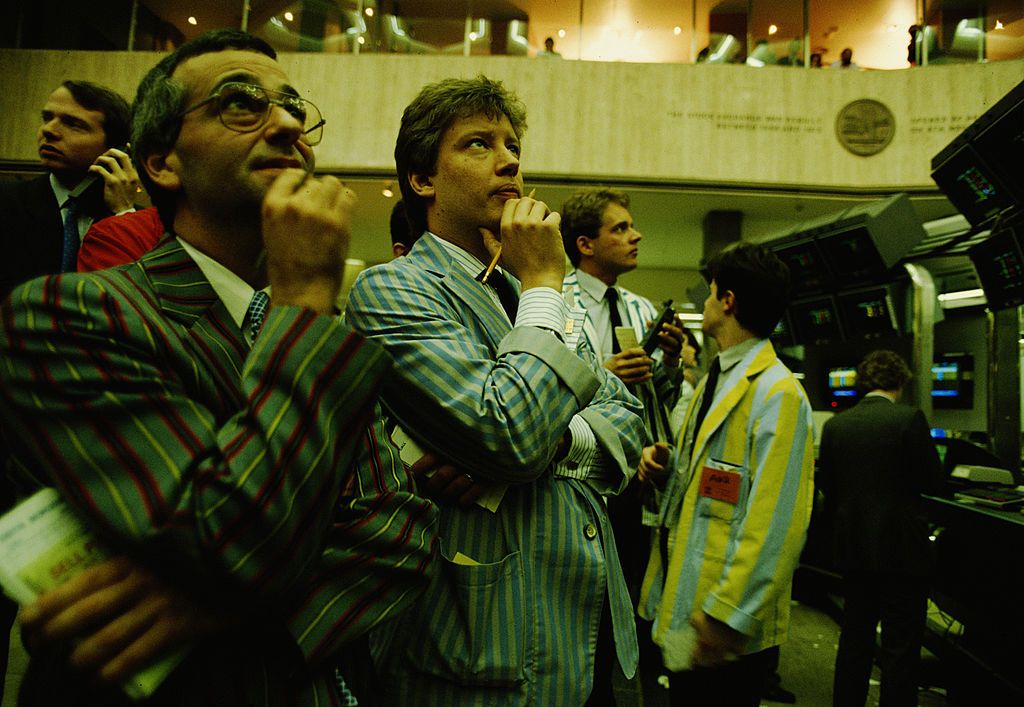
Fifty years ago, the sector was in deep crisis. January 1975 marked the depths of the two-year bear market that saw UK shares fall 70% in nominal terms and 80% in real terms. Trust discounts peaked at more than 40%. They narrowed as the market rebounded, but remained at around 25% for the next 10 years. After Foreign & Colonial (now F&C), the first investment trust, launched in 1868, private investors remained the backbone of the sector until the mid 1960s. There were regular new launches and the sector generally traded at a premium to NAV. However, they then started to abandon the market as a result of inflation, bear markets, poor relative performance as discounts rose, and a growing preference for life-insurance products with favourable tax treatment and unit trusts that traded at NAV.
Investment trusts had huge disadvantages for the private investor. There were no individual savings accounts (ISAs) or self-invested personal pensions (SIPPs) to protect them from income and capital gains tax, at higher rates than now. Stamp duty was 2%. Private investors had to pay commission to a stockbroker of 1.65%, both for buying and selling, unless they were dealing in large sizes. The bid-offer spread was only available when the broker walked onto the floor of the stock exchange and asked a “jobber” (market maker) for a bid and offer.
A trust could borrow to invest, but interest rates were prohibitively high. Share buybacks were illegal under section 54 of the 1948 Companies Act, as was paying dividends from capital. Accumulated revenue reserves could be distributed, but otherwise dividends were limited to earnings, with all costs, including interest and all management fees, expensed. Boards were self-selecting oligarchies, often in cahoots with the managers and serving indefinite terms. Communication with investors was limited to the annual and interim reports and accounts. There were no fact sheets, and brokers’ research was limited to professional investors. Opportunities to meet, see or hear the managers were almost non-existent.
Thanks to exchange controls, investment was heavily weighted to Britain: UK equity exposure was nearly 50% in 1975 and rose to above 60% in 1980 as markets, especially in the UK, recovered. Exchange controls were abolished in 1979 leading trusts to invest more overseas, but this was a time when the UK was outperforming overseas markets, so this diversification was not adding value.
The turning point for investment trusts
Yet by 1981, there were signs of recovery. “The tide for investment trusts has turned and the climate has changed dramatically for the better,” wrote Robin Angus of Wood Mackenzie. “Most world markets have made considerable progress; greater specialisation within the sector has been on offer and capital gains tax reform has increased the appeal of trusts to professional funds. Average discounts remain nearly 30% but prices have yet to reflect the success of international diversification.”
During the previous year there had been six takeovers, eight conversions into unit trusts and six other trust removals. Against that, there were 10 new issues, five rights issues and 13 changes of investment policy. The move to specialisation, mostly via new issues, resulted in four oil and energy trusts, three investing in Japan, three in technology and biotechnology and three in UK smaller companies.
As private investment declined, pension funds and insurance companies bought into the sector and became the dominant holders, seeing it as a cheap way into the equity market. Yet a new threat had appeared.
Corporate financiers had invented the trick of getting their clients to bid for investment trusts at a discount as a disguised rights issue. This led to Robert Maxwell taking over the Bishopsgate Investment Trust and to the British Coal Pension Fund launching a successful hostile bid for the £1.1 billion Globe Investment Trust, the largest in the sector. Such bids and liquidations were “killing the goose which lays the golden egg”, said Angus. “A once-and-for-all gain may be desirable and substantial but it can never be repeated.”
As to discounts, there would be “a fairer ground for criticism if discounts were something new”, he wrote. “They provide endless opportunities for the shrewd investor to make money by switching in and out. At best, one can gear up one’s gains if one has the good fortune to spot a winner at an early stage.” The problem was one of performance, not over-supply. “An unattractive trust will sell at a bigger discount no matter how drastically the number of shares is reduced overall, while an attractive trust will sell at a small discount or even a premium.”
A better future for investment trusts
Angus passed away in 2022, but were he still with us, he would surely see many similarities between then and now. He would recognise – but have little time for – the “death list mentality with regard to the future of the industry”. He would observe that strongly performing trusts were mostly trading at a small discount or at a premium, and point out that apparent poor performance had been exacerbated by trusts trading at NAV four years ago. He would surely note how much trust governance has improved, applaud share buybacks and approve of the current dividend flexibility. And he would probably regard the last few years as a period of creative destruction for the sector and note, again, how the tide had turned.
Investment trusts face a better future. Liquidations, mergers and buybacks will give way to net issuance as discounts decline and premiums become more common. Still, net issuance has a historic tendency to be focused in the wrong areas; split-capital trusts, insurance-underwriting trusts, hedge fund-like trusts and renewable-energy trusts. Investors will need to beware of such crazes, which usually end in tears.
“The lesson of the last few years for trusts is that you have to get on the front foot and tell your story,” says Edward Warner, chair of HarbourVest Global Private Equity. This is true. At the same time, the lesson for investors, as in 1981, is not to wait for a better investment opportunity. It may never come.
This article was first published in MoneyWeek’s magazine. Enjoy exclusive early access to news, opinion and analysis from our team of financial experts with a MoneyWeek subscription.