
Last week, U.S. President Donald Trump’s Venezuela pitch to oil executives to invest the vast sums required to revive the country’s flagging oil sector proved largely ineffectual. Exxon Mobil (NYSE:XOM) CEO Darren Woods offered the starkest assessment, calling the South American country “uninvestable” under its current commercial frameworks and hydrocarbon laws, while ConocoPhillips (NYSE:COP) CEO Ryan Lance also gave Trump a reality check, informing him his company lost billions of dollars when it exited the country under the Chavez regime.
The serious descent of Venezuela’s energy sector into the abyss began after Hugo Chávez’s government nationalized the oil infrastructure and assets of ExxonMobil (NYSE:XOM) and ConocoPhillips (NYSE:COP) in 2007, after the companies refused to accept new terms that would give the Venezuelan state oil company, PDVSA, a majority share in their projects. The nationalization process was initiated in early 2007 through a presidential decree and a new Hydrocarbons Law.
Trump, however, scored some notable wins. To wit, Hilcorp‘s Jeff Hildebrand said his company is ready to go rebuild Venezuela’s energy infrastructure, while Chevron (NYSE:CVX) said it can ramp up its Venezuela production of 240K bbl/day “100% essentially effective immediately”.

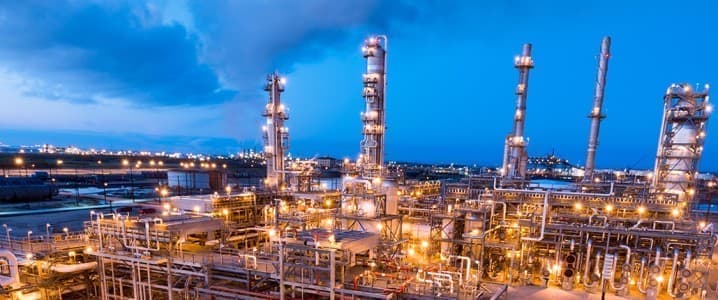
Previously, we reported that it will take billions in infrastructure investments to return Venezuela’s oil sector to its 1970s peak production of 3.5 million barrels per day. Venezuela currently produces ~1 million barrels per day, with Chevron accounting for a quarter of that. U.S. refiners love Venezuelan crude because it provides a competitive advantage for complex refiners with substantial coking capacity that can process the heavy oil into high-value products. Merey crude from Venezuela’s Orinoco belt has among the lowest in API gravity and highest sulfur content globally, requiring specialized refinery units to break down the heaviest molecules and remove impurities.
Unfortunately, less than half of U.S. refineries have a coker, with refiners along the Gulf and East Coasts most likely to benefit from higher Venezuelan crude supplies. U.S. refiners with the highest coking capacity include Valero (NYSE:VLO), Exxon, Chevron, Marathon Petroleum (NYSE:MPC), Phillips 66 (NYSE:PSX) and PBF Energy (NYSE:PBF).
Coking and hydrocracking are petroleum refining processes that upgrade heavy crude oil fractions into lighter, more valuable products like gasoline, diesel, and jet fuel, but they use different methods: Coking is a thermal, carbon-rejection process, essentially baking heavy oil to leave solid petroleum coke and lighter liquids. Hydrocracking uses high-pressure hydrogen and a catalyst to chemically add hydrogen, breaking large molecules into smaller ones, producing cleaner fuels with fewer solid byproducts. Highly complex refiners can achieve distillate yields of 33% compared to 30% for medium-complexity plants. Shortages of heavy oils like Venezuelan crude have forced many U.S. refineries to invest in topping units to refine lighter oils such as U.S. shale oil.

Source: Bloomberg
Increased availability of Venezuelan crude is, however, likely to take a toll on demand for Canadian crude, Mexican Maya, and Middle Eastern grades. The U.S. still buys 80% of Canada’s crude output, despite the recent TMX expansion improving access to Asia. This helps to keep WCS (Western Canadian Select) prices tied to U.S. refinery demand and alternative heavy grades. On the other hand, more Venezuelan flows are likely to benefit Mid-continent and West Coast refiners, including British Petroleum (NYSE:BP) and HF Sinclair (NYSE:DINO), thanks to greater WCS discounts if Gulf Coast demand is displaced.
That said, Venezuela’s low-hanging fruit is rather limited: According to Norwegian energy consultancy Rystad Energy, only 300-350 kbpd can be quickly restored with minimal spending from the current clip of 800,000 bpd-1 million bpd, with production beyond 1.4 mbpd requiring heavy, sustained investment.
Rystad estimates that Venezuela will require $53 billion over the next 15 years just to keep production flat at 1.1 mbpd, but could need up to $183 billion over the same period to ramp up production to over 3 million bpd, roughly equivalent to the entire North American land capex for one year.
Analysts at satellite intelligence company Kayrros have described Venezuela’s energy infrastructure as being in a “catastrophic state” following decades of under-investment, disrepair, and cannibalization of equipment.
According to Kayrros, numerous oil storage tanks at the Bajo Grande and Puerto Miranda terminals are out of order due to corrosion and a lack of maintenance. But this is an industrywide problem: Kayrros estimates that roughly a third of Venezuela’s storage capacity is currently inactive, reflecting unusable storage tanks, reduced refinery operating rates, and declining oil production. Meanwhile, operations at the large interconnected Amuay and Cardón refineries are running below 20% of capacity, essentially turning them into “de facto storage centres” according to the experts.
Not surprisingly, Venezuela’s pipeline network is in a similar state of disrepair: A leaked document from PDVSA in 2021 revealed that the country’s oil pipelines had not been updated in 50 years, with Venezuela’s National Oil Company estimating it would take a staggering $58 billion to get them back in peak condition. Recent estimates have placed the figure in excess of $100 billion. Venezuela’s operational oil pipeline network has a total length of 2,139 miles (approximately 3,442 kilometers). For some perspective, the UAE, which produces approximately 3.2 million bpd, has ~9,000 km of oil pipeline.
By Alex Kimani for Oilprice.com
More Top Reads From Oilprice.com