
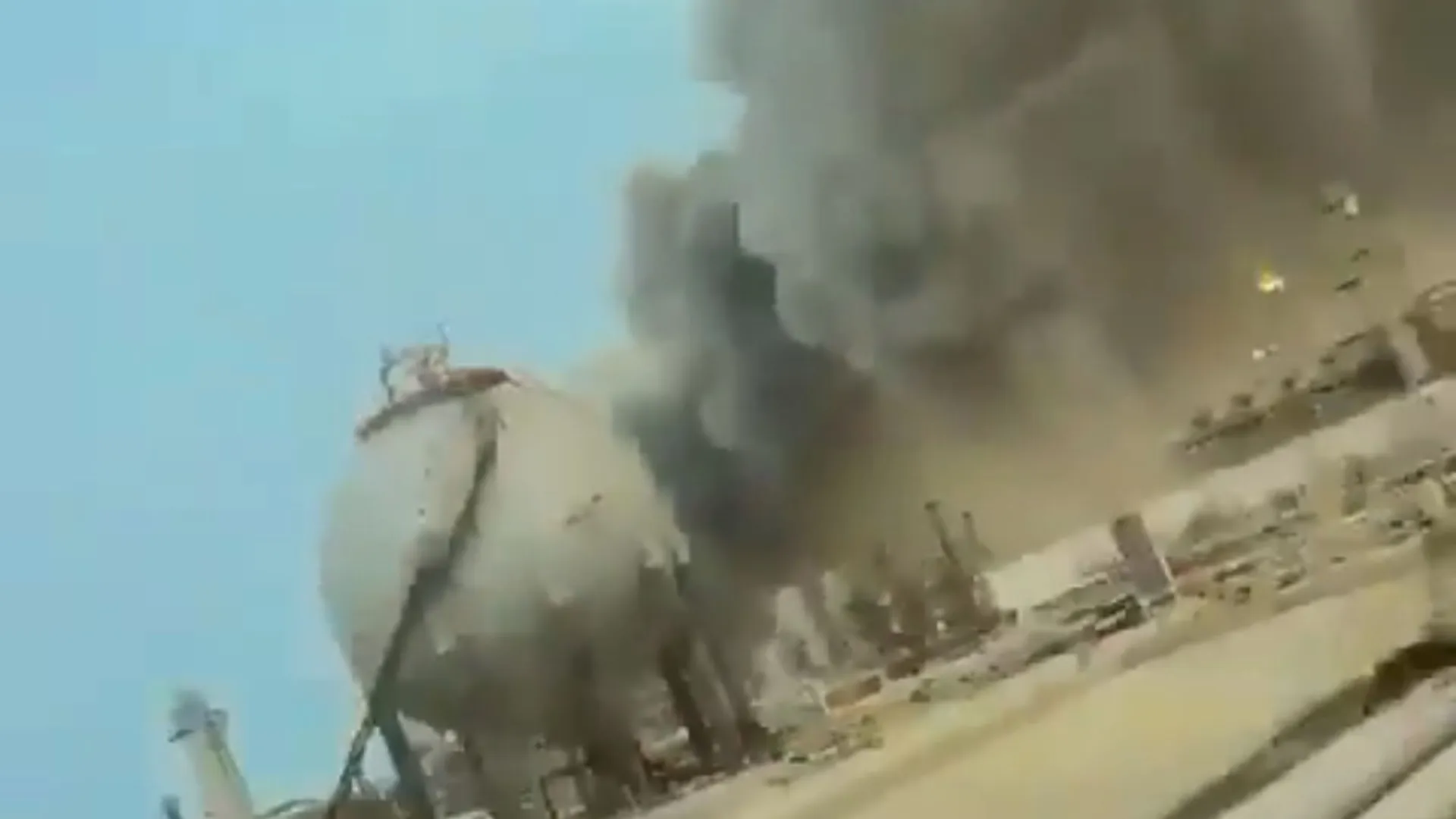
SAUDI Arabia’s biggest oil refinery has been blasted by an Iranian drone strike in a “significant escalation” in the Middle East.
Operations have been halted at the mammoth Ras Tanura refinery on the Persian Gulf coast after the blast earlier today.
Two missiles were intercepted and destroyed at the 550,000 barrel-per-day plant, according to the country’s defence ministry.
Torbjorn Soltvedt, Middle East analyst at risk intelligence firm Verisk Maplecroft, said Gulf energy infrastructure is now “squarely in Iran’s sights”.
“The attack is also likely to move Saudi Arabia and neighbouring Gulf states closer to joining US and Israeli military operations against Iran”, he said.
Further Iranian drone attacks in Qatar have caused gas prices across Europe to skyrocket as much as 45 per cent.


Two attacks – in Ras Laffan and Mesaieed – have led Qatar’s state-run energy firm to ceased its liquefied natural gas production.
Follow The Sun’s live blog for the latest updates on Iran
Shocking footage from Ras Tanura shows huge mushroom clouds of smoke rising above the facility.
A fire broke out at the plant, caused by debris from the two intercepted drones, the Saudi Press Agency said.
Most read in The Irish Sun
The blaze is now under control with “no civilian casualties”, it added.
Saudi Arabian state oil giant has not yet commented on the situation.
The strike on Ras Tanura threatens to rattle global energy markets, with traders already braced for supply shocks as fighting spreads across the region.
The refinery, which processes around 550,000 barrels of crude a day, is a linchpin of Saudi Arabia’s export network.
Oil and gas facilities have been forced into shutdown across the Middle East.
Any prolonged shutdown could squeeze supplies and send prices soaring worldwide.
It comes as the US-Israel war with Iran entered its third day, with Tehran rejecting an ultimatum from President Donald Trump to lay down its weapons.
Tehran has vowed revenge after the killing of its supreme leader, Ayatollah Ali Khamenei, and says it is unwilling to negotiate with Washington over its nuclear programme while under fire.
Iran has spread its strikes across the major Gulf States with explosions rocking Kuwait, Qatar and the UAE.
The widening conflict has raised fears of a direct confrontation between Iran and Gulf Arab states long wary of Tehran’s regional ambitions.
Saudi Arabia has previously accused Iran of targeting its energy infrastructure, including the 2019 attacks on Abqaiq and Khurais oil facilities that temporarily knocked out half of the kingdom’s oil output.
Iran denied responsibility at the time.
Analysts say the latest strike signals a shift from proxy warfare to more direct confrontation, dragging the world’s top oil exporters deeper into open conflict.
It comes as…
Lebanon has also been dragged into the war as Israel exchanges fire with Iran-backed terror proxy Hezbollah.
Israel continued pounding targets in Tehran and struck Lebanon’s capital Beirut after Hezbollah fired missiles across the border.
Lebanese officials said at least 31 people were killed in Israeli strikes on Sunday morning.
US forces have also intensified operations, with Trump warning strikes would continue at “full force” until all objectives are achieved.
He also admitted there will “likely be more” casualties after three US troops were killed in an Iranian attack.
Several US fighter jets were reported to have crashed near the American embassy in Kuwait amid heavy aerial activity, though crews survived.
Americans have been ordered to stay away from the US embassy in Kuwait after smoke was seen rising from the area near the building.
It said: “Shelter in place, review security plans in the event of an attack and to stay alert in case of additional future attacks”.
A British RAF base in Cyprus, RAF Akrotiri, was hit in a drone strike that damaged part of the runway.
No injuries were reported but families are being moved off the base.
Prime Minister Sir Keir Starmer confirmed the UK had accepted a US request to use additional British bases.
Iran said one of its key nuclear facilities at Natanz was struck in the latest wave of attacks, prompting the UN nuclear watchdog to warn of potentially “serious consequence”.
At least 555 Iranians have been killed since the start of hostilities, according to Iranian state media.
More to follow… For the latest news on this story keep checking back at The Sun Online
Thesun.co.uk is your go-to destination for the best celebrity news, real-life stories, jaw-dropping pictures and must-see video.
Like us on Facebook at www.facebook.com/thesun and follow us from our main Twitter account at @TheSun.