
Stay informed with free updates
Simply sign up to the Oil & Gas industry myFT Digest — delivered directly to your inbox.
Oil buyers are scrambling to replace supplies from the Gulf, causing price leaps for grades around the world from Norway to Kazakhstan and driving crude traded in Oman to a record of more than $150 a barrel.
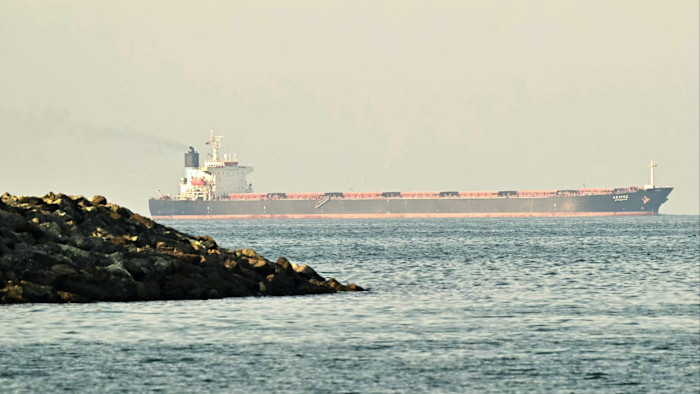
The closure of the Strait of Hormuz due to the war in the Middle East has severed about a fifth of the world’s oil production from global markets, boosting demand for grades of crude with similar characteristics to those produced in the Gulf.
The growing disruption to supplies has driven a number of regional price benchmarks to all-time highs, even as global marker Brent has fallen back to just above $100 a barrel after jumping to nearly $120 in the early stages of the Iran war.
“It’s sheer physical scarcity driving prices,” said David Fyfe, chief economist at Argus Media.
The price of a barrel of oil in Oman — which exports from ports outside the Strait of Hormuz — soared to nearly $154 on Tuesday, driven by intense competition for the small volumes still leaving the Middle East.
Meanwhile, demand for grades of oil with similar characteristics to those produced in the Gulf has surged as refiners seek substitutes for Middle Eastern barrels.
Prices for some oil grades produced in Norway, Algeria, Libya and Kazakhstan are at record highs relative to North Sea dated crude, according to data from Argus, which has been tracking some of those prices since the 1990s.

In the case of Algerian Sahara Blend, prices were probably driven by demand from the petrochemicals industry, which had been struck by shortages as vessels carrying their feedstock were also trapped in the Gulf, said Fyfe.
Buyers seeking alternatives to Gulf crude have also had to pay far more than usual to transport cargoes because of increased demand for tankers, longer routes and soaring shipping fuel prices.
Even when a comparable oil grade was available, some refineries might not want to use it because they were unsure how the switch would affect their output, said Philip Jones-Lux, senior analyst at Sparta Commodities. Older refineries in Japan, Thailand, Indonesia, Vietnam and some in Singapore might fall into this category, he said.

The cost of crude for Asian refineries had “roughly doubled” since before the war, Jones-Lux said.
As the war progresses, the difference between prices quoted on widely used oil benchmarks Brent and US WTI and prices paid for physical deliveries has become more stark.
Those benchmarks have not risen as much in part because they reflect prices for light crude with low sulphur levels, whereas the trapped oil in the Gulf is typically heavier and with more sulphur content.

“The Hormuz crisis mostly impacts medium-sour crude flows to Asia and there are very limited options to offset flows,” said Ivan Mathews, head of APAC analysis at energy data company Vortexa.
Brent and WTI futures also reflect prices for oil delivered in May, by which time some traders hope that flows through Hormuz will have at least partially resumed, whereas physical purchases need to arrive much sooner.
“Right now it feels like the paper and the physical market has dislocated,” said Ole Hansen, head of commodity strategy at Saxo Bank. “[This is] the biggest disruption since the 1970s and Brent can barely hold above $100.”
Data visualisation by Clara Murray