


By Nora Caley
From the November/December 2025 Issue
The manufacturing industry maintains its place as a vital economic engine. According to the National Institute of Standards and Technology’s “Annual Report on the U.S. Manufacturing Economy: 2024,” in 2023 manufacturing contributed $2.3 trillion to U.S. GDP, amounting to 10.2 % of total U.S. GDP. Citing the Current Population Survey, NIST also reported that there were 15.6 million employees in U.S. manufacturing in 2023, representing 9.7 % of total U.S. employment.
One of the measures that indicates manufacturing is still a thriving industry is exports. According to The National Association of Manufacturers (NAM), trade volumes rebounded post-pandemic, with U.S.-manufactured goods exports hitting a new record level. In 2024, manufacturers exported $1,647.4 billion of products, with durable goods exports hitting an all-time high, at $1,047.9 billion. Nondurable goods exports rose slightly in 2024, growing to $599.47 billion from $590.01 billion in 2023.
Also, according to NAM, of the 239,265 firms in the manufacturing sector, about 93% have fewer than 100 employees. The bulk of employment comes from larger firms, with 59.1% of all employees in the sector working for firms with 500 or more employees.
Alabama: Manufacturing Builds The Future
In Alabama, manufacturing isn’t just a sector of the economy, it’s the foundation of the state’s modern identity. From automotive and aerospace to advanced materials and forest products, Alabama’s manufacturing base drives innovation, exports, and opportunity across its communities.
Strategically positioned in the heart of the Southeast, Alabama offers manufacturers a powerful combination of logistics advantages, competitive operating costs, and a workforce that knows how to build. The state’s robust transportation network—including five Class I railroads, a deepwater port in Mobile and access to six interstates—allows companies to move products efficiently throughout North America and to markets around the world.
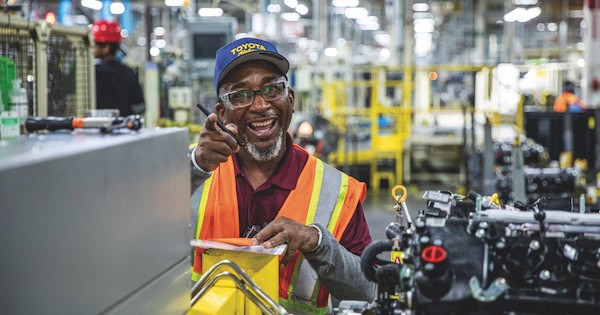
In recent years, Alabama has experienced a steady surge in manufacturing investment. Global companies like Hyundai, Mazda Toyota, Airbus, and Austal continue to expand their footprints, while new entrants such as Samkee Corp., Owens Corning, and Butting are joining the state’s growing network of production facilities.
One of the newcomers is Glaukos, a global leader in ophthalmic pharmaceuticals and medical technologies. The California-based company is investing $80 million to open a state-of-the-art research, development and manufacturing facility in Huntsville. “After evaluating over 100 potential sites worldwide, we ultimately chose Huntsville for its strong talent base and vibrant business climate,” Thomas Burns, Glaukos Chairman and CEO said in a company press release.
These growth projects are reinforcing Alabama’s reputation as a top-tier destination for advanced manufacturing and job creation.
“Alabama continues to attract companies that are building the future—in vehicles, aerospace systems, and next-generation materials,” said Ellen McNair, Secretary of the Alabama Department of Commerce. “Our focus on collaboration, speed and long-term partnership gives manufacturers the confidence that Alabama is the right place to grow.”
A key driver of this momentum is the “Catalyst” strategic plan, a comprehensive roadmap designed to ensure Alabama remains competitive in a rapidly evolving global economy. The plan prioritizes industrial site readiness, workforce innovation, and international outreach—including new business development offices in Japan and South Korea to complement an existing office in Germany—to connect Alabama with global supply chains and investment opportunities.
Workforce development remains a cornerstone of the state’s success. Through renowned workforce development agency AIDT, companies gain access to customized, no-cost workforce training programs that prepare workers for high-tech manufacturing environments. This commitment to skill-building has earned AIDT national recognition as one of the most effective workforce development organizations in the country.
Beyond its workforce and logistics advantages, Alabama offers a welcoming business climate supported by pro-growth policies and competitive incentive programs. The state’s restructured incentive framework streamlines project approval and enhances transparency while empowering local communities to play a larger role in development.
From small towns to industrial powerhouses, the state’s manufacturing story continues to evolve—rooted in craftsmanship, collaboration, and a shared commitment to progress. “Manufacturers come to Alabama because they know we deliver,” Secretary McNair said. “Our communities, our workforce, and our partners all work together to make sure that success isn’t just achieved—it’s sustained over the long haul.”
Visit www.MadeInAlabama.com for more information.