
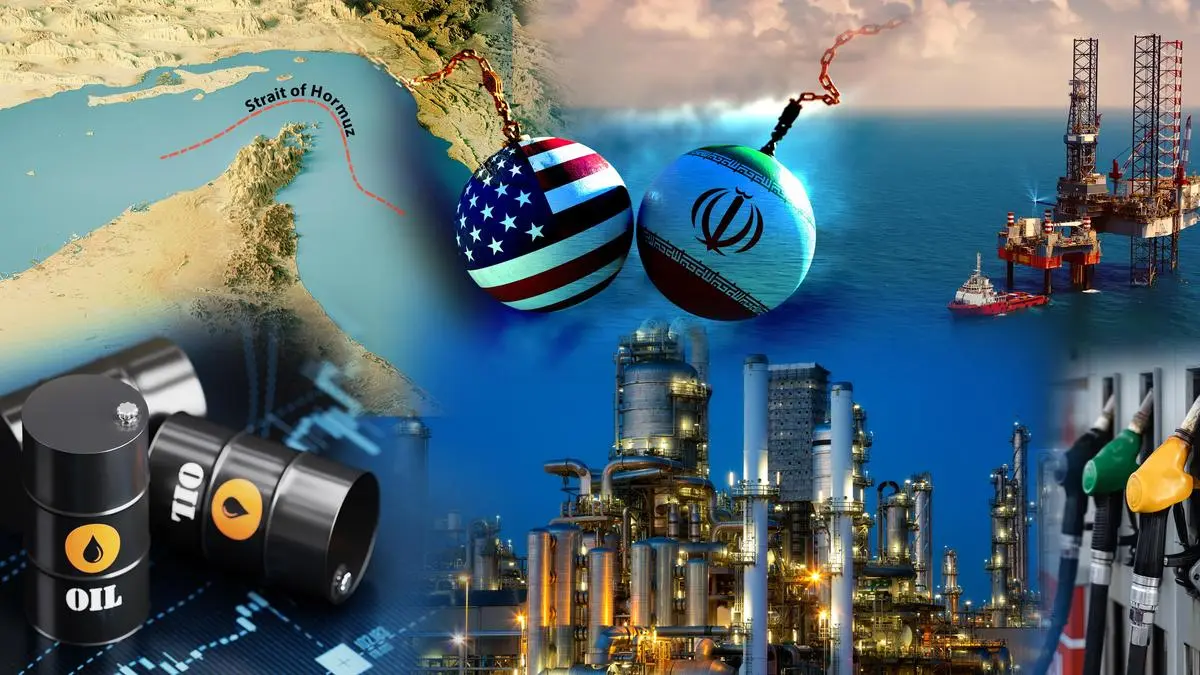
Is there enough LPG for India’s needs, is the burning question on everyone’s mind right now. The ongoing hostilities between US-Israel and Iran have squarely turned the spotlight on India’s oil infrastructure and the companies that own and operate it.
India imports over 90 per cent of the crude it consumes and crude-based petroleum products form about 30 per cent of its energy mix. Coal leads—accounting for over 50 per cent. Given this situation, oil infrastructure that includes oil fields, pipelines, refineries and marketing network (fuel stations) assumes national importance and critical for India’s energy security. Hence, PSUs play a significant role across the infrastructure and the value chain in this space.
Upstream, companies such as ONGC and Oil India (OIL) handle exploration and production activities. Downstream, the three oil marketing companies (OMCs)—IOCL, BPCL and HPCL—along with two pure-play refiners, MRPL and CPCL, manage refining operations. The OMCs also operate pipelines that transport crude oil and petroleum products. Together with dedicated pipeline operators like GAIL and Petronet LNG, they form the core of the midstream segment, which focuses on the storage and transportation of oil and gas.
Since a handful of PSUs cater to the entire subcontinent, the scale associated with them is anything but modest—170 mt per annum (million tonnes) of refining capacity, accounting for two-thirds of the nation’s capacity, 35,000 km in pipelines (Srinagar and Kanyakumari are 3,000 km apart for context), 92,000 retail fuel outlets and ₹19 lakh crore ($210 billion) in revenue.
However, their market values are low at about ₹8 lakh crore or $85 billion (HPCL and MRPL are subsidiaries of ONGC, and CPCL is a subsidiary of IOCL; hence, market caps of only parent companies are considered here and for revenue above) and trade at paltry mid-single-digit or high single-digit PEs. This was even before the US-Iran war started, and some of them have been under pressure since. Yet, their low valuation is an attraction for many investors, especially retail investors. With crude climbing 42 per cent since the war broke out, shares of some of them, especially those of the OMCs, have crashed anywhere between 15 per cent and 20 per cent—making them further cheaper. This has placed them back squarely in the spotlight again.
Are they value stocks or is their low PEs only optics? It can be both at different points in times!
We attempt to decode this puzzle by looking at history, which has always served as a reliable guide to approach markets.
Given that today’s scenario closely resembles the situation when the Russia-Ukraine war broke out in 2022, we draw parallels and take stock of what’s ahead for the stocks.
Brass tacks
Before diving in, it helps to understand why these companies do not fetch healthy valuations. The primary reason is that they have little control over market prices.
Upstream companies make money when crude price rises and vice-versa, but cannot influence the market price of crude. Even in a scenario where crude price sustains at higher levels, the government could step in and slap a windfall tax, limiting their earnings potential.
On the other hand, prospects of refineries depend on something called gross refining margin (GRM), which essentially is the gross profit per barrel of crude processed, calculated as total revenue from refined products minus the cost of raw materials. Revenue depends on global benchmark prices of the petroleum products, and cost—where crude is a substantial part—also depends on global price trends—something refineries barely have any influence on. Hence, their earnings largely track global GRM benchmarks, such as the Singapore GRM, which is the benchmark for Asia. Global GRM benchmarks, in turn, are largely driven by the global demand for petroleum products, the demand for refining capacity and the price of crude. Generally, GRMs tend to track crude prices—higher crude prices would mean higher GRMs and vice-versa.

That said, there are certain factors that are still within refineries’ control such as scale of operations, operational efficiency, viscosity and sourness of crude, among others. A refinery can very well work with these variables, manage higher yields and eke out higher margin or premium over and above global GRM benchmarks. These make refineries relatively better insulated from volatility compared with upstream players and OMCs.
Further, if it is windfall tax for upstream companies, it is export duty for refineries. The government could impose a duty on export of diesel, for instance, if, in its judgment, exports are to be routed into the domestic market to rein in inflation, as it happened in FY23.
The above aspects apply to both standalone refineries and refineries operated by OMCs alike.
Let’s move on to OMCs. Once crude is refined, they move the output to the market. Again, the market price/ retail price for petrol, diesel and LPG is fixed by the government, though not so for ATF (however, the government exerts its influence with taxes). In a rising crude scenario, their refineries could profit from higher GRMs but would suffer marketing losses if government does not allow them to proportionately raise prices of petroleum products. This phenomenon is known as under-recovery.
When all such variables do their thing, it translates into wild volatility in earnings for the players involved (see chart). All in all, volatile prices, inability to influence pricing and regulations mean the stocks trade at lower multiples (readers can scroll all the way down to see valuation multiples).


Mirroring 2022-23
Given the war in the Gulf and spiking crude prices, today’s scenario is pretty much similar to what companies went through in FY23—the fiscal year after the breakout of the Russia-Ukraine war in February 2022. Russian crude, which accounts for roughly 10 per cent of the global crude production, was sanctioned by the West. Crude price shot up 17 per cent in just a week (five trading days) of war—from $97 a barrel to $113. In the days that followed, crude hit a peak of $138. From this peak, though oil cooled, it sustained at higher prices—between $100 and $120 a barrel for three-four months.
Today’s situation, though similar, is far worse. A week into the war, crude has gained 28 per cent—from $73 to $93 and till date crude has gained 42 per cent. It peaked last week at $120 a barrel briefly, but has traded in a volatile range of $80-100 in the days after. Last time, only about 10 per cent of global crude trade was initially interrupted and went out of supply until Russian crude found its way into countries such as China and India. This time, over 20 per cent of global supply is at stake, as roughly the same amount passes through the Strait of Hormuz.
Another reason why this time could be a lot worse is that with rupee depreciating 20 per cent since the Ukraine War, the rupee cost of crude is as close as it was during that war. Back then, though crude was trading at $120-130, a dollar costed just ₹77. Now though crude prices are relatively lower than those levels, a dollar costs a lot today at ₹92.

However, there may not be a sustained material impact if the war were to stop soon.
Energy economics
We will now make sense of how companies fare and shares react, beginning with FY22 to 9M FY26. Though the aftermath of the Ukraine war was seen in FY23, it would help to build a base with FY22. We have analysed financials with the EBITDA metric as it is common for oil firms to post healthy profit in a year and massive losses in the next, for the same quantum of revenue.


Year before the war: In FY22, crude price shot up 75 per cent over FY21 on an average daily price basis ($46 in FY21 to $80 in FY22). On a point-to-point basis (April 2021 to March 2022) it ranged between $65 and $110. GRMs (both benchmark and of refiners) rose in tandem, boosted by inventory gains. Inventory gains accrue because the benchmark price of finished products and hence the crack spreads (price difference between refined products and crude) would have aligned to rising crude price, but the products themselves would have been processed from older/ cheaper crude stock, purchased before the oil rally. Conversely, firms incur inventory losses when crude price falls—thus bringing GRMs down.
For the OMCs, while higher GRMs would mean healthy profits in their refining business, the catch here is that their marketing under-recoveries offset this gain.For standalone refiners though, it is simple and their fortunes are directly linked to GRM trends.
Price charged to dealers too were hiked from ₹33/litre (petrol in Delhi) in March 2021 to ₹54/litre in March 2022. Despite higher fuel prices and higher GRMs, OMCs incurred marketing losses. HPCL’s EBITDA declined the most (see chart), as its GRM is inferior to that of IOCL and BPCL. IOCL managed a 14-per cent EBITDA growth, aided by superior GRM and a balanced marketing-to-refining ratio (quantity of fuel marketed divided by quantity of crude processed) at 1.1x—an advantage BPCL (1.3x) and HPCL (2.8x) didn’t have. Standalone refineries capitalised on higher GRMs, while upstream players gained from higher realisations for crude and natural gas.
The aftermath: Come FY23, crude sustained between $100 and $120 for about four months till July-end. This prompted the government to impose a windfall tax on crude produced by upstream players and a duty on export of petrol, diesel and ATF by the refiners and OMCs (duty on petrol was suspended shortly). From July, oil went on a decline towards $80 by the fiscal-end. GRMs, too, peaked in FY23, aided by cheaper Russian crude. However, with marketing realisations remaining constant, refining margins could not offset marketing losses. What added to the pain was the massive LPG under-recoveries— of about ₹30,000 crore (as per Petroleum Planning and Analysis Cell), driven by elevated import prices (India imports roughly 60 per cent of the LPG it consumes). HPCL slipped into losses in FY23, while IOCL and BPCL saw their EBITDA decline. MRPL and CPCL continued to capitalise on higher GRMs, with MRPL’s EBITDA growth normalising on a high base. OIL was the least impacted, as its business is limited just to upstream and refining (Numaligarh) operations. HPCL’s losses ate into ONGC’s upstream gains, leading to a modest 4 per cent EBITDA growth.
Stocks of the three OMCs plummeted in FY23, finding support only by September-October. IOCL, BPCL and HPCL declined 16 per cent, 17 per cent and 30 per cent respectively from their prices before the start of the war. Shares of upstream players and standalone refiners stood to gain, on the other hand. Since the start of the war to their FY23 peak, MRPL, CPCL, OIL and ONGC rose 189 per cent, 271 per cent, 36 per cent and 16 per cent. Unlike others, ONGC hit post-war peak prematurely in March 2022 itself (FY22).
OMCs recover: FY24 was a year of recovery for the OMCs. Crude corrected 14 per cent more versus FY23 (on average basis as above) and retail prices remained unchanged. GRMs normalised, with inventory gains reversing. OIL saw EBITDA degrowth owing to its upstream operations. ONGC’s upstream operations posted modest EBITDA growth, while HPCL’s EBITDA recovered to offer growth at the consolidated level. CPCL’s EBITDA degrew as GRM fell. Export duties on diesel and ATF were done away with in this fiscal.
Shares of OMCs rallied to their FY24 peaks from FY23 lows. Shares of MRPL and CPCL saw large corrections as they factored in reversal of FY23 inventory gains and subsequent decline in GRMs (see FY25 GRM). HPCL’s recovery meant ONGC shares rallied too. Oil India too rallied on the back of a revised pricing policy for natural gas, which is an advantage for ONGC’s gas business as well.
Falling GRMs: FY25 and 9M FY26 can be analysed together. In FY25, secularly all players saw EBITDA degrowth. Crude corrected a modest 5 per cent as against 14 per cent in FY24, aiding ONGC and OIL to post lower EBITDA degrowth compared with OMCs and refiners. As oil traded lower, the windfall tax on domestic crude was done away with. As for OMCs and refiners, the GRMs—benchmark-wise and for Indian players fell significantly—becoming half of FY24 margins for most players. For OMCs, the pain was accentuated by large LPG under-recoveries which ballooned to ₹41,000 crore combined, going by some reports. For context, the combined EBITDA of the three OMCs in FY24 (financially, a healthy year) was ₹1.4 lakh crore.
However, in 9M FY26, though crude corrected 17 per cent, tables turned for GRMs, especially in Q3 FY26, driven by rebound in crack spreads and demand-supply imbalances. This recovery in margins lifted GRM for the whole of 9M FY26 (see chart). EBITDA of all refiners grew healthily, though on the low base of 9M FY25. Moreover, the government, in August 2025, announced a ₹30,000-crore one-time compensation to OMCs in relation to the LPG under-recoveries suffered. This is payable in 12 instalments extending up to FY27—₹12,500 crore in FY26 and ₹17,500 crore in FY27. With crude prices down, OIL’s EBITDA declined and so did for ONGC’s upstream business. Yet its refining operations aided the company post a 16 per cent EBITDA growth.
Shares of all players were seen correcting in FY25 reacting to fundamentals and they bottomed out close to March 2025. With GRMs recovering in 9M FY26 and government’s compensation for under-recoveries kicking in, shares have rallied from these lows, only to have become subject to the recent volatility in oil prices.
Making sense of valuation
It is now established that the sector witnesses volatile earnings. Hence while P/E ratio is a useful metric, it can also be misleading many a times., especially for the OMCs. As can be seen from the charts, in their recent worse years, that is, FY23 and FY25, P/E multiples shot up abnormally. For instance, BPCL’s P/E went up to 35x by FY23-end and HPCL’s had a invalid P/E because of losses in that year. However, it is in these worse years, when P/E becomes expensive, that their price-to-book value (P/B) ratio is seen bottoming out. Sometimes the best opportunity to buy these stocks has been when their PE has been invalid or very high (see chart). Hence P/B becomes a more reliable valuation metric to understand where the stocks can bottom out. At the end of the day, these are companies with hard, productive assets that have the potential to make hay when the sun shines. The P/B ratio at stocks’ bottom as given in the chart were as observed in FY23. The ratios bottomed in FY25 too, though not as deep as in FY23.


So, investors looking to make value bets on OMC stocks as soaring crude/ marketing under recoveries take a toll on their profitability, need to consider their attractiveness as they trend closer their prior bottoms in P/B multiples. The other stocks too will be volatile as different factors discussed above play out. The valuation range given in the charts can serve as useful guide to assess their attractiveness or lack of it.
Published on March 14, 2026