
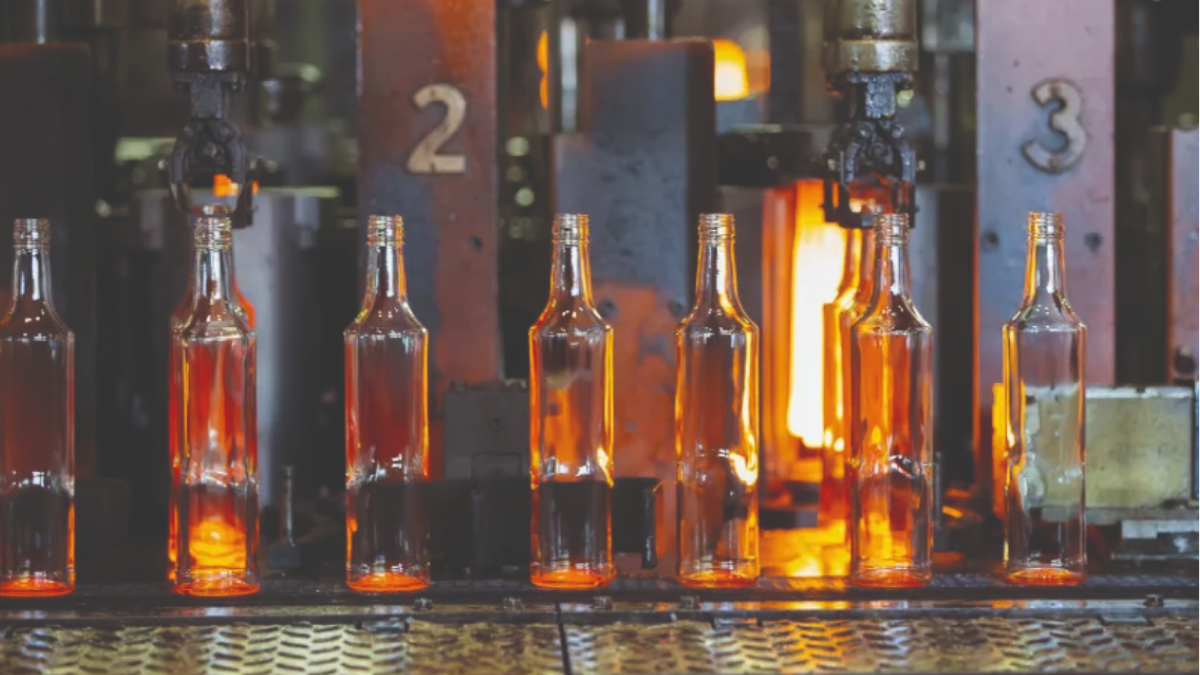
Infrared solutions for glass manufacturing challenges
IR Cameras & Pyrometers For The Glass Industry
The Importance of Infrared Temperature Monitoring in Glass Industry
In the glass industry, infrared temperature monitoring is crucial for maintaining product quality and process efficiency. Glass production involves extreme temperatures, from melting raw materials to forming and annealing, where precise temperature control is essential. INSTROTECH, local representative of OPTRIS has infrared (IR) sensors and cameras which provide non-contact temperature measurements, making them ideal for these high-temperature environments.
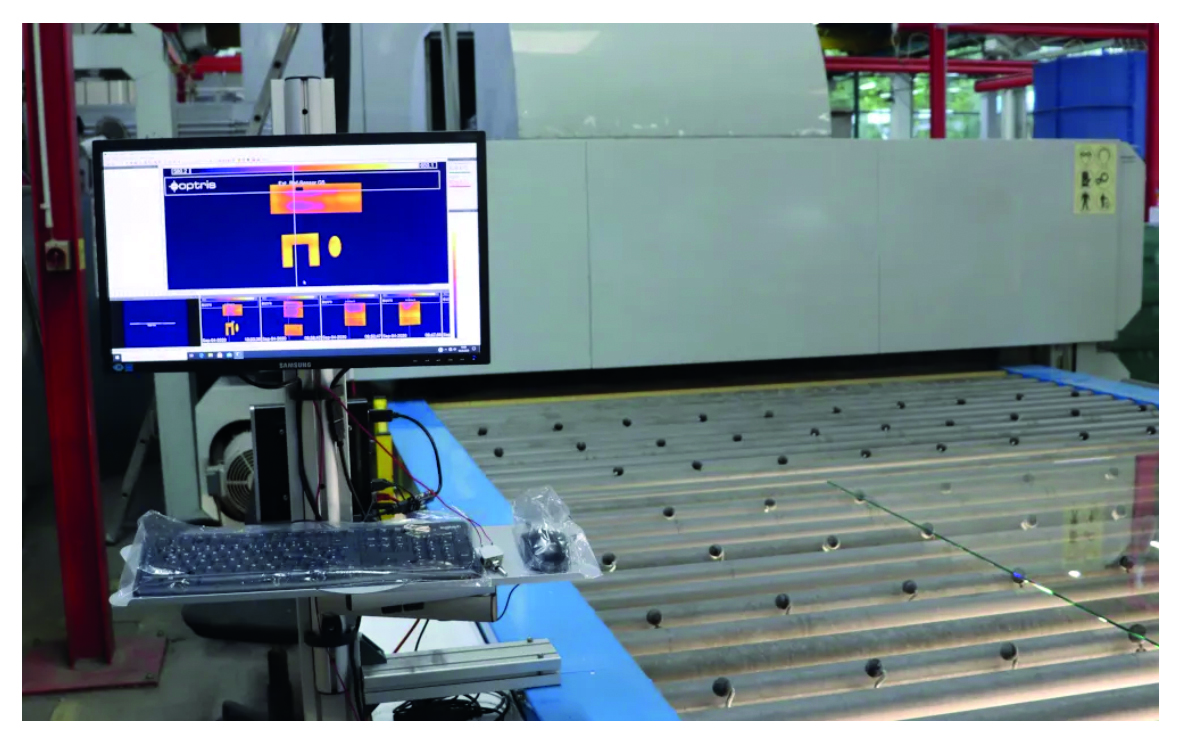
Accurate thermal monitoring ensures that the glass is processed within its optimal temperature range, preventing defects such as thermal stress, bubbles, and uneven surfaces. By using IR technology, manufacturers can detect temperature variations in real-time, enabling them to make immediate adjustments and maintain consistency and quality throughout the production cycle.
Enhanced safety is another significant advantage. IR sensors eliminate the need for physical contact with hot glass, reducing the risk of accidents and equipment damage. This non-contact capability also minimises maintenance needs for temperature sensors exposed to harsh conditions.
Furthermore, IR temperature monitoring improves process efficiency. It allows for precise control of melting furnaces, annealing lehrs, and forming equipment, optimising energy consumption and reducing waste. Overall, integrating infrared temperature monitoring into glass manufacturing processes ensures the production of high-quality products, operational safety, and cost-effective production.
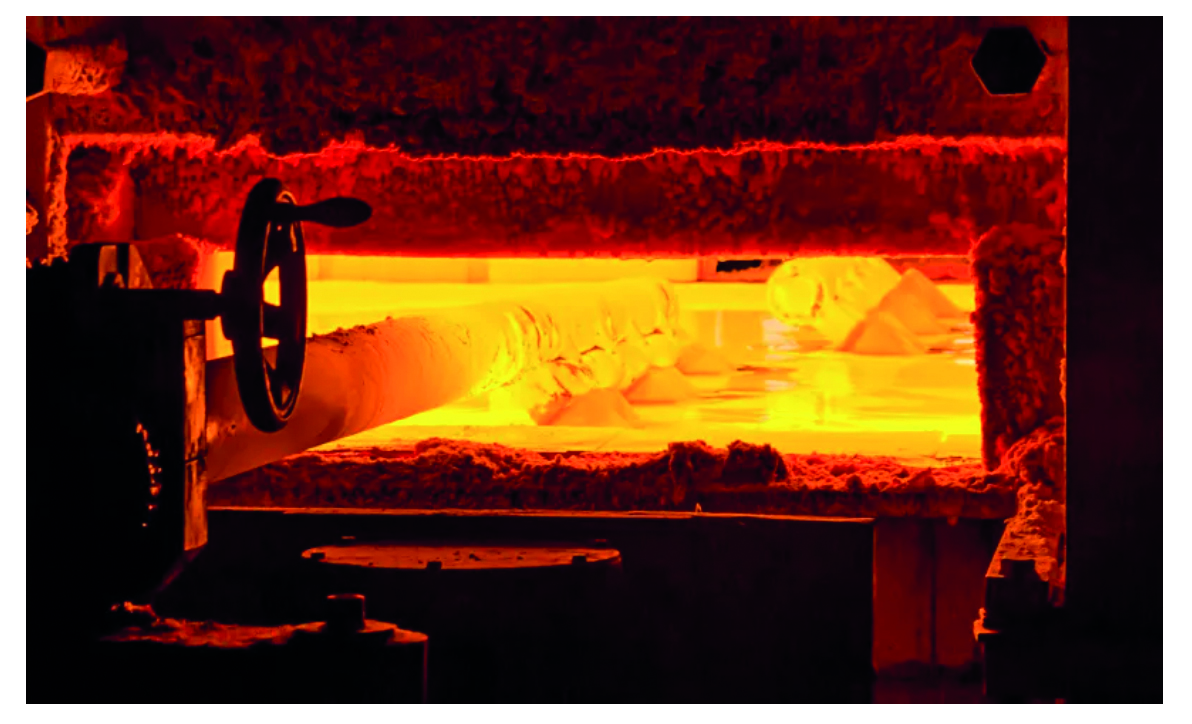
Challenges of Non-Contact Temperature Measurement in the Glass Industry
Infrared (IR) non-contact temperature measurement presents specific challenges in the glass industry. High ambient temperatures in glass production environments, such as melting furnaces and forming stations, can impact the accuracy of IR sensors. These sensors require precise calibration to account for thermal interference and ensure measurement reliability. Additionally, the reflective nature of molten glass complicates temperature readings, as varying emissivity can lead to measurement inaccuracies. Adjusting the emissivity settings on IR devices is crucial but can be complex and time-consuming.
Dust and smoke generated during glass processing can obstruct IR measurements. These particulates can affect the clarity of thermal images and readings, requiring frequent maintenance and cleaning of IR equipment. Moreover, temperature gradients within the glass during processes like annealing can pose challenges. IR cameras must be configured to handle these variations effectively, ensuring accurate monitoring across different zones of the production process.
Benefits of IR Non-Contact Temperature Measurement for Glass Industry
Despite the challenges, IR non-contact temperature measurement offers substantial benefits for the glass industry. Precision in high-temperature environments is a significant advantage. IR sensors can accurately measure temperatures without physical contact, crucial for monitoring molten glass and high-heat applications where traditional sensors are unsuitable. This precision enables the achievement of optimal thermal conditions necessary for producing high-quality glass.
Real-time monitoring provided by IR technology enables immediate adjustments to be made during the production process. This capability is vital for maintaining consistent glass quality and preventing defects such as thermal stress or uneven surfaces. Real-time data enables dynamic control of melting, forming, and annealing processes, thereby optimising overall production efficiency.
Enhanced safety is another key benefit. Non-contact measurement reduces the risk associated with handling extremely hot materials, thereby improving safety for operators and reducing equipment wear and tear. This safety enhancement contributes to a safer work environment and lower maintenance costs for temperature measurement systems.
Applications and Efficiency Gains
Infrared non-contact temperature measurement significantly enhances efficiency across various glass industry applications. In melting furnaces, IR sensors provide accurate temperature readings to control the molten glass temperature, ensuring proper material properties and reducing energy consumption. For forming processes, IR cameras monitor temperature variations to optimise mould heating and cooling, enhancing product consistency and reducing defects.
During annealing, IR technology helps in managing the temperature profiles of glass as it cools, which is crucial for achieving the desired mechanical properties and minimising stress. By integrating IR measurement into these processes, manufacturers can streamline operations, reduce energy costs, and improve overall production efficiency. The ability to detect and address thermal anomalies promptly leads to higher-quality products and more cost-effective manufacturing practices.
Glass Industry Applications
- Float Glass – Enhancing Float Glass Production Efficiency with Infrared Technology
- Glass Tempering – Ensuring Uniform Heating and Cooling in Low Emissivity Glass Toughening with Precise Temperature Control
- Glass Tube Processing – Optimisation of the Process for Forming Glass Tubes at Temperatures above 1000°C
- Enamel Manufacturing – Real-Time Data Integration into Process Control for Efficient Temperature Management
- Single Pane Glass Processing – Boosting Efficiency and Product Quality with Under-Line Thermal Measurement
- Glass Gob Production – Accurate Temperature Control and Real-Time Position Tracking in Industrial Glass Gob Production
- Safety Glass Production – Accurate Line Scanning Infrared Technology Improves Glass Manufacturing
Contact INSTROTECH for more information on OPTRIS IR CAMERAS & PYROMETERS FOR GLASS INDUSTRY, on 010 595 1831 or sales@instrotech.co.za