
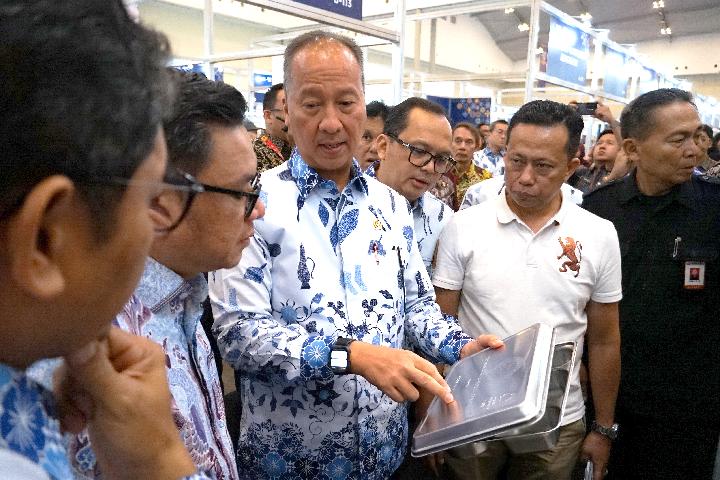
TEMPO.CO, Jakarta – Indonesia’s Ministry of Industry noted that non-oil and gas processing or manufacturing grew by 5.58 percent in the third quarter of 2025. This figure exceeded the national economic growth, which recorded 5.04 percent in the same period.
“With this achievement, the processing industry becomes the highest contributor to the economy at 1.04 percent. This reaffirms the strategic role of manufacturing as the driver of the national economy,” said Minister of Industry Agus Gumiwang Kartasasmita, as quoted in a written statement on Thursday, November 6, 2025.
Agus stated that the growth was supported by the government’s policies to improve production efficiency, expand the market, and strengthen competitiveness.
He mentioned that this was evident in the demand data for the manufacturing sector in the third quarter of 2025. Exports and investments supported the growth of the manufacturing sector. Non-oil and gas exports grew by 12.56 percent annually, contributing more than 85 percent to the total national exports in the third quarter of 2025.
“Several main commodities supporting these exports include vegetable oil, steel, machinery and electrical equipment, jewelry and gems, as well as vehicles and their parts, each recording growth between 8 and 82 percent,” Agus said.
This member of the Golkar Party claimed that manufactured products are the backbone of Indonesia’s exports. This indicates that the national industry’s competitiveness continues to improve, while also supporting a trade surplus.
From an investment perspective, he mentioned that the manufacturing sector recorded Rp562.7 trillion in revenue from January to September 2025. This value consisted of domestic direct investment (PMDN), which amounted to Rp178.9 trillion, and foreign direct investment (PMA), which amounted to Rp383.8 trillion.
This sector accounted for 37.73 percent of total national investment. “This figure proves that the investment climate for the manufacturing sector is still very attractive to both foreign and domestic investors,” said Agus.
He continued by stating that the processing industry is also one of the sectors with the largest workforce absorption. In 2025, the number of workers in this sector reached 20.31 million people or 13.86 percent of the total national workforce.
During the period from February to August 2025, this sector added approximately 210,000 new jobs. “The employment of workers in the manufacturing sector directly contributes to the improvement of public welfare. In fact, some companies were able to recruit workers who had previously been laid off from other sectors,” he said.
Agus stated that despite the manufacturing sector’s higher growth compared to the national average, manufacturing production capacity utilization remains at 59.28 percent. He assessed that this condition indicates a wide-open expansion space.
“There is still a great opportunity to increase production capacity through strengthening domestic and export demand, as well as improving production efficiency,” he said.
Agus added that the government will continue to strengthen downstream policies, investment incentives, and human resource development. Therefore, he is optimistic that the competitiveness of the national industry will increase, and the manufacturing sector will remain the main driver of Indonesia’s future economic growth.
Editor’s Choice: The Small-Island Mining Permit Problems
Click here to get the latest news updates from Tempo on Google News