Close Menu
Simply Invest Asia
  • Home
  • Industries
  • Investment
  • Money
  • Precious Metals
  • Property
  • Stock & Shares
  • Trading
What's Hot

Building society launches new ‘competitive’ savings account with 4% interest | Personal Finance | Finance

March 7, 2026

Income Tax Impact of Selling Precious Metals and Numismatics

March 7, 2026

High-Frequency Trading: HFT in Modern Crypto Trading

March 7, 2026
Facebook X (Twitter) Instagram
Trending
  • Building society launches new ‘competitive’ savings account with 4% interest | Personal Finance | Finance
  • Income Tax Impact of Selling Precious Metals and Numismatics
  • High-Frequency Trading: HFT in Modern Crypto Trading
  • Martin Lewis explains how to get much better return on savings
  • Costco’s Strong Growth Continues. But Is the Stock Too Expensive?
  • Platinum deficit set to continue for 4th yr; shortage may shrink 75%
  • Boost tax-free Personal Allowance for savings with HMRC pension rule | Personal Finance | Finance
  • Best savings accounts as lenders cut rates
Facebook X (Twitter) Instagram YouTube
Simply Invest Asia
  • Home
  • Industries
  • Investment
  • Money
  • Precious Metals
  • Property
  • Stock & Shares
  • Trading
Simply Invest Asia
Home»Industries»Factories first: Why China is determined to shield manufacturing from decline
Industries

Factories first: Why China is determined to shield manufacturing from decline

By LucasNovember 9, 20253 Mins Read
Share
Facebook Twitter LinkedIn Pinterest Email


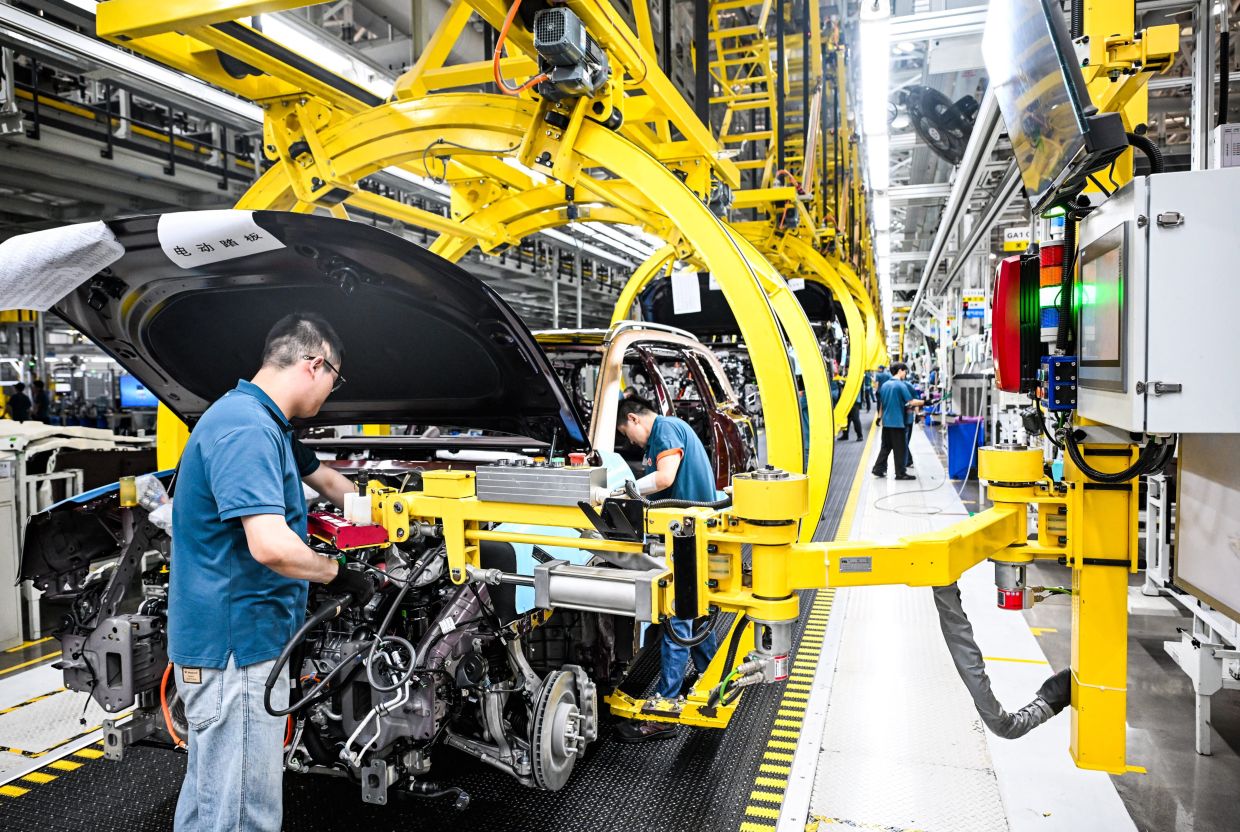
Beijing has pledged to prevent industrial hollowing-out by safeguarding the share of manufacturing in its economy, noting that the trend has historically proven difficult to reverse in an official outline of priorities for the next five years.

As nations industrialise, the share of manufacturing in their economies typically peaks before declining. If left unchecked, the trend could lead to deindustrialisation, undermining economic strength and resilience, according to a book released last week by the Communist Party leadership. The publication offered a detailed interpretation of the proposals for the coming 15th five-year plan.

“In recent years, some advanced economies have attempted to revive their manufacturing sectors after deindustrialisation, but it has proven to be extremely difficult,” the authors said.

Last month, the Communist Party’s Central Committee unveiled the proposals for the 2026-2030 development blueprint, with a focus on building a modern industrial system by “maintaining a reasonable share of manufacturing” – though without setting a specific target.

For a populous, developing country like China, manufacturing forms the foundation of a robust real economy, the book’s authors said. This explained China’s prioritisation of its vast industrial base, they added, noting the country would double down on manufacturing amid growing unilateralism and protectionism.

China is the only country that possesses all industrial categories under the UN’s classification system. Manufacturing value added accounted for 24.9 per cent of gross domestic product in 2024, while the country has been the world’s largest manufacturer for 15 consecutive years, the authors said.

Dong Yu, executive vice-president of the China Institute for Development Planning at Tsinghua University, said Beijing had long been committed to preserving manufacturing’s share in the economy. “The 14th five-year plan already has such a requirement,” he said.

The current blueprint, covering 2021 to 2025, called for “maintaining a relatively stable share of manufacturing” and strengthening its competitive edge. Dong said this focus followed a decade-long decline leading up to 2021.

Manufacturing’s share of GDP fell from 32 per cent in 2011 to 26 per cent in 2020, before rising to 27 per cent in 2021 – the first increase in a decade, according to World Bank data.

But the authors of the government policy book stressed that China’s industrial base faces complex changes, including intense external pressure and competition.

“China’s manufacturing sector is generally large in scale but not yet strong in quality, and is currently at a critical juncture in its transition from size to strength,” they wrote.

Beijing has called for a nationwide push to strengthen industry and move up the global value chain. Last week’s proposals stated that advanced manufacturing would form the “backbone” of the modern industrial system that China seeks to build.

This demonstrated a focus on structural upgrades and greater resilience to adapt to global changes, Dong said.

Industrial policy has shifted significantly in many countries since 2020, driven less by economic competitiveness and more by geopolitical tensions, national security and supply chain resilience, according to a report by the International Monetary Fund released last month.

Western trade partners have accused China of fuelling overcapacity and global imbalances amid a tit-for-tat tariff war with the United States.

To absorb production, China has focused on expanding its domestic market and boosting household demand, Dong said. But as industries upgrade, some competition with other countries is unavoidable, he added, noting that protectionism is not the solution. — SOUTH CHINA MORNING POST


Source link

Share. Facebook Twitter Pinterest LinkedIn WhatsApp Reddit Tumblr Email

Related Posts

Invoking emergency powers, India asks oil refiners to ramp up LPG output

March 7, 2026

UK Lords warn of AI impact on creative industries

March 7, 2026

Government’s AI copyright reforms set for delay after backlash from creative industries

March 6, 2026
Leave A Reply Cancel Reply

Our Picks

Amid economic tumult, Trump’s weird rhetoric about groceries does not inspire confidence

November 18, 2025

European governments turn to short-term debt as borrowing costs rise

January 22, 2026

Best GAP insurance 2026 | Auto Express

January 24, 2026

RBI proposes linking BRICS’ digital currencies to reduce reliance on US Dollar: report

January 30, 2026
Don't Miss
Money

Building society launches new ‘competitive’ savings account with 4% interest | Personal Finance | Finance

By LucasMarch 7, 2026

Skipton Building Society has launched a new savings account with a 4% interest rate. The…

Income Tax Impact of Selling Precious Metals and Numismatics

March 7, 2026

High-Frequency Trading: HFT in Modern Crypto Trading

March 7, 2026

Martin Lewis explains how to get much better return on savings

March 7, 2026
Our Picks

Silver’s Volatility vs Gold – What Investors Should Consider Before Buying

October 10, 2025

Gold and Silver Analysis: Geopolitical Risks and Weak Dollar Drive Bullish Momentum

February 25, 2026

Utilities Down on Cyclical Bias – Utilities Roundup

December 3, 2025
Weekly Pick's

Rachel Reeves Budget 2025: Major money changes young people need to know

November 27, 2025

Prediction: This Artificial Intelligence (AI) Stock Will Soar After Nov. 4 (Hint: It’s Not Palantir)

October 27, 2025

Samsung Heavy Industries wins W341b shipbuilding deal, construction set for Vietnam

October 24, 2025
Monthly Featured

Cat bonds remain favoured due to their liquidity and more standardised structure: Howden Re

January 31, 2026

5 investing trends that could define 2026

January 16, 2026

5 Industries Experiencing Double-Digit Growth Over The Next Decade

November 27, 2025
Facebook X (Twitter) Instagram Pinterest
  • Contact Us
  • Privacy Policy
  • Terms and Conditions
© 2026 Simply Invest Asia.

Type above and press Enter to search. Press Esc to cancel.