
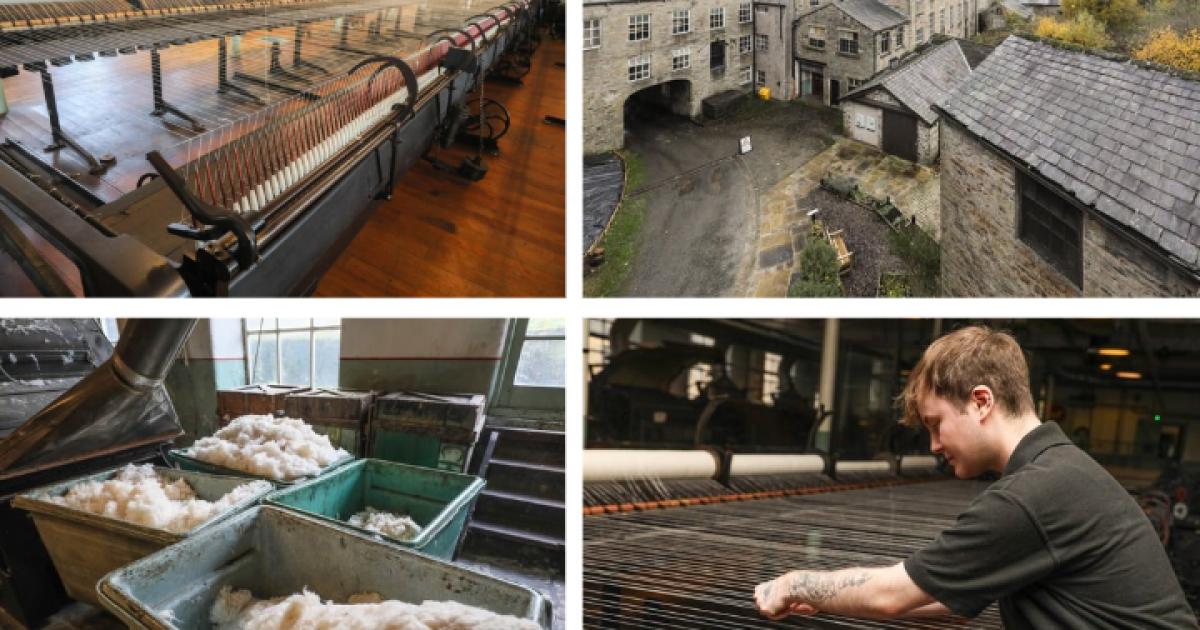
The working museum in Rossendale is bucking the trend this year by staying open through the winter, giving visitors the rare chance to experience Lancashire’s textile heritage in action while many other historic sites take a seasonal break.
From November through to March 2026, the sound of the looms will continue to echo through the valley, as the museum’s working machinery keeps Britain’s industrial past alive.

Two Mills, One Story
Helmshore Mills is made up of two neighbouring mills, Higher Mill, built in 1789, and Whitaker’s Mill, which dates from the 1820s.
Together, they tell the story of Lancashire’s rise as a global textile powerhouse.

Assistant manager Mike Whitworth said the site offers a unique glimpse into both the wool and cotton industries that shaped the area.
National Lottery grant to commemorate landmark 1826 Lancashire Rising
Residents to commemorate 1826 Weavers uprising
He said: “Helmshore Mills is two mills on one site.
“There’s a wool pulling mill that dates back from 1789 and has a 20-tonne water wheel that powers it, and next door to it there’s a cotton spinning mill from the early 1820s that still has working machinery in the building.”
Whitworth said it’s important for local people to see and understand that heritage first-hand.

He said: “It’s important to the area because it’s our textile history.
“You get a feel for the woollen industry in the Higher Mill and the cotton industry in the Whitaker Mill.”
History in Motion
Unlike most museums where machinery sits silently behind ropes, Helmshore’s exhibits still move.
He added: “The machines we actually run every day, twice a day, so people can come and see them demonstrated.
“You can see three machines running which are all over 100 years old.
“We keep them maintained and they still produce cotton that we send to our sister mill at Queen Street in Burnley to be made into cloth.”

That ongoing link to production makes Helmshore one of the few textile museums in the UK where visitors can still watch the full process, from raw fibre to finished fabric, exactly as it would have been done a century ago.
A Winter First
For the first time, the museum will be open on Wednesdays and Thursdays throughout the winter season, from 11am to 4pm.
There will be tours of the mills running throughout the day, with no need for visitors to book in advance.
Guests can explore both mills, watch live machinery demonstrations, and chat with the knowledgeable staff and volunteers who keep the site running.

The museum also hosts special events and temporary exhibitions throughout the year, and visitors can relax in the on-site café after their visit or browse the gift shop, which stocks locally themed crafts, books and textile-inspired souvenirs.
Keeping Heritage Alive
Helmshore Mills is part of Lancashire County Council’s museum service and has long been one of the best-preserved reminders of the region’s textile heyday.

The mills sit beside the River Ogden, their waterwheel once driving the machinery that processed wool and cotton for markets across the world.
Today, the same wheel still turns, now as part of a living demonstration that shows visitors, young and old, how Lancashire’s industrial story was woven together.
Admission costs £5 for adults, while children up to the age of 18 can visit free of charge.