
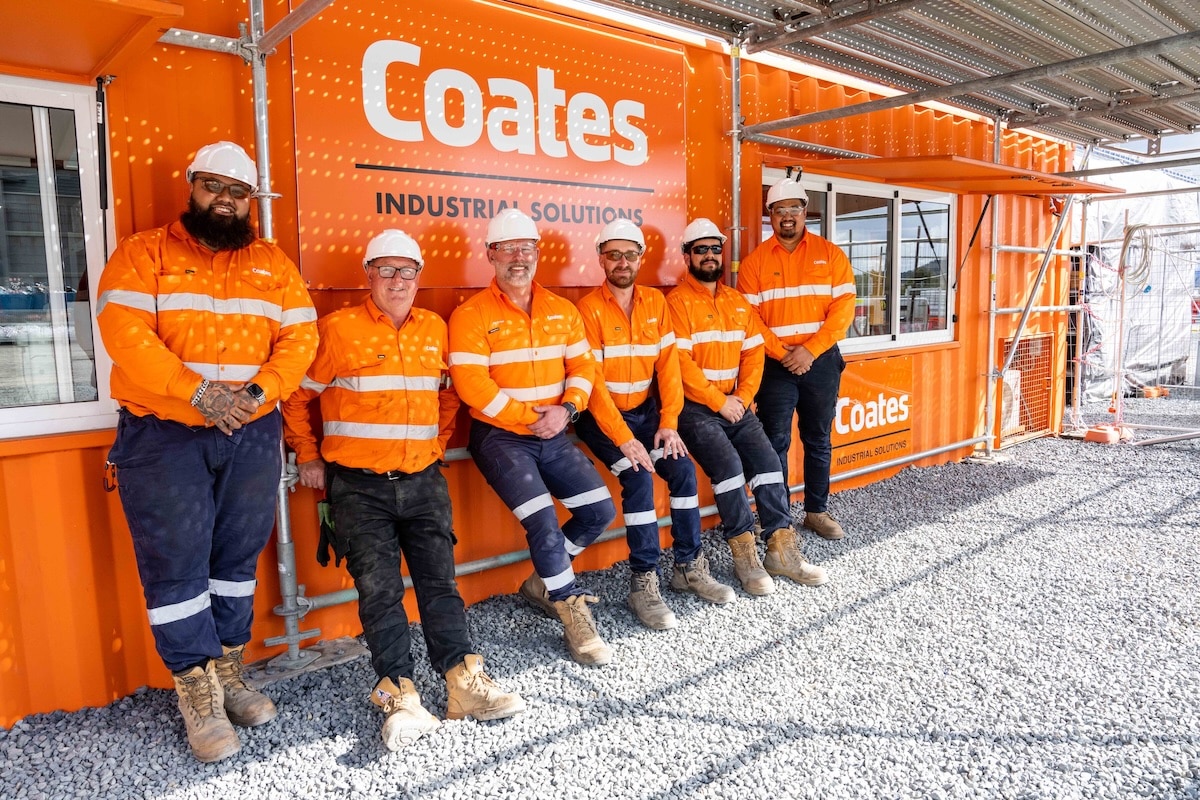
Andrew Fisher (3rd from left) and his Coates Industrial Solutions team. Image: Coates
How do equipment hire providers help heavy industries deliver successful shutdowns at their plants and sites? In this Expert Profile, we hear from Andrew Fisher, Shutdown Manager at Coates Industrial Solutions, whose team delivers the planning, tools technology and on-site expertise needed to support shutdowns that are safe, efficient and delivered on budget.
The Coates Expert Profile series highlights the people and knowledge that power Coates’ end-to-end project solutions across Australia’s key industries. From water management to engineering and industrial maintenance, Coates experts are helping customers achieve greater safety, productivity, and cost efficiency every day.
As shutdown manager for Coates Industrial Solutions, Andrew Fisher plays a vital role in supporting customers’ maintenance and shutdown events across Queensland and the Northern Territory. With more than seven years at Coates – and hands-on experience in every aspect of the shutdown process – Andrew leads a team that sets up and manages on-site Coates tool stores, ensuring hundreds of contractors have access to the tools, equipment and consumables they need.

Can you tell us about your role at Coates and what a typical shutdown project involves?
I started out as a tool store controller and progressed each year by showing interest in what I did and putting customers first. I’ve been in my current role as shutdown manager for about three and a half years now, looking after Queensland and, more recently, the Northern Territory.
For shutdowns, we oversee everything from tooling and consumables to logistics and reporting. I’m in constant contact with suppliers, clients, and my team to make sure equipment is where it needs to be and issues are resolved quickly. It’s busy, but I love what I do.
What are some of the common challenges customers face during shutdowns and maintenance events?
One of the main pain points customers’ face is out-of-scope work. They might have people starting that weren’t in the original plan or suddenly need tools and materials that weren’t forecast. Weather can also be a big one – if it rains, it can delay things by a week or more.
Another major challenge is that many suppliers just don’t hold enough stock. There are days where we’re ordering vast quantities from suppliers of things like gloves, toilet paper, and hand rolls – all the everyday items you can’t run out of during a shutdown.
Planning is another key issue. Costs start to blow out with inadequate planning, so having the right people with experience in shutdowns makes all the difference.
How does your team support customers in managing these complex shutdowns successfully?
We take care of everything: consumables, tooling, PPE, certification, maintenance – all of it. That takes the pressure off the customer so they can focus on running their shutdown safely and efficiently.
We also analyse data constantly – what’s on hire, what’s not being used, consumable usage, and so on. That information helps customers stay within budget and make decisions quickly. I always work closely with clients to make sure the reports show what they need to see, not just what I want to show.
If I see something that doesn’t need to be on site, whether it’s equipment or labour, I’ll flag it straight away. Anything that helps the client save money and stay on track, that’s what we do.
What recent innovations or technologies are changing the way shutdowns are managed?
The biggest change for Coates has been SiteIQ. With this platform, I can pull out detailed data on hire items, consumable usage, and labour, and send it daily to clients. It’s been a game-changer for how we manage and report on shutdowns, and it gives customers much more visibility.
What do you enjoy most about your work and the industries you support?
My team feels like a family. That’s important when you’re away from home for long periods. We all get along well, have a laugh, and support each other. It makes a tough job a lot easier.
I also love it when a customer comes over and gives us good feedback – not just about our service, but about how professional and organised our setup looks. You get a real buzz from that.
Is there anything else you’d like to add?
I think new technology like SiteIQ is essential, but it works best alongside experience. A computer system can pull data, but it can’t analyse it or interpret what it means for the customer. You still need people who know what to look for.
It’s important we keep teaching the next generation and passing on our knowledge. You need a good eye for detail in this line of work – it’s the little things that help clients and save money in the long run.
Visit the Coates Industrial Solutions website for more information.