
- Egypt to invest $4 billion upgrading six refineries
- Plan aims to boost capacity, cut fuel imports
- Output lags 840,000 bpd capacity, driving imports
Egypt plans to invest $4 billion in six modernization and development projects at its existing oil refineries, Petroleum and Mineral Resources Minister Karim Badawi said on Monday.
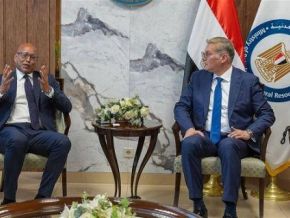
“The government has developed a strategy to increase the value added of existing oil refineries by implementing six projects requiring total investment of $4 billion to boost production capacity and reduce the fuel import bill,” Badawi said at a meeting with Ethiopis Tafara, IFC vice president for Africa, and Cheick-Oumar Sylla, the institution’s regional director for North Africa and the Horn of Africa.
According to a ministry statement, officials from the World Bank Group’s private sector arm discussed investment and financing opportunities in oil refining, petrochemicals and value-added industries, as well as in the mining sector. They also explored potential cooperation to help finance higher utilization of the country’s refining infrastructure.
Egypt has a nominal refining capacity of 840,000 barrels per day (bpd) across a dozen refineries, most of which are operated by state oil company Egyptian General Petroleum Corporation (EGPC). The largest facilities are at Mostorod, with capacity of 161,000 bpd, and MIDOR, with 160,000 bpd. Most refineries are not operating at full capacity, partly due to insufficient maintenance and modernization. As a result, refined petroleum product output was around 600,000 bpd in 2024, forcing the country to import a large share of its fuel needs, according to data from the U.S. Department of Commerce.
Egypt’s consumption of refined petroleum products is expected to rise in the coming years, despite sharp cuts to state fuel subsidies introduced in recent years as part of an economic reform program backed by the International Monetary Fund (IMF).
Walid Kéfi