
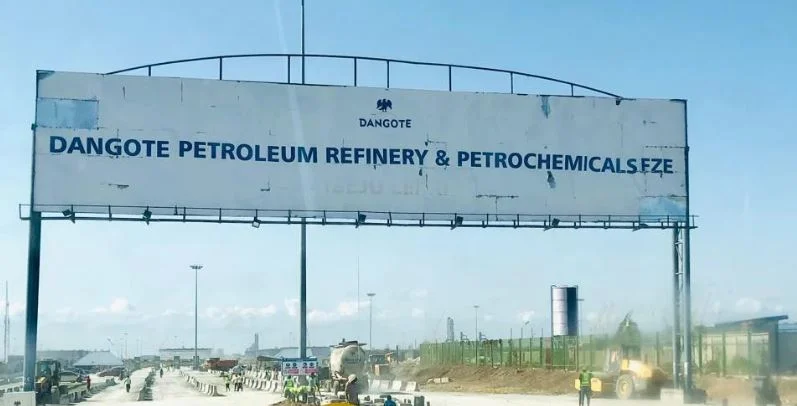
- 20m litres surplus for export
Dangote Petroleum Refinery & Petrochemicals will supply between 60 and 65 million litres of Premium Motor Spirit (PMS) daily to meet national demand, effectively positioning the country for sustained fuel self –sufficiency.
The firm will export up to 20 million litres in surplus.
President of Dangote Group, Aliko Dangote, disclosed the developments in Lagos, confirming that a structured off-take agreement has been concluded with selected marketers to ensure nationwide distribution and stem supply instability.
“We have agreed an off-take framework to supply up to 65 million litres daily for the domestic market. Any surplus, estimated at between 15 and 20 million litres, will be exported,” Dangote said.
Nigeria’s average daily petrol consumption stands at between 50 and 60 million litres. The refinery’s output, therefore, exceeds current domestic requirements, marking a decisive break from decades of fuel import dependence and intermittent scarcity.
Under a revised distribution framework endorsed by the Nigerian Midstream and Downstream Petroleum Regulatory Authority (NMDPRA), Dangote Petroleum Refinery will channel nationwide supply through major marketing companies, including MRS Oil Nigeria Plc, Nigerian National Petroleum Company Limited Retail (NNPC), 11 Plc (formerly Mobil Oil Nigeria), TotalEnergies Marketing Nigeria Plc, Rainoil Limited, Northwest Petroleum & Gas Company Limited, Ardova Plc, Bovas & Company Limited, AA Rano Nigeria Limited, AYM Shafa Limited, Conoil and Masters Energy.
The structured model is designed to eliminate supply bottlenecks and curb speculative practices that have historically triggered disruptions.
The development signals what industry analysts describe as a significant structural reform in Nigeria’s fuel supply chain. For decades, Africa’s largest crude oil producer relied heavily on imported refined products, exposing the economy to foreign exchange volatility, logistics disruptions and periodic shortages.
With local refining now exceeding national demand, the country stands to conserve billions of dollars annually in foreign exchange previously spent on petrol imports. Analysts say this would ease pressure on the naira, strengthen external reserves, and improve trade balance stability.
NNPC Limited Group Chief Executive Officer Bayo Ojulari had, during a recent visit to the facility, described the refinery as a transformative national asset capable of redefining Nigeria’s energy security architecture and accelerating industrial growth.
He described the refinery as a source of national pride and an example of Nigeria’s ability to leapfrog legacy industrial constraints through the adoption of best-in-class global technology.
Commending its operational performance, Ojulari said the plant had exceeded expectations.
“This plant was designed for 650,000 barrels per day. None of us thought it would even touch 550,000. What we saw live today was 661,000. These are live parameters, not reports or photographs,” he stated.