
…Deployment of CNG to begin this month
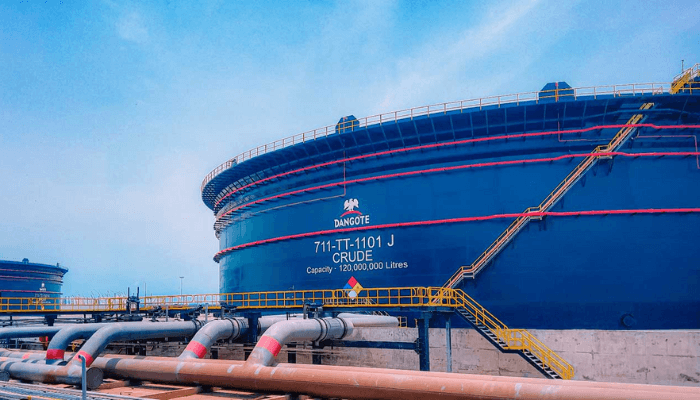
Dangote Petroleum Refinery & Petrochemicals is receiving only five crude oil cargoes per month from the Nigerian National Petroleum Company, less than half of the 13 it needs to sustain full domestic supply, a shortfall that is forcing Africa’s largest oil refinery to scramble for expensive imports on international markets even as a geopolitical crisis drives global energy prices sharply higher.
The gap between what state-owned NNPC supplies and what the refinery requires is exposing structural fault lines in Nigeria’s energy policy at the worst possible moment.
Benchmark Brent crude prices have surged roughly 26 percent to above $84 a barrel in recent weeks, propelled by the Middle East conflict that has shuttered refinery capacity across the region and triggered a global scarcity of petroleum products.
Read also: NNPC reform begins — But transparency alone is not enough
China, the world’s largest crude importer, has compounded the squeeze by banning exports of gasoline and diesel.
To bridge the gap, the Lekki-based refinery has been forced to procure additional cargoes from local and international traders at open-market foreign exchange rates, a significantly costlier route that has piled pressure onto its operating margins.
The cargoes it does receive from NNPC are paid for in naira, but are nonetheless priced at international market rates plus a premium.
“Nigerian crude oil is more expensive than the Brent benchmark price by $3 to $6 per barrel. After adding freight of $3.50 per barrel, crude oil lands in our tanks at between $88 and $91 per barrel,” Dangote Petroleum Refinery & Petrochemicals said.
That compares starkly with the $68-per-barrel landing cost when the refinery’s ex-depot price for Premium Motor Spirit stood at N774 per litre.
Since then, surging crude and freight costs have forced it to raise prices by N100 per litre, a 12 percent increase, even as it voluntarily absorbed 20 percent of the total cost escalation to cushion Nigerian consumers from the full force of the global shock.
Nigeria’s upstream producers are also falling short of separate crude supply obligations under the Petroleum Industry Act (PIA), the landmark 2021 legislation that was meant to, among other things, incentivise domestic refining.
The refinery said that non-compliance by upstream operators has left it with no choice but to source a substantial portion of its crude feedstock through international traders, who charge additional premiums on top of already elevated spot market prices.
Despite the pressure, Dangote insists it will continue to prioritise the Nigerian domestic market over exports, framing local refining as a strategic buffer against external shocks roiling global energy supply chains.
The refinery said it was positioning itself as an “energy lifeline” for West Africa’s most populous nation, helping moderate foreign exchange demand by reducing the need to import refined products.
Read also: AEDC eyes 350MW injection from NNPC plant to boost electricity supply
On the logistics front, the company said it was accelerating the deployment of Compressed Natural Gas-powered trucks to lower distribution costs nationwide, with a rollout scheduled to begin this month. The initiative aims to reduce delivery costs and shorten supply timelines for retail markets across Nigeria’s sprawling downstream sector.
The Dangote refinery, which has a nameplate capacity of 650,000 barrels per day and is the largest single-train refinery in the world, has been touted by Nigerian officials as a potential game-changer for the country’s perennial fuel supply crisis. Nigeria, despite being Africa’s largest crude producer, has for decades been almost entirely dependent on imported refined petroleum products owing to the collapse of its state-run refineries.

