
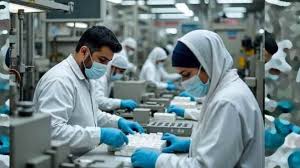
Pakistan’s pharmaceutical industry, valued at Rs. 748 billion, faces challenges with API imports. Localizing API production could enhance economic stability and healthcare affordability.
Pakistan’s pharmaceutical manufacturing industry is one of the country’s largest and fastest growing industries. It includes more than 650 manufacturers and accounts for approximately Rs. 748 billion in annual sales. And yet despite consistent growth, the local industry has largely failed to localize production of APIs (Active Pharmaceutical Ingredients). The term refers to the therapeutic chemical compounds in every medication. Some of the more prolific APIs include paracetamol, penicillin, and ibuprofen among others. For the most part, costly APIs are imported into Pakistan where they are processed into finished medicinal products.
Pakistan must localize API production. This will result in multiple economic and societal benefits including but not limited to improved balance of payments, increased employment opportunities, and lower cost of medical care.
Even though the pharmaceutical industry has an impressive annual sales value of Rs. 748 billion, excessive reliance on imported APIs exposes it to supply chain disruptions. Presently a staggering 85-90% of Pakistan’s APIs are imported, primarily from India and China. In 2022 Pakistan’s API import costs stood at $330 Million, while in 2024 the country’s domestic API market stood at a modest $175 Million, representing a significant trade imbalance. Essentially, Pakistan imports APIs nearly twice the value of its domestic production.
It is important to note that pharmaceutical companies pass on the high cost of imported APIs to the Pakistani consumer. Alternately, increased domestic production would reduce the cost of manufacturing and allow for greater consumer affordability.
Moreover, in view of global supply chain inefficiencies – as seen during the Covid-19 pandemic – many countries recognized the benefits of localized API production. An excellent example of this can be seen is India’s Production-Linked Incentive (PLI) scheme that allows the country to indigenize API manufacturing. Currently our neighbor manufactures thirty eight APIs domestically – and this number will only go up in the years ahead. Pakistan must learn from such constructive examples and develop a robust domestic API manufacturing ecosystem.
In addition to alleviating import dependency, localized API production can also significantly reduce the costs of manufacturing for pharmaceutical companies. APIs typically account for at least 52% of a medicine’s cost. Local production would circumvent import expenses like custom duties, freight charges, and foreign exchange fluctuations. More importantly, it will allow Pakistani manufacturers a pricing edge both at home and abroad.
Additionally, if the Pakistani patient population has ready access to effective drugs at affordable rates, they are more likely to seek medication/treatment early. This will in turn reduce the likelihood of more serious illnesses in the long term. This potential benefit could serve as a significant advantage for both population health and lower healthcare costs.
Localized API production will also lead to increased employment across Pakistan. At present, the pharmaceutical industry directly employs some ninety thousand and indirectly creates a hundred and fifty thousand additional jobs. Increased API production will contribute to a significant increase in both numbers.
In terms of directly employment, there will be a high demand for industrial engineers, quality control specialists, and pharmacists among others. Similarly, complimentary industries like chemical manufacturing, distribution & warehousing, transportation, and packaging will see a fast expanding workforce.
Two local companies have successfully showcased the potential for domestic API production: Pharmagen and Citi Pharma.
Pharmagen Limited manufactures APIs such as paracetamol, cefixime, and ciprofloxacin. In 2023, the company reported impressive revenue to the tune of Rs.14.616 Billion – a full 24.5% YoY growth rate.
Citi Pharma has reported similarly impressive numbers. It now supplies APIs to companies like GlaxoSmithKline, Abbott Laboratories, and Martin Dow among others. Additionally, Citi plans to maintain a minimum export value of EUR 8,000,000 to the Middle East and North Africa, while eyeing possible expansion as far as North America.
The exemplary success of Citi Pharma & Pharmagen Limited showcase Pakistan’s stellar industrial capabilities and offers a detailed roadmap for others similarly inclined.
The global pharmaceutical industry is projected to grow at a rate of 7.41%. Strategic investments at this stage will allow Pakistan to become a competitive global exporter of premium and affordable APIs. Bangladesh, for example, has done just that. Over the last five years the country has exported APIs worth $40 million – and much more is expected in the years ahead.
The example of other countries that have localized API production reveals the crucial role of government in creating an enabling environment. In addition to grants and favorable loan schemes, the state must improve manufacturing regulations, develop technological and operational capacity for human resource training, and possibly establish more industrial estates.
By focusing on localized API production, Pakistan can reduce its problematic dependence on imported APIs, decrease pharmaceutical manufacturing costs, improve affordability of medication, generate employment, and strengthen the national economy. Pharmagen & Citi Pharma have proven that successful API production in Pakistan is achievable. All that is needed now is for others to follow suit.