
There are increasing concerns over the harm being done by so-called ‘forever chemicals’, and research has now linked some of these substances with weakened bones in children.
Per- and polyfluoroalkyl substances (PFAS) have been given their nickname because they stick around so persistently in the environment. They’ve been used in manufacturing and other industries for decades, and are basically impossible to avoid.
In a new study, researchers from across the US and Canada looked at health data logged for 218 kids as they grew up, examining levels of several PFAS in their blood: perfluorohexane sulfonic acid (PFHxS), perfluoroctane sulfonic acid (PFOS), perfluorooctanoic acid (PFOA), and perfluorononanoic acid (PFNA).
The researchers cross-referenced these levels at certain ages with measurements of bone density across different parts of the children’s skeletons.
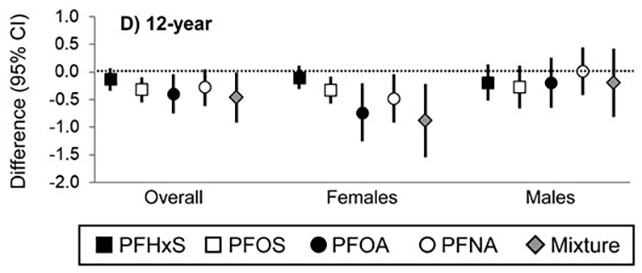
The data showed an association between PFOA and lower forearm bone density at age 12. For the other substances scanned, associations with bone density varied with exposure time, suggesting that age is an important factor in how harmful PFAS might be.
“These findings add to growing evidence that PFAS exposure during early life may carry long-term health consequences, underscoring the importance of efforts to reduce contamination in drinking water and consumer products,” says epidemiologist Jessie Buckley of the University of North Carolina.
Among the other discoveries made by the researchers was that the association between higher PFAS levels and lower bone density was stronger in females, a finding that future studies can examine in more detail.
This is an observational study – where researchers don’t directly intervene – and therefore doesn’t prove a direct cause-and-effect. However, the connections found here are notable enough to suggest links between PFAS and bone density, warranting further study.
The difference between the highest levels of PFAS and the lowest levels could work out to a roughly 30 percent higher chance of bone fracture, the researchers estimate – though it is only an estimation.
As previous studies on this issue have highlighted, lower bone mass at a young age is linked to a greater risk of bone fractures and conditions such as osteoporosis as people grow into adulthood.
The next question is what might be behind the association. The researchers point to earlier research linking several different types of PFAS with vitamin D disruption, which might explain some of the mechanisms at play.
Vitamin D is one of many chemicals and substances the body needs to properly build bone, and although this study only went up to 12 years of age, it’s a crucial time of life for biological growth and development.
“Our findings suggest reducing PFAS exposure during key developmental windows could support healthier bones throughout life,” says Buckley.
PFOA is a common PFAS because it has been used so widely – across textiles, electronics, and cleaning products. As so much research has now linked it to health harms, use of the chemical is now banned globally under the Stockholm Convention, but it remains widely present in the environment.

Of the more than 10,000 PFAS available for use, only a few have been studied for safety, and some have been linked to worrying health outcomes at certain concentrations.
PFOA, for instance, is labeled a carcinogen by the International Agency for Research on Cancer. PFOS is linked to cancer and birth defects, and PFNA has been linked to accelerated biological aging in some people.
While efforts are progressing to find ways to remove the most harmful of these chemicals from the environment, these efforts are still in the early stages. PFAS have seeped into our food and drink, the water cycle, and the ground beneath our feet, so a lot of scrubbing is required.
This study didn’t look at how bone density progressed into the teenage years and adulthood, which the researchers suggest is something that needs to be looked at next to further confirm the connections highlighted here.
Related: Forever Chemicals Linked to Multiple Sclerosis in Concerning New Study
“Continued research is needed to assess whether these associations persist or evolve into adulthood,” write the researchers in their published paper.
The research has been published in the Journal of the Endocrine Society.