

Sunday May 24, 2026

Mogadishu (HOL) — Goat prices have sharply risen in Mogadishu ahead of Eid al-Adha, with traders and residents blaming drought, weak household incomes and higher transport costs for putting sacrificial animals beyond the reach of many families.
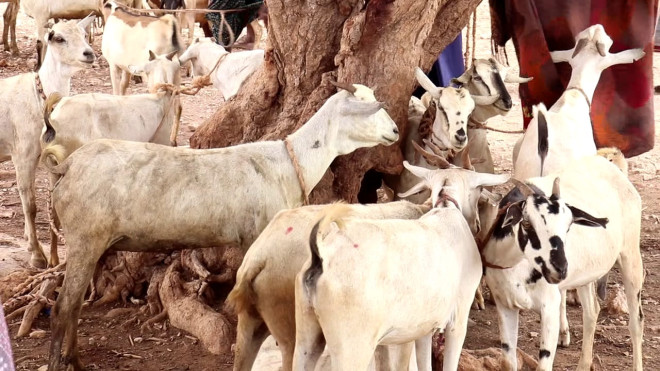
At Dayah Market, one of the capital’s largest livestock trading centers, goats are selling for between $190 and $350, with some animals approaching $400, traders said.
Livestock sellers said they could not remember prices reaching such levels before the Eid holiday.
“The market situation has changed dramatically. The prolonged drought and the lack of money have caused livestock to become more expensive,” one trader at Dayah Market said.
Traders said poor rainfall and limited pasture have reduced the number of healthy animals arriving in Mogadishu, driving up prices at a time when demand traditionally rises for Eid al-Adha.
Some buyers said the increases have created a heavy financial burden for families already struggling with inflation and the rising cost of basic goods.
“A sheep that used to cost $150 is now worth more than $250,” one market vendor said.
Eid al-Adha is one of the most important holidays in the Islamic calendar, when many Muslim families slaughter livestock as part of the annual sacrifice. In Somalia, the holiday usually brings a surge in livestock sales, but this year’s prices have left many households reconsidering what they can afford.
The price pressure is also being felt outside Somalia. In Dubai’s Al Qusais livestock market, traders said Somali sheep prices have risen by as much as 40% ahead of Eid al-Adha as demand increases and regional shipping costs climb.
Kamran Khan, owner of Muhammad Ejaz Livestock Trading, said prices typically rise before Eid because of high demand, but regional tensions and disruption to shipping have made the increase sharper this year.
“Usually before and during Eid, prices of livestock increase due to supply and demand, but with the tension in the region the prices surged,” Khan told The National.
He said Somali sheep that previously sold for 750 dirhams, or about $204, are now selling for between 1,000 and 1,100 dirhams.
Animals from Somalia are usually transported by sea to Gulf markets, but disruption linked to tensions around the Strait of Hormuz has increased shipping costs and pushed some sellers to consider alternatives, including importing livestock by air from India.
The price surge in Somalia reflects a wider strain on the livestock economy, where drought, weak purchasing power and disrupted trade routes are combining just days before one of the busiest buying periods of the year.