
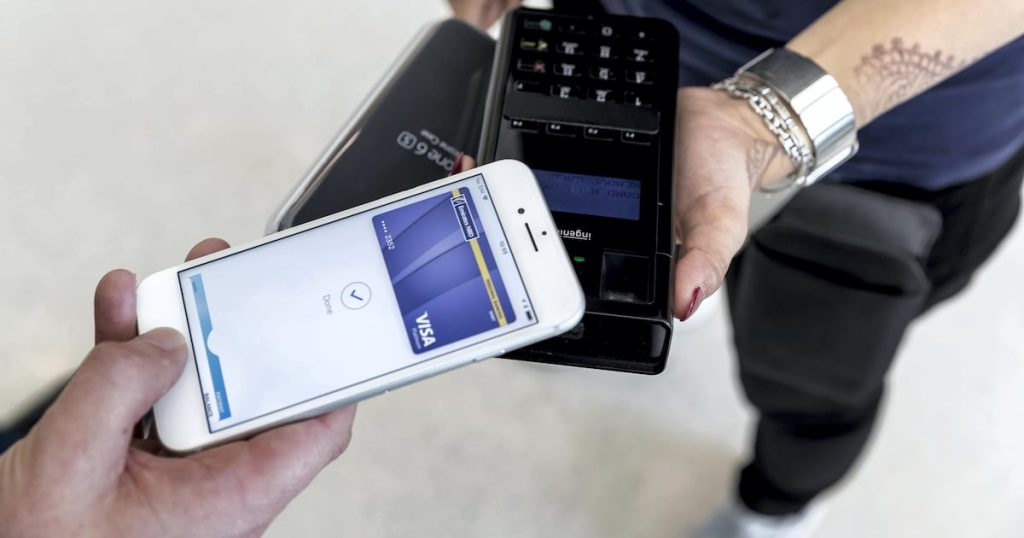
Dubai is moving fast when it comes to adopting cashless payment methods, with the government having set a target that, by the end of this year, 90 per cent of transactions will be electronic.
In one of the latest innovations, authorities have allowed resale activity in the real estate tokenisation market, after it was introduced by the Dubai Land Department in a pilot project in March 2025.
Real estate tokenisation converts property ownership into digital tokens on a blockchain, enabling fractional ownership.
Its introduction, said Stephen Flanagan, regional partner and head of valuation and advisory at Knight Frank Middle East and North Africa, promotes accessibility.
“By allowing assets to be divided into fractional interests, tokenisation lowers [the] entry threshold,” he said. “This opens the market to a broader mix of investors, including those who prefer to allocate smaller amounts across multiple properties rather than commit to a single unit.”
The system promotes transparency and improves operational efficiency Mr Flanagan said, as being blockchain-based, all transactions are recorded.
One concern is that it could encourage property to be treated as “a speculation asset”, suggested Prof Hubert Pun, who researches cashless financial technology, including blockchain, at Western University in Canada.
“That would bring a lot of fluctuation to a real-estate asset,” he said. “That may have implications for the citizens who really need the house to live in.”
Alec Smith, head of residential sales and leasing at Savills Dubai, said that there will always be property speculation with or without tokenisation.
“We’re always going to have that negative,” he said. “People are going to be worried. Does this change that? I don’t think so.”
He said bringing in additional investors to a property market would tend to make it “more stable”.
Tokenisation in the property market is only one way in which the UAE authorities are pushing the envelope in the digitalisation of financial transactions.
Cashing out
In October 2024 Dubai initiated the Dubai Cashless Strategy, which promotes digital transactions in the public and private sectors.
The Digital Dirham, a Central Bank Digital Currency (CBDC) based on a blockchain-type technology, formally became legal tender in late 2025 with the aim of making payments faster and more secure. In dozens of other countries central banks have launched or are looking to create digital currencies.
Does the march of these new technologies make notes and coins increasingly obsolete?
If it does, what will a cashless society of apps, credit cards, bank transfers and digital assets look like?
“It will be very convenient. There will be less friction. Rather than having a lot of cash in your bag, you just have everything on your phone,” said Prof Pun.
“If your country is still using physical cash or stuck with the physical, non-digital bank, your country is left behind. A lot of countries, a lot of different governments, are trying to race towards a digital society.”
The shift to digital payments is credited with numerous benefits, including better tax compliance, improved record keeping of payments, cost savings, convenience and easier cross-border transactions.
“Maybe five years from now, nobody talks about cross-country payment any more, because payments can be moved very fast and also very low cost, just like email versus physical snail mail,” Prof Pun said.
Nations as diverse as Saudi Arabia, Brazil and India have had state-led interventions to promote cashless payment platforms.
In China consumers have embraced mobile payments, bypassing the use of credit or debit cards.
“Five or six years ago they had already leapfrogged to a cashless society – they pay everything directly through an app called Alipay or maybe the WeChat Pay, so that is a cashless society. As long as there’s internet available, that makes a cashless society very possible,” Prof Pun said.
Momentum also comes from the private sector. As well as the introduction of new forms of electronic payments, many shops and other businesses no longer take cash.
A reason for this is that accepting cash costs money. Employees or security firms may have to take it to the bank, making dealing with cash “relatively expensive”, said Alistair Milne, professor of financial economics at Loughborough University in the UK.
“At supermarkets, cash is a bit slower at the tills, so you need a few more staff. The business driver is fairly obvious,” he said.
Holding on to cash
However, small businesses in particular often pay significant charges to card companies, causing some to remain cash-only.
“Many businesses would prefer to have one or the other – either just cards or just cash. Having both is what adds to costs,” Prof Milne said.
Governments have sometimes tried to protect access to cash, such as by penalising banks if they do not continue to provide ATMs, but Prof Milne indicated that ensuring cash’s continued acceptance was more difficult.
This is significant because the shift to a cashless society could complicate life for certain groups, such as elderly people who find making electronic payments more difficult. It also eliminates simple ways to manage spending.
“The £50 (Dh248) shopping money in the biscuit tin is not a bad cash management strategy, but it’s difficult to use that if places are not accepting cash any more,” Prof Milne said.
When it comes to financial crime, a cashless society has pluses and minuses.
Digital transactions leave a digital footprint, potentially making the life of drugs cartels that shift suitcases of cash more difficult.
While there have been infamous electronic thefts, notably the 2016 cyber heist in which Bangladesh Bank lost $101 million (funds that were eventually recovered), banks have high levels of cyber security and the incident was not linked to the cashless society.
Individuals are, however, increasingly at risk of fraud. As Prof Milne puts it, a person is unlikely to give a complete stranger a large sum in cash, but might well transfer this money electronically.
“For the question of individuals being subject to fraud, I think there’s still a lot to be done in terms of providing protections,” Prof Milne said.
“We could go a lot further in terms of robust digital identity verification, but it’s politically difficult, because at least here in the UK, digital identity is often regarded as an infringement of individual liberty.”
There are also society-level security vulnerabilities when cash is no longer in use. It creates the danger of huge upheaval in the event of major external attacks.
“The other thing that often gets forgotten is robustness,” Prof Milne said. “If we get a major cyber attack, which entirely disables our banking system, at the moment we still to a degree have cash to fall back on.
“If society really went truly cashless, that creates quite a substantial security vulnerability, which the authorities would have to think quite seriously about.”