

1 / 6
In a world full of famous cities like Delhi, Mumbai, Tokyo, London, Paris and New York, one metropolis stands out for being almost unbelievably strange. Chongqing, a massive city in southwestern China with over 32 million people, is being called the “world’s craziest city” and once you see how it works, you’ll understand why. Built across steep mountains and deep valleys, Chongqing doesn’t follow normal rules. Buildings flip between ground level and skyscrapers, trains pass through homes, roads stack on top of each other like a puzzle, and even maps can’t help you find your way.
Which is ‘craziest city’ on the Earth?

2 / 6
Chongqing, located in southwestern China, is home to over 32 million people and sits on some of the most extreme terrain of any major city in the world. Built across steep mountains and deep river valleys where the Yangtze and Jialing rivers meet, the city has had to adapt in wild and creative ways.
Why Chongqing known as ‘craziest city’ in the world?

3 / 6
One of the most surreal features of Chongqing is how buildings seem to change size depending on where you stand. Due to the steep slopes, a structure that looks like a normal ground-floor entrance on one side can turn into a 22-storey skyscraper when viewed from the valley below.
Trains that pass through the middle of apartment blocks

4 / 6
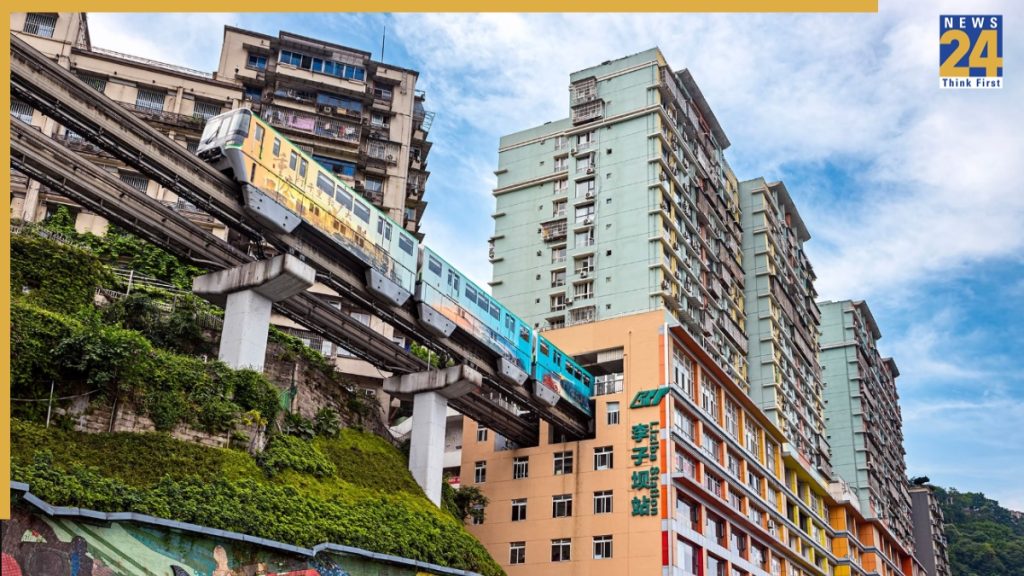
One of the most viral things about Chongqing is the Liziba Metro Station, where a train literally passes through the inside of a residential building. The track runs straight through the 6th floor of an apartment block, with the train travelling through the structure as if it were just another tunnel.
Car lifts, rooftop petrol pumps and floating skyscrapers

5 / 6
Because flat land is rare, Chongqing has developed unique infrastructure: there are lifts designed specifically for cars to move between road levels, petrol stations on rooftops, and even boats with skyscrapers built on top of them. Some restaurants float on the river inside these high-rise boats, offering diners a surreal view of the city’s two rivers meeting in the centre.
Maps are useless here
6 / 6
In Chongqing, traditional maps don’t work. A place that looks close on a flat map might actually be dozens of floors above or below you. The city exists in multiple vertical layers, confusing both locals and tourists. The Huangjuewan Overpass alone connects more than 20 ramps and eight different roads, looking like something designed for a science fiction film.