
TOKYO, Apr 10 (News On Japan) –
In November 2025, a major development shook Japan’s food service industry when U.S. financial giant Goldman Sachs acquired all shares of BK Japan Holdings, which runs Burger King’s Japan operations, for 80 billion yen.
The price marked a more than 50-fold increase from the roughly 1 billion yen valuation when a Hong Kong investment fund acquired the business in 2017, highlighting the brand’s remarkable turnaround over just eight years.
Behind this resurgence lies a marketing strategy that smaller companies can also learn from, built on what is known as the “five principles of BK-style marketing.”
Burger King first entered Japan in 1993 but struggled for years, with franchise rights repeatedly changing hands before the company fully withdrew from the market in 2001, earning a reputation as a failed foreign brand. Although it re-entered Japan in 2007, it remained unprofitable for years.
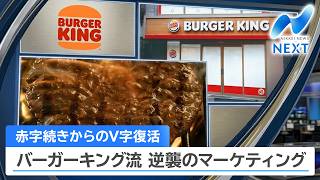
The turning point came around 2019, when sales began to grow steadily, and the number of stores expanded to 337, achieving a V-shaped recovery after years of losses.
This comeback was led by Kazuhisa Nomura, CEO of BK Japan Holdings, who implemented a marketing strategy centered on social media.
The first principle is “If you lack money, use creativity.” When opening a new store in Shimokitazawa with limited advertising budget, the company spotted a social media post from a user asking Burger King to open a branch there. Burger King replied in Kansai dialect, “We’re building it,” and turned the exchange into a large poster displayed at the construction site, generating major buzz at zero cost.
The second principle is “Ask customers.” Instead of spending heavily to find new locations, Burger King offered 100,000 yen to anyone who introduced a suitable vacant property via social media. The campaign drew around 78,000 submissions nationwide, directly contributing to store expansion.
The third principle is “Embrace being teased.” A deformed prototype burger was humorously marketed as the “Ugly Burger,” turning self-deprecation into a hit product by creating authenticity and relatability.
The fourth principle is “Exaggerate and provoke.” On the day a nearby McDonald’s outlet closed, Burger King displayed a “Thank You” poster. However, when read vertically, it revealed a hidden message: “Our victory,” sparking attention with its bold challenge to the dominant competitor.
The fifth principle is “Support strategy with logic.” Burger King’s defining strength lies in its flame-grilling method, which competitors cannot easily replicate. To emphasize this authenticity, the company avoids using computer graphics in its advertisements, instead showcasing real, flame-grilled products.
This blend of playful creativity and calculated strategy has enabled Burger King to turn its fortunes around, demonstrating how unconventional marketing can deliver tangible results even in a highly competitive market.
Source: テレ東BIZ