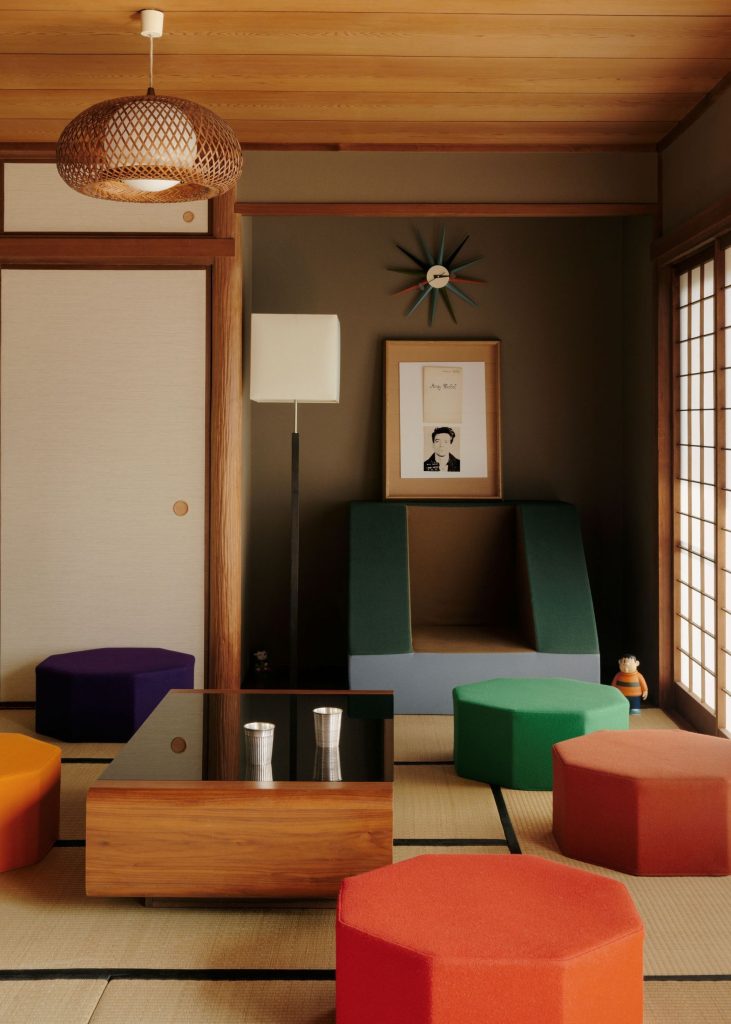
I have always hugely admired Japanese design — the curated calm, the effortless elegance, the intentionality. Along with a distinct connection to nature, balance is key to the aesthetic — balance in space, rather than symmetry — with ’empty’ space just as vital to the overall design as the pieces within it. And with every corner carefully considered, each space becomes its own work of art.
Japanese design principles are centered on so much more than just minimalism — it’s about finding ways to live more harmoniously, more efficiently, and to do that, spaces need to be multi-functional. To honor the creativity of a plethora of stunning Japanese homes, gestalten has just released a new book, A House in Japan: Lessons in Living, which showcases all the unique ways that interior designers and architects have designed homes that epitomize self-expression.
These homes — from compact urban spaces to vast sites in the mountains — are an exercise in problem-solving. They teach us the importance of experiences, in how a space makes you feel, over material objects, and that the spirit of the Japanese home can be applied to your own home, no matter where you live. Below are excerpts from the book, which I was utterly fascinated by — each entirely unique, and just the tip of the iceberg of a collection of breathtaking dwellings.
Article continues below
gestalten
A House in Japan: Lessons in Living
Showcasing a vast array of breathtaking homes by interior designers and architects across Japan, these dwellings are a masterclass in embracing restraint and self-expression.
1. Where Handmade Craft Meets Modern Living
APARTMENT KAIROU — KOOO ARCHITECTS AND ICHIJO-TOMA — MINATO, TOKYO
Image 1 of 5
The decorated internal sliding doors reveal a minimalist tea room, and when closed, create a work of art in the open-plan living space.(Image credit: Keishiu Horikoshi, from A House in Japan: Lessons in Living (gestalten 2026))
When the sliding doors are closed, a work of art is revealed, providing contrast and color to the otherwise neutral-hued space.(Image credit: Keishiu Horikoshi, from A House in Japan: Lessons in Living (gestalten 2026))
The shoji screens across the windows, which run along the entire length of the space and corners on one side, give a wonderful diffused light, while the wood flooring and cabinetry add warmth and depth.(Image credit: Keishiu Horikoshi, from A House in Japan: Lessons in Living (gestalten 2026))
The freestanding kitchen island is sleek and sophisticated, with internal open storage for plates and mugs.(Image credit: Keishiu Horikoshi, from A House in Japan: Lessons in Living (gestalten 2026))
A minimalist bedroom of dreams — the wood-drenched space creates a cocoon of warmth, while the floor-to-ceiling glass door floods the bed with light.(Image credit: Keishiu Horikoshi, from A House in Japan: Lessons in Living (gestalten 2026))
Here, serenity greets you at the entry, where araidashi, a kind of plaster embedded with natural pebbles, quietly announces a home crafted by human hands. This thoughtful materiality continues throughout — from the warm wood underfoot to the intricate shoji screen that wraps around the living, dining, and kitchen area.
2. Finding Stillness in Cedar and Light
TSUSHOSHA — ED NG AND TERENCE NGAN, AB CONCEPT — KARUIZAWA, NAGANO
Image 1 of 5
This grand bedroom breathes elegance from every corner — bathed in light and surrounded by warm natural materials, it is a framed picture of serenity.(Image credit: Owen Raggett, from A House in Japan: Lessons in Living (gestalten 2026))
Standing majestic among the forest and mountains, Itsu Sho Sha is completely at one with nature. The large floor-to-ceiling framed windows allow the view to merge the living spaces with the great outdoors, while also being reflected into the surroundings. (Image credit: Owen Raggett, from A House in Japan: Lessons in Living (gestalten 2026))
The concrete surround of this outdoor seating area frames the view of the natural environment while also providing an intentional contrast.(Image credit: Owen Raggett, from A House in Japan: Lessons in Living (gestalten 2026))
A dining room with endless interest — each element carefully considered to attract and delight, from the decor to the unique seating arrangement.(Image credit: Owen Raggett, from A House in Japan: Lessons in Living (gestalten 2026))
The large cream oval rug grounds the space, adding softness and contrast, while the low-profile seating adds to the negative space provided by the high ceiling.(Image credit: Owen Raggett, from A House in Japan: Lessons in Living (gestalten 2026))
Itsu Sho Sha takes the form of a small village, consisting of a main living area, a studio, a study room, and a guest pavilion. This “village” typology gave the duo [Ed Ng and Terence Ngan] more creative freedom and allowed them to fashion spaces that function both as a personal sanctuary and a design laboratory. Nestled gently into the surrounding forest, the home reflects — and honors — its verdant surroundings.
3. Finding Space and Style in a Narrow Frame
SHOEI HOUSE — HEARTH ARCHITECTS — KOKA, SHIGA
Image 1 of 5
This minimalist open-plan living space is tranquility personified. With diffused light and soft warmth from natural materials all around, it exudes effortless elegance and calm sophistication.(Image credit: Yuta Yamada, from A House in Japan: Lessons in Living (gestalten 2026))
The intentional greenery provides a subtle contrast to the wood cabinetry and neutral-hued walls while bridging a connection to nature.(Image credit: Yuta Yamada, from A House in Japan: Lessons in Living (gestalten 2026))
The strategic light play highlights the foliage and brings life to an otherwise dark corner.(Image credit: Yuta Yamada, from A House in Japan: Lessons in Living (gestalten 2026))
This built-in sofa commands attention without overtaking the space — the construction gives it a complete sense of belonging, where you couldn’t imagine anything else in its place working as well.(Image credit: Yuta Yamada, from A House in Japan: Lessons in Living (gestalten 2026))
An internal courtyard unlike any other, the dark walls on either side and large stepping-stone-like concrete slabs guide you towards the indoor tree, which is gloriously framed by the window and bathed in light.(Image credit: Yuta Yamada, from A House in Japan: Lessons in Living (gestalten 2026))
Inside, the architecture celebrates restraint. Exposed wooden beams line the ceiling, their texture warming the otherwise minimalist interior. Horizontal slatted blinds filter sunlight into shifting bands that glide across the walls throughout the day, adding a graphic touch to the pared-back space.
In the absence of a traditional garden, pockets of greenery were introduced indoors. Small courtyards feature aesthetically arranged plants and rocks; in the double-height volumes, skylights create a vertical “skyspace,” allowing the trees to grow freely.
The Livingetc newsletters are your inside source for what’s shaping interiors now – and what’s next. Discover trend forecasts, smart style ideas, and curated shopping inspiration that brings design to life. Subscribe today and stay ahead of the curve.
4. Finding Concrete Joy on Every Single Level
BUILDING FRAME OF THE HOUSE — IGARCHITECTS — TOKYO
Image 1 of 5
A multi-layered space that defies convention. Floating walls, no doors, and contrasting materials create a feast for the eyes and a living experience unlike any other.(Image credit: Ooki Jingu, from A House in Japan: Lessons in Living (gestalten 2026))
Despite the vast three-storey-high library wall, the space does not look or feel cluttered. The multifaceted home makes the ordinary extraordinary.(Image credit: Ooki Jingu, from A House in Japan: Lessons in Living (gestalten 2026))
This home breaks the norm from the outside in.(Image credit: Ooki Jingu, from A House in Japan: Lessons in Living (gestalten 2026))
This bedroom gives a new meaning to a floating bed.(Image credit: Ooki Jingu, from A House in Japan: Lessons in Living (gestalten 2026))
The wood flooring and cabinetry create a lovely contrast against the concrete walls and ceiling, and the considered treatment of the open shelving mirrors the colors and textures of the surrounding materials for a cohesive space.(Image credit: Ooki Jingu, from A House in Japan: Lessons in Living (gestalten 2026))
Designed for a couple whose lives flow seamlessly between work and leisure, the house rejects the notion of fixed boundaries. Instead of compartmentalizing functions through walls, IGArchitects designed floors that stagger and float, allowing the inhabitants to feel each other’s presence, even from opposite ends of the space.
5. A Kaleidoscope of Color and Creativity
KOLORU HOUSE — RAMDANE TOUHAMI — SHINJUKUM TOKYO
Image 1 of 5
Gloriously joyful, playful, and inviting, the layered, colorful seating in this space gives drama to an otherwise ordinary room.(Image credit: Jonathan Leijonhufvud, from A House in Japan: Lessons in Living (gestalten 2026))
The seating in this tea room is at once angular and soft, and plays against the slim, round central table with the gold tea set.(Image credit: Jonathan Leijonhufvud, from A House in Japan: Lessons in Living (gestalten 2026))
This wood-drenched space is already warm, but the skylight adds another layer of warmth, while the whimsical yet intentional decor creates pockets of joy.(Image credit: Jonathan Leijonhufvud, from A House in Japan: Lessons in Living (gestalten 2026))
The low-profile stools and coffee table create a feeling of more space and add an instant sense of calm, and while there are lots of colors in the room, none are overwhelming.(Image credit: Jonathan Leijonhufvud, from A House in Japan: Lessons in Living (gestalten 2026))
This is a space full of confidence and self-expression, embodying its occupants beautifully while welcoming guests, too.(Image credit: Jonathan Leijonhufvud, from A House in Japan: Lessons in Living (gestalten 2026))
Every detail in Koloru House is a reflection of the couple’s shared sensibility: a deep respect for craft, an openness to impermanence, and an instinct for beauty that transcends borders. Streamlined yet incredibly expressive, it captures the family’s ongoing exploration of home — not through permanence, but through making a space your very own, no matter how long you stay.
Bring the Aesthetic Home
NARUMI 鸣海
Cotton Cloth Japanese Noren Curtain
Japanese ‘Noren’ curtains are great for adding a softer sense of separation, particularly in smaller spaces and this green hue is wonderfully sophisticated.
H&M
Rice Paper Floor Lamp
Paper is a key material in Japanese-style decor, from shoji screens to rice paper lamps, and this style brings gentle curves with a diffused light for a cozy space.
Wayfair
Latitude Run Leunne Solid Wood Folding Room Divider
Another common decorative feature of Japanese homes is the shoji screen — in place of the traditional translucent screen, this room divider would give a similar effect.
As A House in Japan proves, embracing restraint can lead to endless possibilities, and a home should always reflect its inhabitants for harmonious living. These five homes are just a taste of the amazing homes showcased in this book — to see all the wondrous creativity featured, order your own copy of A House in Japan: Lessons in Living by gestalten on Amazon or directly at gestalten.
If you’re feeling inspired to bring the spirit of the Japanese home to your own, these are the things you’ll find in Japanese homes that make spaces calmer and ‘move better’.