
Close Menu
Simply Invest Asia
  • Home
  • About us
  • Explore industries/sectors
    • Automobile
    • Aviation
    • Banking
    • Biotechnology
    • Chemical & Fertilizer
    • Entertainment and Media
    • Food Processing
    • Healthcare
    • Iron and Steel
    • Leather
    • Mining
    • Oil and Gas
    • Pharmaceutical
  • Explore by countries
    • China
    • Dubai / UAE
    • Hong Kong
    • India
    • Indonesia
    • Japan
    • Malaysia
  • Explore cities
    • Bangkok
    • Beijing
    • Chongqing
    • Delhi
    • Dubai
    • Guangzhou
    • Jakarta
    • Kuala Lumpur
  • Why Asia
Facebook X (Twitter) Instagram Threads
Trending:
  • Beijing trying to “confuse international opinion” through dialogue with a Taiwanese opposition party
  • NCLAT upholds fund distribution to dissenting creditors in OCL Iron and Steel case
  • Hong Kong Grants First Stablecoin Licenses To HSBC And Standard Chartered — TradingView News
  • Armor buried under Japanese temple linked to ancient Korean kingdom
  • St Mary’s Catholic Church, Dubai reopens with strict mass attendance rules
  • India’s Artisans Are Driving a New Global Design Residency Ahead of Milan Design Week 2026
  • Portugal surpasses Italy in automobile production
  • Vessel buyout scheme launched in Indonesia to help conserve CITES-protected shark, ray populations
  • Malaysia tech sector outlook positive, but risks cloud 2026 growth
  • Chongqing Changan Automobile Company Limited Reports Earnings Results for the Full Year Ended December 31, 2025
  • 55 Years on China-Belgium Diplomatic Ties: Seize the China Opportunity in the Year of the Horse
  • Architect who helped capture Dubai’s lost past and chart Sharjah’s future retires after 50-year career
  • Hong Kong Grants First Stablecoin Licenses To HSBC And Standard
  • As Dubai’s property sector moves towards tokenisation, what could a cashless society look like?
  • Highest temperature in Kuala Lumpur on April 10? Trading Odds & Predictions (Apr. 10, 2026)
  • The healthcare system is bleeding money. Predictive AI is the only way to stop it.
  • Chula to Host ICA Regional Hub Thailand 2026 – Chulalongkorn University
  • What to know about U.S.-India ties in a changing global order
Friday, April 10
Facebook X (Twitter) Instagram
Simply Invest Asia
  • Home
  • About us
  • Explore industries/sectors
    • Automobile
    • Aviation
    • Banking
    • Biotechnology
    • Chemical & Fertilizer
    • Entertainment and Media
    • Food Processing
    • Healthcare
    • Iron and Steel
    • Leather
    • Mining
    • Oil and Gas
    • Pharmaceutical
  • Explore by countries
    • China
    • Dubai / UAE
    • Hong Kong
    • India
    • Indonesia
    • Japan
    • Malaysia
  • Explore cities
    • Bangkok
    • Beijing
    • Chongqing
    • Delhi
    • Dubai
    • Guangzhou
    • Jakarta
    • Kuala Lumpur
  • Why Asia
Simply Invest Asia
Home»Explore by countries»India»What to know about U.S.-India ties in a changing global order
India

What to know about U.S.-India ties in a changing global order

By IslaApril 10, 20265 Mins Read
Share
Facebook Twitter Pinterest Threads Bluesky Copy Link


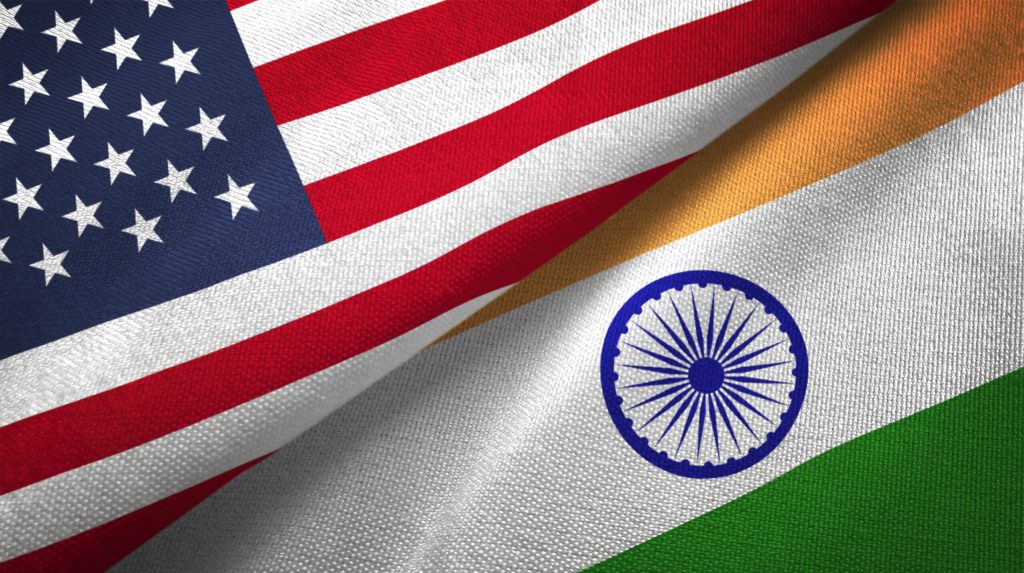
At a moment of global fragmentation, the India-U.S. partnership is emerging as a central pillar of economic, technological, and strategic alignment.

From ongoing conflicts in West Asia to intensifying disruptions in global trade, countries are being forced to rethink how they secure energy, build supply chains, and manage economic risks. As one of the world’s fastest-growing major economies and an increasingly consequential geopolitical actor, India is playing a central role in shaping how this phase of global fragmentation unfolds. That role is closely tied to its relationship with the United States, which is home to more than 5 million people of Indian origin and forms one of the largest and most influential Indian diaspora communities.

At the 2026 Hopkins India Conference, convened by the Gupta-Klinsky India Institute at Johns Hopkins University, leaders across sectors gathered at the Johns Hopkins University Bloomberg Center to discuss the opportunities and challenges defining the relationship today.

“In a rapidly evolving geopolitical landscape, we need spaces that bring together diverse perspectives to think collectively about what comes next,” said Amita Gupta, faculty co-chair of the Gupta-Klinsky India Institute and director of the infectious diseases division of the Johns Hopkins School of Medicine. “The Hopkins India Conference is one such platform, helping to advance partnerships that can drive meaningful progress across the India-U.S. corridor.”

How the India-U.S. relationship has evolved

The India-U.S. relationship has progressed gradually through years of cooperation across defense, trade, and technology to build trust and manage differences. Since then, a partnership has emerged that would have been difficult to imagine even a decade ago. Ambassador Namgya Khampa, deputy chief of mission for the Embassy of India, described that shift as the product of long-term efforts.

“What was once careful, sometimes hesitant engagement has evolved into a partnership that is now central to how both countries envision the world around them—driven by intersecting interests: economic, strategic, security, and technological,” she said. “And this transformation is not sudden. It has been built steadily over years—across governments and through sustained effort on both sides.”

The scale of economic ties reflects that trajectory. The U.S. is now India’s largest trading partner, with bilateral trade surpassing $240 billion and a shared ambition to reach $500 billion by 2030. That growth is increasingly concentrated in sectors where both countries are responding to similar pressures, particularly in technology development, energy demand, and supply chain resilience.

Meeting the rising energy demand

The demands of artificial intelligence, advanced manufacturing, and digital infrastructure are also reshaping how countries think about energy systems. Vivek Lall, chief executive of General Atomics Global Corporation, pointed to this convergence as pivotal to the India-U.S. relationship.

“Energy security is part of national security, and the events of the last several weeks and several months indicate that that is a reminder to all not to separate the two topics,” he said, as recent tensions in the Middle East have raised concerns about global energy supplies.

For India, where economic growth and digital expansion are both accelerating, meeting the growing energy demand is critical. That dynamic is especially evident in nuclear energy, advanced manufacturing, and emerging technologies that require scale and technical capacity. Atul Keshap, a retired ambassador and president of the U.S.-India Business Council, emphasized that the two nations have the potential to build one of the biggest trading relationships in the world.

“People talk about a $500 billion goal for trade between our two countries,” he said. “I would say, as the leader of a business organization that represents 200 of the leading companies in America and India, we ought to be impatient, and we ought to be ambitious, and we ought to be shooting for a trillion dollars in bilateral annual trade.”

Navigating a more fragmented global economy

A growing number of experts view fragmentation as a lasting shift, with 68% expecting a more fragmented global order. For India, this means balancing long-standing priorities with new external pressures. India continues to pursue strategic autonomy while expanding partnerships that support its economic, technological, and defense ambitions. Aparna Pande, senior fellow of India and South Asia at Hudson Institute, described how that tension is playing out.

“The challenge India faces is that the actions of the second Trump administration, whether on the economic front or in India’s external extended neighborhood, have reinforced, at some level, the long-standing Indian belief of self-reliance and strategic autonomy,” she said. “But that conflicts with the reality that India needs partnerships for economic tech and defense ambitions.”

This approach is also reflected in India’s long-term national vision. Through its Viksit Bharat 2047 goal, the country aims to become a developed economy by the hundredth anniversary of its independence, with a focus on expanding industrial capacity, strengthening infrastructure, and scaling innovation across sectors.

What comes next

Experts emphasized that the India-U.S. relationship will be defined by how effectively both countries translate shared priorities into sustained cooperation that complements each other. The U.S brings leadership in innovation, capital, and advanced research, while India contributes scale, talent, and a rapidly expanding technological base. Together, they argued, these capabilities create opportunities with implications that extend well beyond bilateral ties.


Source link

Related Posts

India’s Artisans Are Driving a New Global Design Residency Ahead of Milan Design Week 2026

April 10, 2026

Why Multiple Sclerosis Is Emerging As A Public Health Priority In India

April 10, 2026

India permits Iranian oil tankers to berth for Reliance, sources say

April 10, 2026
Add A Comment
Leave A Reply Cancel Reply

Top Posts

US trade chief says tech restrictions to block Chinese autos

April 10, 2026

Japan to release extra 20 days’ oil reserves from May

April 10, 2026

India's ModiFi Aviations secures NSOP with Falcon 2000 – ch-aviation

April 10, 2026
Don't Miss

Beijing trying to “confuse international opinion” through dialogue with a Taiwanese opposition party

By IslaApril 10, 2026

Taiwan’s Mainland Affairs Council warned the KMT–CCP meeting risks creating a “false impression” that Taiwan…

NCLAT upholds fund distribution to dissenting creditors in OCL Iron and Steel case

April 10, 2026

Hong Kong Grants First Stablecoin Licenses To HSBC And Standard Chartered — TradingView News

April 10, 2026

Armor buried under Japanese temple linked to ancient Korean kingdom

April 10, 2026
SUBSCRIBE TO OUR NEWSLETTER

Get our latest downloads and information first. Complete the form below to subscribe to our weekly newsletter.


I consent to being contacted via telephone and/or email and I consent to my data being stored in accordance with European GDPR regulations and agree to the terms of use and privacy policy.

Stay In Touch
  • Facebook
  • YouTube
  • TikTok
  • WhatsApp
  • Twitter
  • Instagram
Top Trending

Hong Kong Grants First Stablecoin Licenses To HSBC And Standard

By IslaApril 10, 2026

As Dubai’s property sector moves towards tokenisation, what could a cashless society look like?

By IslaApril 10, 2026

Highest temperature in Kuala Lumpur on April 10? Trading Odds & Predictions (Apr. 10, 2026)

By IslaApril 10, 2026
Most Popular

Pharmaceutical Excipients Market: Growth, Trends, and Future

April 9, 2026

bioMérieux invests in Plair to advance real-time monitoring in pharma cleanrooms

April 9, 2026

Malaysia agrees to reopen labor market

April 9, 2026
Our Picks

Indonesian activists target Myanmar’s president in genocide case against him

April 9, 2026

What to know about U.S.-India ties in a changing global order

April 10, 2026

Hikers flee as Indonesia volcano erupts with towering ash clouds – Yahoo News UK

April 9, 2026
SUBSCRIBE TO OUR NEWSLETTER

Get our latest downloads and information first. Complete the form below to subscribe to our weekly newsletter.


I consent to being contacted via telephone and/or email and I consent to my data being stored in accordance with European GDPR regulations and agree to the terms of use and privacy policy.

© 2026 Simply Invest Asia.
  • Get In Touch
  • Cookie Policy
  • Privacy policy
  • Terms & Conditions

Type above and press Enter to search. Press Esc to cancel.

SUBSCRIBE TO OUR NEWSLETTER

Get our latest downloads and information first.

Complete the form below to subscribe to our weekly newsletter.


I consent to being contacted via telephone and/or email and I consent to my data being stored in accordance with European GDPR regulations and agree to the terms of use and privacy policy.