
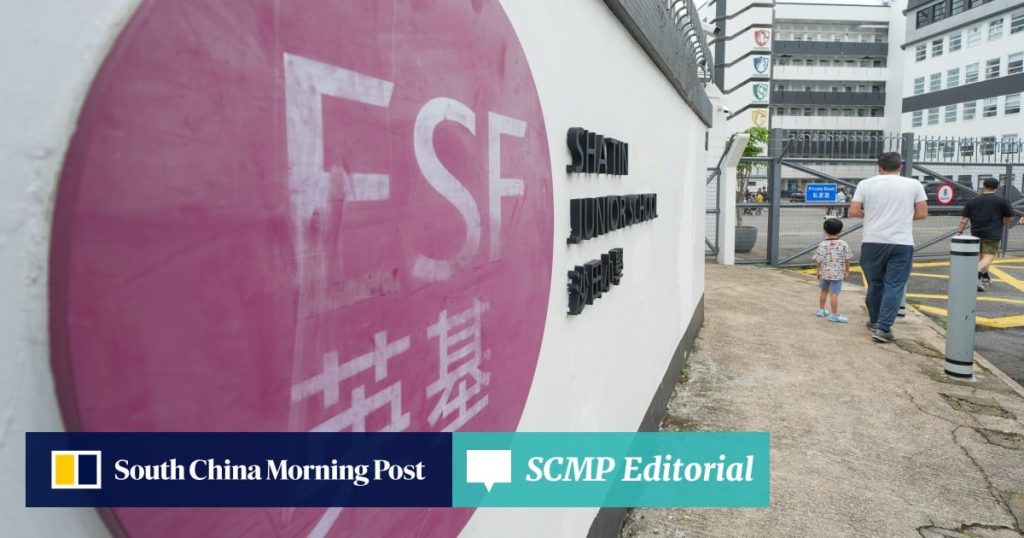
According to the Education Bureau, the proportion of non-local students at some schools had fallen to as low as 39 per cent this academic year, compared with targets ranging from 50 to 98 per cent. Local enrolment rose from 7,713 in 2016-17 to a record 15,142 in 2025-26, currently accounting for 34 per cent of the 44,745 students. The latest proportion of local students is the fourth-highest in the past decade, slightly down from the peak of 34.9 per cent in 2023-24.
The authorities are right to stress the importance of meeting the targets, warning that non-compliance could see service agreements terminated and government sites reclaimed. But the problem must also be put into the wider context. The city is undergoing a critical phase of restructuring to accommodate a range of social, economic and political adjustments. The changing demographic is beyond the schools’ control. The authorities must therefore be realistic and give schools more time to meet the quotas.
This is not the first time the targets have been missed. The bureau issued similar reminders to the institutions after four schools in 2021-22 and five in 2022-23, as well as the ESF, failed to meet the required student mix.
Hong Kong must redouble its efforts to enhance the city’s international appeal. The government’s drive to recruit overseas talent and its investment-for-residency scheme are proactive steps to reverse the brain drain. Hopefully, it won’t take long for international schools to benefit from the inflows.
Schools must also work hard to restore the balance and not simply wait for non-local families to return. In a commendable move, the government-subsidised local secondary schools under the Direct Subsidy Scheme recently organised a trip to Thailand and Malaysia to promote Hong Kong education to overseas students. This is not just a positive step for the schools’ development, but will also contribute to Hong Kong’s goal to become an international study and talent hub.