
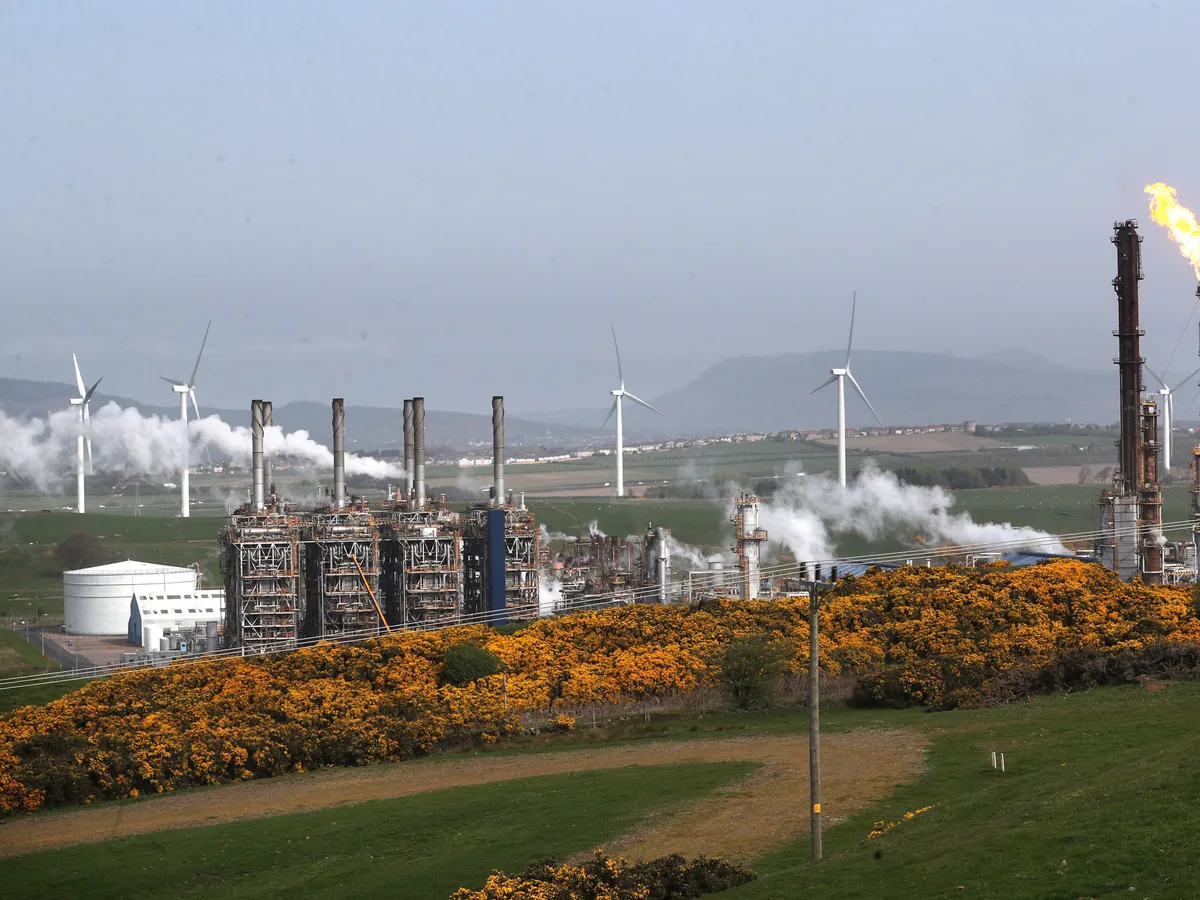
Global energy giant ExxonMobil will close its manufacturing plant in Fife, the company has announced.
The Fife Ethylene Plant at Mossmorran – which produces the base material for plastics – is expected to shut in February.
About 200 direct jobs will be put at risk by the move, according to the Financial Times, along with more than 250 contractors working on the site, in another blow for Scotland’s manufacturing sector.
In a statement, the firm said: “We plan to shut down our Fife Ethylene Plant (FEP) in February 2026, subject to a full employee consultation.
“We considered various options to continue production and tested the market for a potential buyer, but the UK’s current economic and policy environment combined with market conditions, high supply costs and plant efficiency do not create a competitive future for the site.
“FEP has been a cornerstone of chemical production in the UK for 40 years, and its closure reflects the challenges of operating in a policy environment that is accelerating the exit of vital industries, domestic manufacturing, and the high-value jobs they provide.
“We understand and regret the impact this will have on our loyal and valued workforce, contractors and local communities.
“Our priorities are now to support our people through this challenging period, while ensuring continued safe operations through to end of production.”

Scotland’s Deputy First Minister said she was “extremely disappointed” by the “sudden” announcement from ExxonMobil.
“The news of the expected closure of the Fife Ethelyne Plant and the loss of such high-value jobs is a very significant blow to Scotland’s economy,” she said.
“I am extremely disappointed by the sudden news of this commercial decision by ExxonMobil after failing to find a buyer.
“I have met with the business on a number of occasions and expressed my deep concern about the impact this announcement will have on the dedicated workforce, as well as the contractors and supply chain companies whose employment relies on the site.”
The Scottish Government will set up a taskforce to look at what it can do to support workers, but Ms Forbes said the majority of powers sit with the UK Government on such an issue.
“UK ministers must consider what more they can do for the workers at the plant, and take urgent action to address the high cost of energy which is slowly crippling industry, to help support the sector and the livelihoods of those who depend on it,” she said.
Robert Deavy, a senior organiser for trade union GMB, which represents contractors on the site, called for politicians to put together a “planned and measured” transition.
“This is more grim news for workers, their families and communities but exactly how much more bad news is needed before ministers protect jobs and our country’s energy security? How many dominoes have to fall?
“Our members do not need more politicians wringing their hands or making more speeches promising just transitions. There is nothing just about what is going on and there is no transition.
“We need politicians willing to finally stand up and demand an industrial strategy that protects the UK’s crucial oil and gas while actually delivering a planned and measured transition instead of the economic carnage unfolding day by day.”
Earlier this year, the oil refinery at Grangemouth closed its doors after more than a century in operation, with operator Petroineos citing soaring costs.
More than 400 jobs were lost at the central belt site, leaving both the Scottish and UK Governments scrambling to first protect the workforce and subsequently to secure other work.