
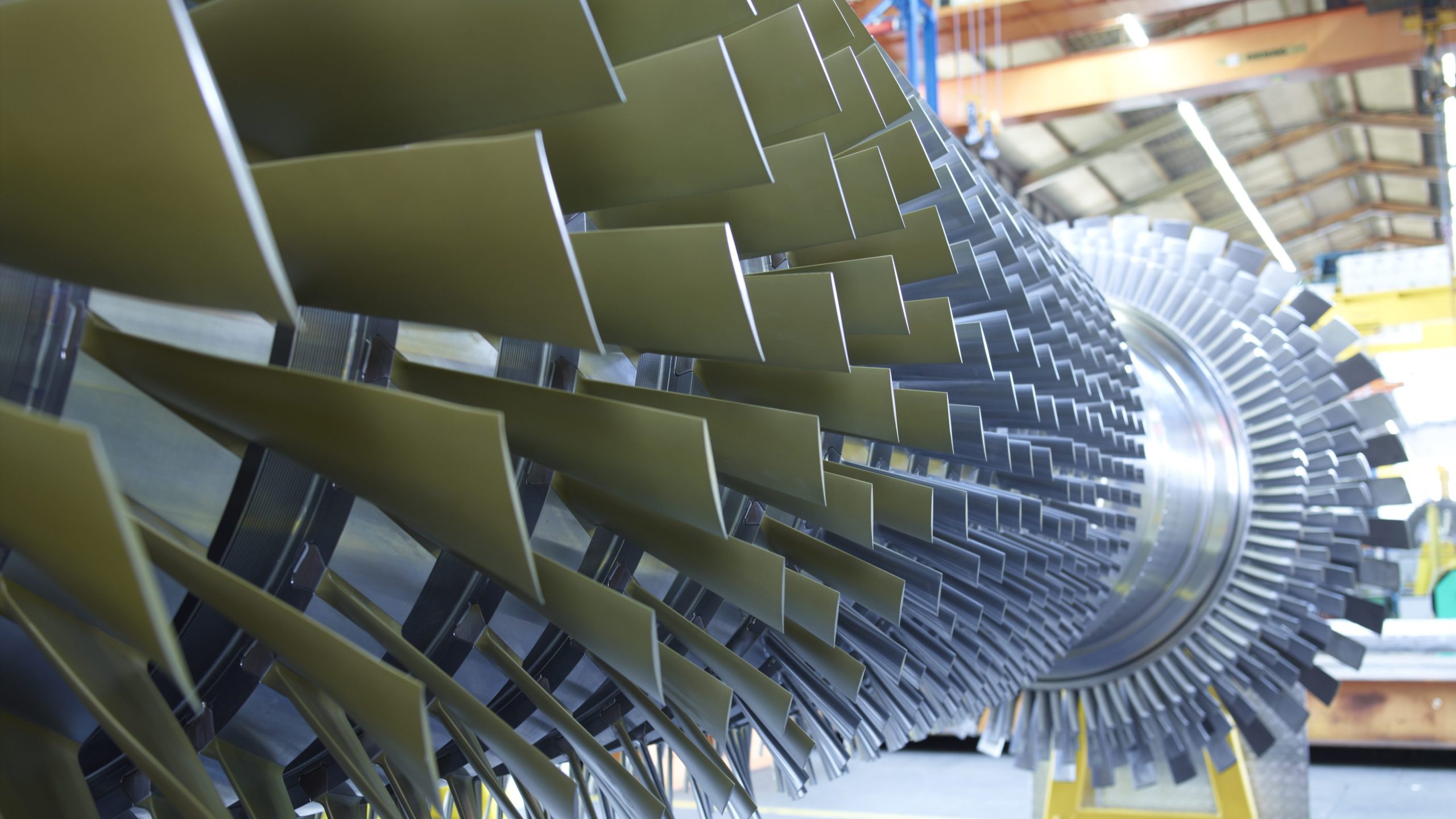
The money flooding in to fund the race to achieve artificial general intelligence has found its way into some lesser appreciated corners of the market. As well as chipmakers and nuclear start-ups attracting huge valuations, the relatively staid old world of gas turbine manufacturing is enjoying its own revival.
This notoriously cyclical business was an unloved part of the market until OpenAI’s launch of ChatGPT two years ago. A multi-year demand slump led to a wave of consolidation and exits, meaning the industry is now dominated by just three main players: Siemens Energy (DE:ENR), GE Vernova (US:GEV) and Mitsubishi Power have a combined market share of about 90 per cent.
The first two have been spun out as part of break-ups of large industrial conglomerates, while the third remains part of Mitsubishi Heavy Industries (JP:7011). Siemens Energy was hived off five years ago, while GE Vernova was spun out in April last year.
Since its spinout, GE Vernova’s shares have risen fourfold, giving it a market capitalisation of about $160bn (£120bn). Over the same period, Siemens Energy’s shares have risen almost sixfold, valuing it at €88bn (£77bn).

The growth in demand means customers currently firming up orders need to wait at least three years before they are delivered. Wait times for some types of grid electrification equipment can be even longer – Siemens Energy’s Grid Technologies arm has orders stretching five to six years into the future, according to Colin Moody, an analyst at RBC Capital Markets.
Group-wide backlogs at both Siemens Energy and GE Vernova equate to about three-and-a-half years of revenue, based on current-year forecasts. Given such robust demand and limited supply, the turbine-makers enjoy pricing power, which is feeding through into higher margins and strong cash generation.
Read more from Investors’ Chronicle
Cash engine
Brokers expect Siemens Energy’s free cash flow to more than double this year to around €3.4bn. GE Vernova, meanwhile, expects to generate free cash of $3bn-$3.5bn.
It is finding good uses for this. Alongside last week’s third-quarter results, GE Vernova said it would spend $5.3bn buying out its joint venture partner in Prolec – a manufacturer of electrical transformers and other grid equipment that it has owned alongside Mexico’s Xignux for the past 30 years. About half of the purchase price will be settled in cash.
Chief executive Scott Strazik said the buyout would leave it better placed to pursue a North American market that it expects to double in size between 2024 and 2030.
The deal also makes GE Vernova look a little more like Siemens Energy, whose own grid technologies arm has been thriving. Although the grid equipment business isn’t as concentrated as that for gas turbines, near-term demand looks stronger in Europe than in the US.
“When you add up the spending plans of the top European grid operators, they’re basically calling for a tripling, or a near-tripling, of their midterm grid spending versus prior periods,” RBC’s Moody said.
As ever for investors, the main challenge is in estimating what has already been priced in, given the strong run that both companies have enjoyed. Moody remains upbeat on Siemens Energy’s prospects.
The demand picture is much broader than from data centres, with turbines required as power plants convert from coal to gas and as more renewables are integrated. On top of this, Siemens Energy now generates a greater portion – 65 per cent, compared with 33 per cent in 2012 – of revenue from servicing existing turbines, having outsourced much of the tricky installation work, Moody said.
GE has said it expects to generate $22bn of free cash flow by 2028, and to return at least a third of this to shareholders through dividends and buybacks, with much of the remainder used to fund organic growth or other acquisitions.
Moody expects Siemens Energy to generate €25bn by 2030 and doesn’t see much scope for acquisitions (the turbine market is too concentrated and multiples for grid companies are very high), so he thinks much of the cash will find its way back to shareholders.
Siemens Energy shares trade at about 33 times forecast earnings. This is only slightly higher than other European grid equipment manufacturers such as ABB (CH:ABBN), Legrand (FR:LR) and Schneider Electric (FR:SU), but Moody said it is growing at “twice the rate over the midterm, has better margin expansion and also has that better visibility”.
He also points to a valuation discount to GE Vernova, which is trading at 46 times next year’s earnings. Although Citi analyst Andrew Kaplowitz acknowledged that GE Vernova looks set to increase earnings faster than most of its peers, a 75 per cent year-to-date gain has left its share price “elevated”, and with the global power supply chains looking tight, near-term valuation growth looks limited.