
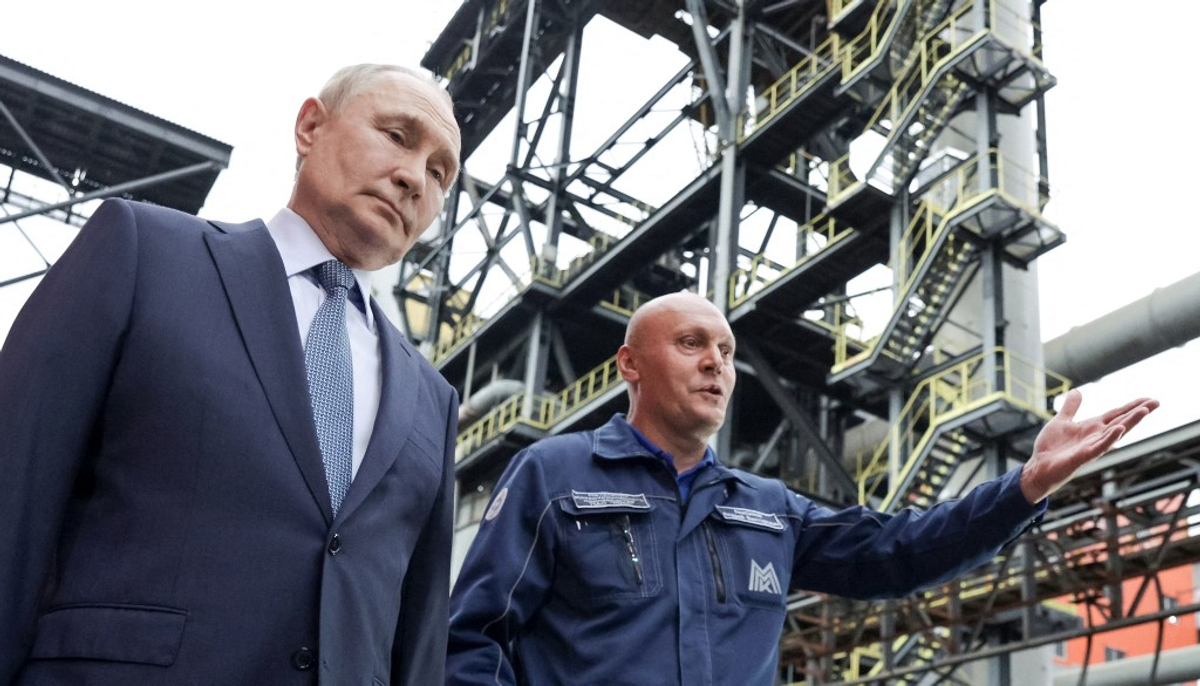
Russia’s heavy industries are cutting jobs and shortening work weeks as the country’s economy weakens in the fourth year of its full-scale invasion of Ukraine.
From railways and car plants to cement, coal, diamonds and metals, major employers are cutting labor costs to cope with weaker demand at home and shrinking export markets abroad, according to a report by Reuters.
JOIN US ON TELEGRAM
Follow our coverage of the war on the @Kyivpost_official.
The agency identified six companies, many of them industrial titans, which have curtailed their working week in order to slash costs without boosting unemployment.
It comes as the Russian economy encounters strain due to falling oil prices, budget constraints, and rising corporate debt. The situation is also complicated by a weak national currency and high interest rates.
Companies have been urged to cut costs and delay investments as access to financing tightens and demand continues to slow. Many are scaling back production schedules, freezing new projects, and reducing working hours to avoid mass layoffs.
Cemros, Russiaʼs largest cement producer with 13,000 employees and 18 plants within Russia, has moved to a four-day week until the end of the year.
The company says it wants to avoid layoffs amid a construction slump and rising imports from China, Iran, and Belarus. It expects national cement consumption to fall below 60 million tonnes this year – the lowest since the Covid-19 pandemic.
Russian Railways, with 700,000 employees, has asked office workers to take three unpaid days off per month as freight volumes decline.
Other Topics of Interest
Latvia Orders 841 Russians to Leave Over Language and Residency Law Violations
It was also reported on Friday that Estonia, Latvia and Lithuania are drawing up contingency plans for mass evacuations in case of a Russian attack as national security concerns intensify.
Vehicle makers GAZ, Kamaz, and Avtovaz have all reduced working hours in response to falling sales, though GAZ later returned to a full schedule, Reuters reported.
Alrosa, the world’s largest producer of rough diamonds, has cut its payroll for all non-mining staff levels by 10% and suspended operations at less profitable sites. It also paused operations at less profitable deposits in spring and summer.
Sveza, one of Russia’s leading timber and paper companies, closed a plywood plant in Tyumen, leaving more than 300 people out of work.
Russia’s coal sector faces one of the sharpest downturns, squeezed by shrinking export markets and mounting financial pressure on producers, the agency reported.
Thirty coal enterprises employing about 15,000 people face bankruptcy. In the Kuzbass region – Siberia’s main coal-mining area – 18 out of 151 operations have already shut down this year, and nearly 19,000 workers have lost their jobs, Deputy Prime Minister Alexander Novak said in April.
Russia’s steel sector, one of the largest in the world, faces “quiet cutbacks,” as plants trim auxiliary staff to avoid more drastic measures. Officials are reportedly mulling a moratorium on bankruptcies in the metals industry.
In 2022, the year the full-scale war began, Russia’s economy shrank by 1.4%. It rebounded afterward, outpacing the G7 average with growth of 4.1% in 2023 and 4.3% in 2024.
This year, the Economy Ministry projects that growth will slow sharply to just 1.0%, though Russian President Vladimir Putin described this as “deliberate.”
Russia is running out of the resources that have provided its economic growth for the past two years following the full-scale invasion of Ukraine, the head of the Central Bank of Russia, Elvira Nabiullina, said during the St. Petersburg International Economic Forum on June 19.