
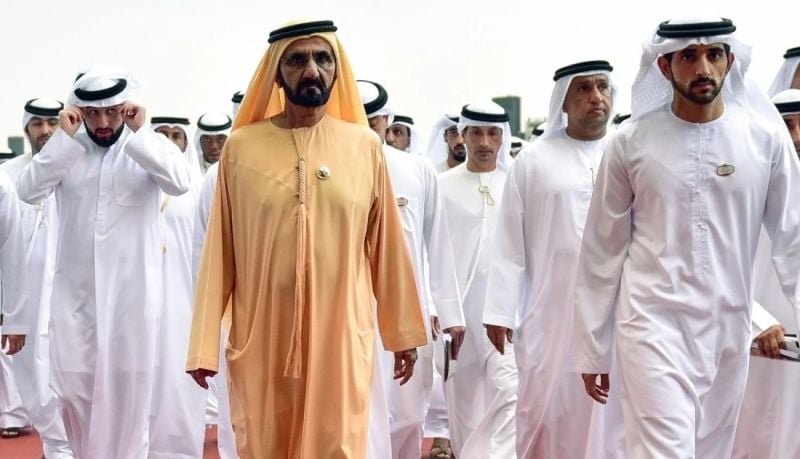
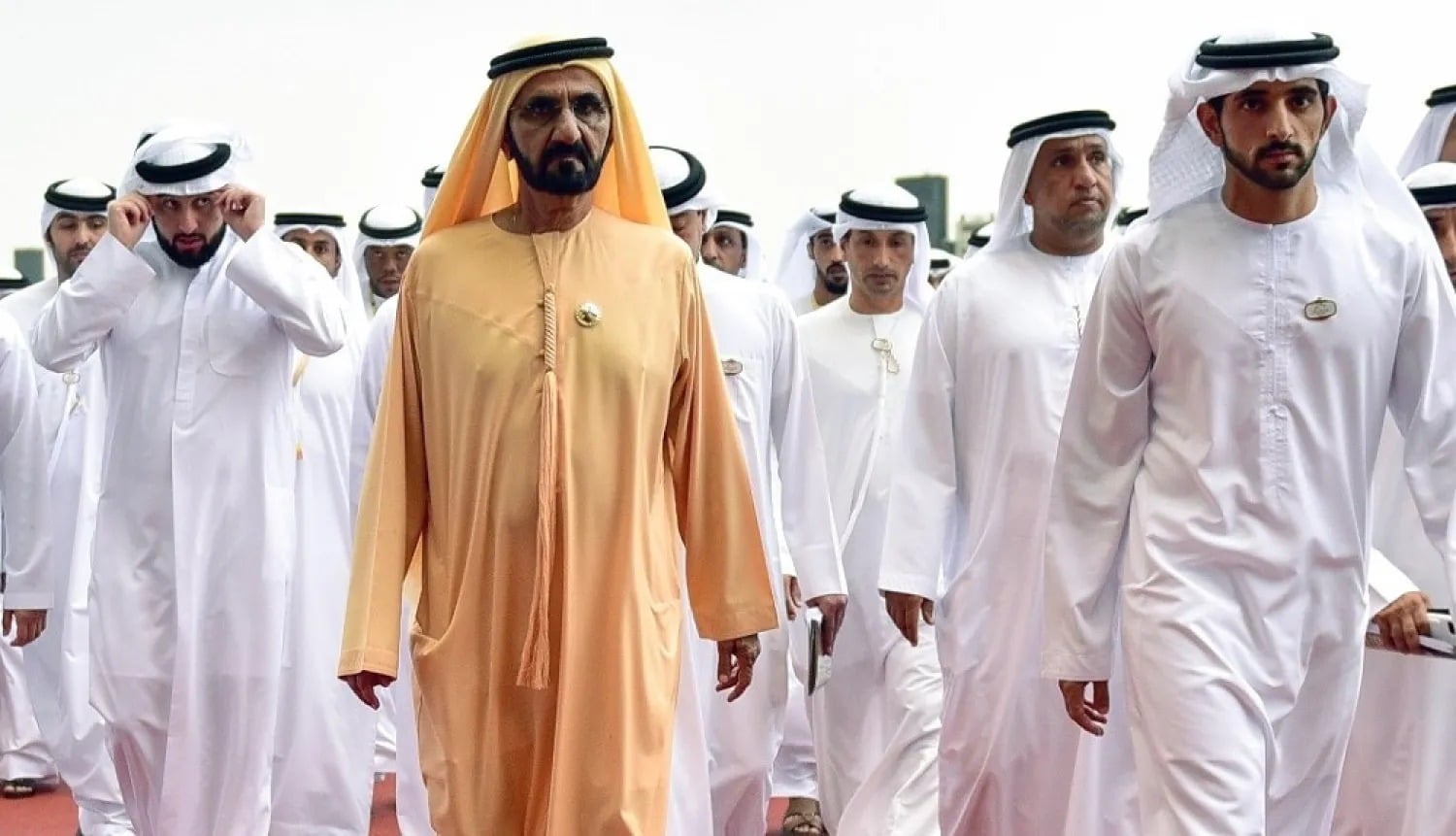
The ruler of Dubai, Sheikh Mohammed bin Rashid Al Maktoum, with his son Hamdan, the crown prince of the emirate, to his left. (Credit: AFP)
By the late 1990s, Dubai had run out of beaches to sell. The ports of Rashid and Jebel Ali occupied the coastline, while hotels had claimed what remained. But Mohammed bin Rashid al-Maktoum still wanted more villas and palaces, even if it meant extending the shoreline. The architects who flocked to his door initially envisioned an island shaped like a sun, with seven kilometers of beach. The crown prince wanted 10 times more. The design stretched, branched out and eventually became a palm tree. For six years, dredgers scoured the Gulf seabed and spat out 94 million cubic meters of sand, which was ringed by rocks brought down from the Hajar Mountains. High above, a satellite monitored the project to make sure the tree grew straight. Twelve billion dollars later, Palm Jumeirah became one of the few man-made structures visible from…
By the late 1990s, Dubai had run out of beaches to sell. The ports of Rashid and Jebel Ali occupied the coastline, while hotels had claimed what remained. But Mohammed bin Rashid al-Maktoum still wanted more villas and palaces, even if it meant extending the shoreline. The architects who flocked to his door initially envisioned an island shaped like a sun, with seven kilometers of beach. The crown prince wanted 10 times more. The design stretched, branched out and eventually became a palm tree. For six years, dredgers scoured the Gulf seabed and spat out 94 million cubic meters of sand, which was ringed by rocks brought down from the Hajar Mountains. High above, a satellite monitored the project to make sure the tree grew straight. Twelve billion dollars later, Palm Jumeirah became one of the few man-made structures visible from…