
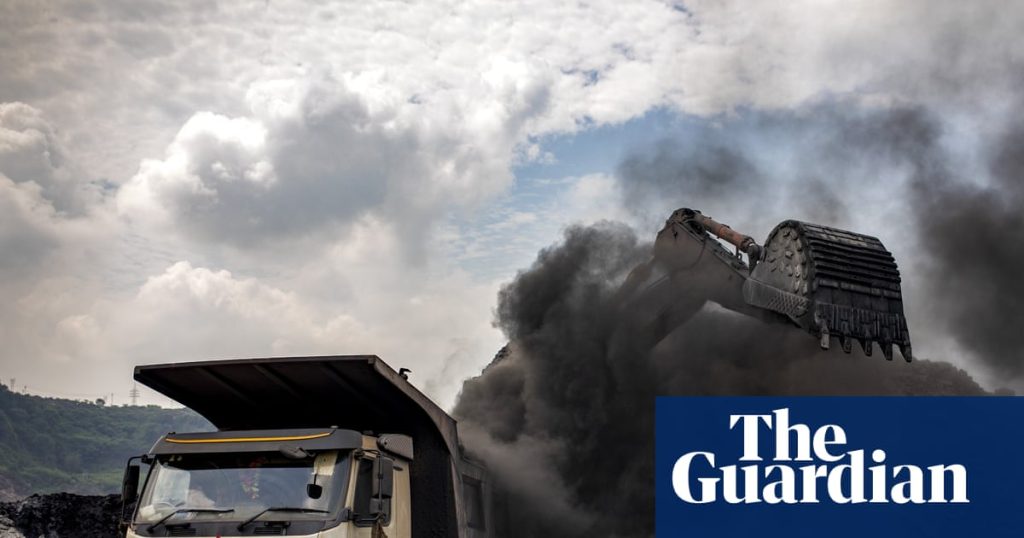
Enough new coalmining projects were proposed last year to increase global supplies by 2.5bn tonnes a year, an increase of 11% from the year before, even as demand for coal plateaus, according to a new report.
Global Energy Monitor, an NGO, found that India ignited a rise in new coalmine proposals in 2025 despite a global slowdown in the number of mine openings because of falling demand for the fossil fuel.
The increase was driven almost entirely by the states of Jharkhand and Odisha, which doubled their proposals for new coalmines in line with an ambitious plan from India’s ministry of coal to increase the country’s output.
India plans to increase its coal production by nearly 100m tonnes to 1.15bn tonnes in the 2025-26 fiscal year to help meet the country’s rising demand for electricity to support economic growth and contend with heatwaves, which have become more severe and more frequent because of the climate crisis.
The planned increases come despite signs that the world is beginning to turn its back on coal in favour of renewable electricity, Global Energy Monitor said.
Coalmine proposals slowed in the years after the Covid-19 pandemic but have begun to climb again, raising concerns that mining could increase in the future despite a slowdown in the number of new facilities.
The startup of new coalmining projects has fallen steadily in recent years, according to the Global Energy Monitor’s latest report.
It found that enough new coalmines to produce about 113m tonnes each year began operations last year, down by 40% from 2024, which was already the lowest annual total in a decade.
This was largely owing to a slowdown in new mines in China and Australia, which fell by 44% and 96% respectively.
Global Energy Monitor warned that India’s rise in new mine proposals was at odds with the slowdown in global coal demand predicted by the International Energy Agency for the end of the decade.
after newsletter promotion
Wind and solar power surpassed coal generation in the global electricity mix for the first time last year, according to a separate report from energy thinktank Ember, in a “milestone moment” for climate action.
China and India were largely responsible for the rise in renewables, according to the Ember report, while the US and Europe continued to rely more heavily on fossil fuels.
Tiffany Means, a senior researcher at Global Energy Monitor and co-author of the report said: “The economic rationale for expanding coalmining becomes progressively weaker as low-cost clean energy continues to displace coal.
“Rather than locking in decades of additional coal production, governments have an opportunity to cancel projects that remain in the development pipeline before they advance to construction.”