
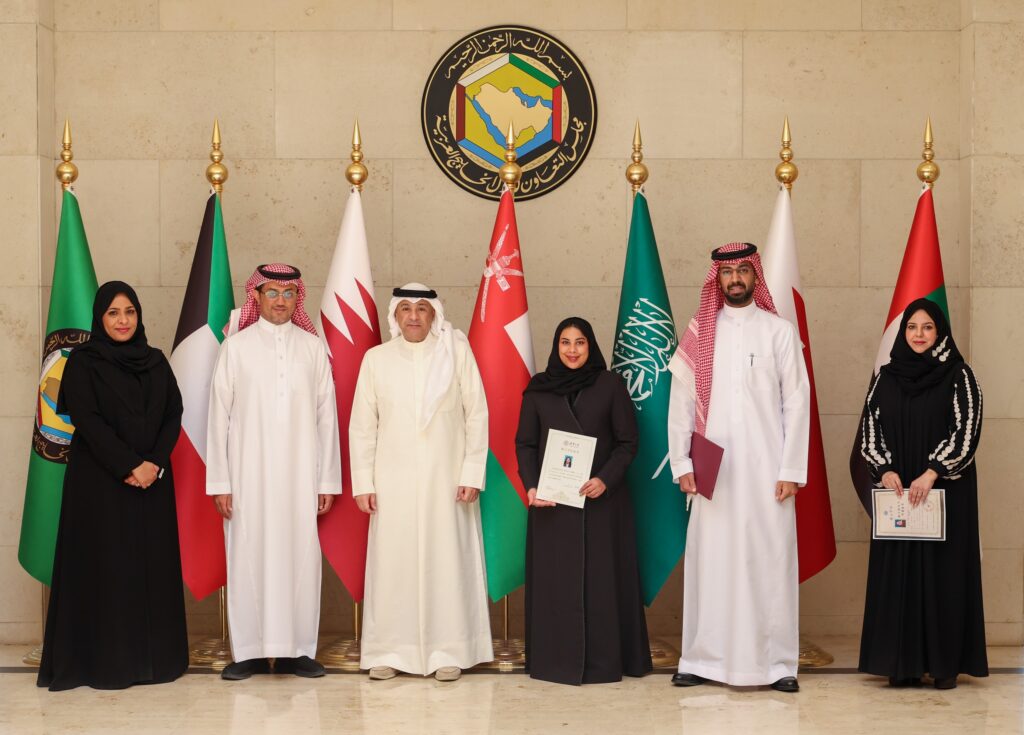
When GCC Secretary General Jasem Mohamed Albudaiwi met employees of the General Secretariat who had completed their master’s degrees in China, the event did not appear especially significant.
There was no summit, no major agreement and no dramatic announcement. The GCC statement simply noted that the employees had studied different subjects in China under a scholarship program and had now returned to their work at the General Secretariat.
Albudaiwi congratulated them and said their new knowledge could contribute to joint Gulf programs and strengthen the work of the institution. The statement did not provide details about the number of graduates, their universities or the subjects they studied.
Still, this small development says something important about the direction of China-GCC relations. The relationship is usually discussed through oil, trade, investment and infrastructure. These remain the most visible parts of the partnership. But China and the Gulf are also building ties through education, professional training and institutional exchange.
These forms of cooperation may not attract the same attention as energy deals or political summits, but they can have a longer-term impact.
Foreign policy is not shaped only by presidents, ministers and ambassadors. It is also shaped by the officials who prepare policy papers, manage joint programs, coordinate with foreign institutions and turn political agreements into practical work.
This is why the education and training of public officials matters. Studying in another country does not automatically mean that a person will support that country’s political position. It would be unfair to suggest that Gulf officials who study in China will return as supporters of Beijing.
But studying abroad does create familiarity. Officials who spend time in China are more likely to understand its institutions, political language, development priorities and administrative culture. They also gain direct experience of how Chinese universities, government bodies and public institutions work.
That familiarity can make future cooperation easier. China and the GCC are already expanding their relationship into areas such as technology, energy, agriculture, education, cybersecurity, tourism and environmental cooperation. The 2022 China-GCC summit also approved a joint action plan for cooperation from 2023 to 2027.
Education is therefore not separate from the wider relationship. It is becoming one of the ways through which that relationship is supported.
China is investing in long-term connections
The GCC statement did not identify the exact scholarship program under which its employees studied. It would therefore be inaccurate to link them to a specific Chinese government scheme without confirmation.
However, China’s wider education and training programs help explain why the development matters. Several Chinese scholarship programs are designed not only for students, but also for government officials, public-sector employees, researchers and institutional managers from developing countries.
The Youth of Excellence Scheme, supported by the China Scholarship Council, offers master’s programs in areas including public administration, international relations, law, engineering and environmental management. It is aimed partly at government officials and professionals working in public institutions and international organizations.
China’s Ministry of Commerce also offers postgraduate programs for officials and professionals from developing countries. These programs are often connected to governance, development, economics, infrastructure and public policy.
China has also announced plans to provide thousands of scholarships and training opportunities to countries across the Global South. This shows that education is not only a cultural activity for China. It is also part of its wider diplomatic engagement.
By training people who later return to ministries, universities and regional organizations, China is building relationships with the institutions that shape policy. This form of influence develops slowly. It does not produce immediate political results, but it can create professional networks that last for years.
GCC adapting to changing times
This relationship should not be seen as China simply trying to influence the Gulf. The GCC is not a passive side in this process.
Gulf states are trying to diversify their economies, strengthen public institutions and expand their knowledge in areas such as digital government, artificial intelligence, infrastructure and economic planning. China has experience in many of these fields.
For GCC institutions, sending employees to study in China can provide access to different development ideas and administrative practices. It can also help officials understand a country that has become one of the Gulf’s most important economic and political partners. The GCC General Secretariat itself has a strong reason to invest in staff training.
It coordinates cooperation among six member states and works across increasingly technical areas. Officials with specialized education and international exposure may be better prepared to manage regional programs and communicate with foreign partners.
The 2025 ASEAN-GCC-China statement also called for greater cooperation through scholarships, student exchanges, research and educational partnerships, particularly in science, technology and engineering. The training of GCC employees in China therefore fits into a wider pattern rather than standing alone.
At the same time, China’s educational role in the Gulf should not be exaggerated. Western universities, military colleges and professional institutions have spent decades building ties across the region. Many Gulf officials have studied in the United States and Europe, and Western institutions still hold a much deeper position in Gulf education and security cooperation.
China is not replacing these relationships. Instead, it is creating another channel of engagement. This gives Gulf states more options and supports their wider policy of building relationships with several global powers rather than relying too heavily on one side.
A quiet form of diplomacy
The meeting between Albudaiwi and the returning graduates was not a major geopolitical event. But it reflected a quiet change in China-GCC relations.
The partnership is moving beyond oil purchases, trade agreements and infrastructure projects. It is also being built through education, professional relationships and direct contact between institutions. These links are less visible, but they may become more important over time.
For China, scholarships and training programs help create familiarity among officials who may later work on Gulf-China cooperation.
For the GCC, they provide access to new knowledge and support a wider strategy of building relationships with different global partners. The importance of these graduates therefore lies not only in the degrees they earned.
It lies in whether their experience changes how the GCC designs programs, manages partnerships and understands China in the years ahead.
That is often how diplomacy develops: not only through major agreements, but through the slower building of knowledge, trust and relationships inside the institutions where policy is actually carried out.

Anoush Taimur
Anoush Taimur is an International Relations graduate from DHA Suffa University, Karachi, currently based in Doha. Her research interests include Gulf politics, small-state diplomacy, Global South studies and conflict
mediation. Her work examines how states create influence through connectivity, institutions and strategic relationships. She can be reached at [email protected]