
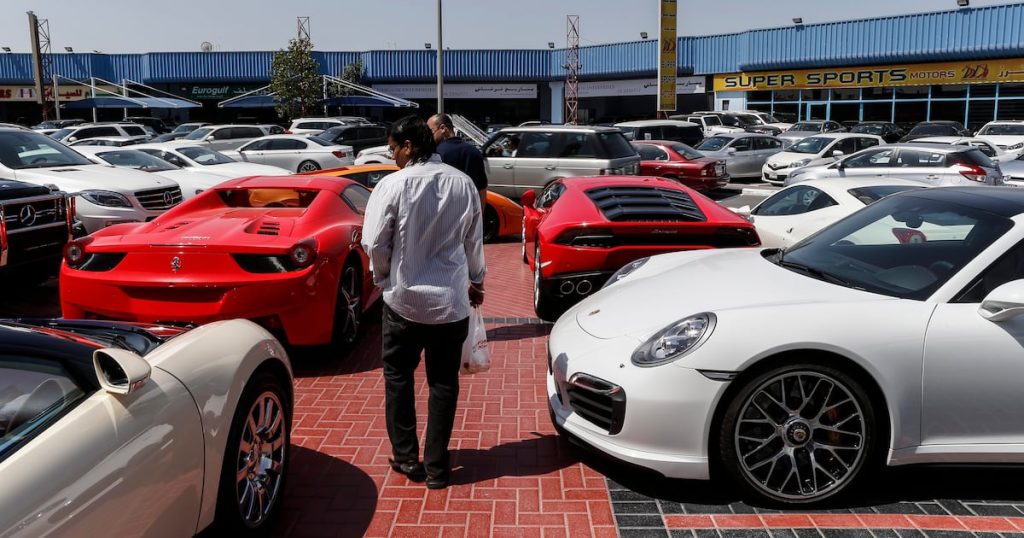
Greater demand for more affordable used cars and mid-term rental properties reflects a more pragmatic approach by consumers to life in the UAE, according to industry professionals.
A recent report on vehicle sales by Dubizzle showed those priced at less than Dh100,000 ($27,300) were in far greater demand than luxury cars, with an appetite for cheaper Chinese-made models.
Elsewhere, an analysis of Dubai’s short-term rental market showed a shifting trend, with stays of 29 nights or longer accounting for almost 70 per cent of bookings in the second quarter of 2026.
Dubizzle cars’ sales director Sherif Magdy said the data showed people were being more cautious with their choices. “We’re seeing a more informed and pragmatic buyer than ever before,” he said.
Cautious buyers
“Today’s consumers are approaching vehicle purchases with a long-term mindset, looking beyond the initial purchase price to evaluate factors such as reliability, maintenance costs, fuel efficiency and resale value.
“Marketplace data increasingly shows that practicality has become one of the strongest drivers of demand, with brands that consistently deliver on quality, durability and overall value continuing to perform exceptionally well on our platform.”
Japanese car manufacturers, led by Toyota and Mitsubishi, recorded some of the strongest growth in buyer interest in June, with more than 9.5 million views on the online marketplace.
Cars priced below Dh100,000 experienced the highest increase in consumer interest, generating more than 16.5 million views, while vehicles within the Dh100,000-Dh200,000 price bracket also showed steady growth.
Ryan Hughes, of RMA Motors, said Chinese vehicles priced at Dh50,000 to Dh100,000 were in huge demand.
“Entry-level expats that are maybe teachers or airline crew are looking in the price bracket of say Dh50,000 to 100,000 for a car,” he said. “They’ve all moved away from Japanese or Korean cars, and more towards the Chinese models.”
He said confidence was slowly beginning to return to car markets, which were severely affected by the disruption of shipping in the Strait of Hormuz.
“The luxury area of the market dried up for a couple of months as people were maybe scared to commit to long-term deals. It’s definitely adding an extra two-three weeks on our times for logistics and getting the cars from Japan over to here. Normally, that’s a really common shipping lane into Jebel Ali,” he said. “We came out of it not too bad in terms of stock, but sales are clearly down over the last four months.”
Mid-term property trend
In the property rental sector, analysts said they had seen renters seeking more mid-term options to stay in the country.
According to the inaugural First Class UAE Short-Term Rental Index, stays of 29 nights or longer accounted for nearly 70 per cent of booked nights at more than 600 properties managed in Dubai, Abu Dhabi and Ras Al Khaimah.
Experts said it was a sign that demand was moving away from leisure breaks towards flexible, longer-term living, while investors wait to see how Dubai’s urban plan develops.
Luis Santos, managing director of First Class Property Management, said future demand will be dictated by developments in transit and local regulations, which will then be reflected in nightly rates.
“As new transport links mature, professionally managed properties located along emerging mobility corridors are expected to become increasingly attractive to both longer-stay residents and visitors seeking convenience,” he said.
“The shift is encouraging travellers and residents alike to place greater importance on practical considerations such as transport access, daily commuting and neighbourhood connectivity.”