
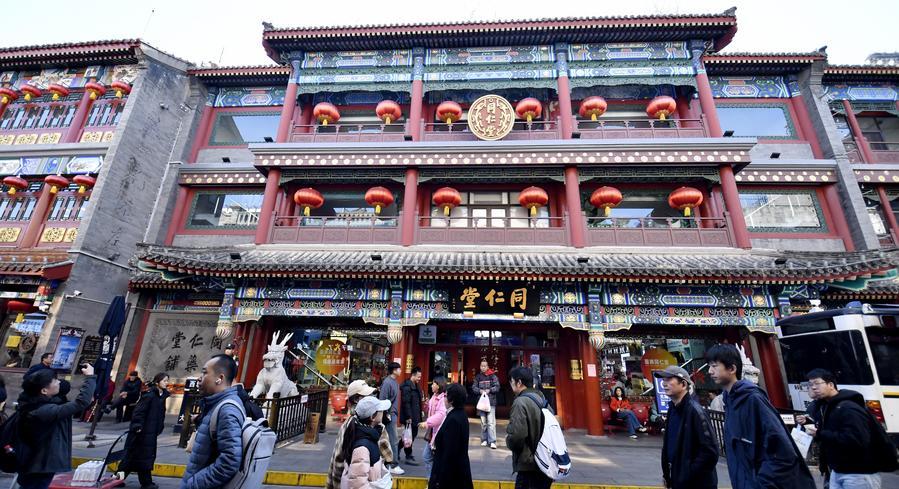
BEIJING, July 22 (Xinhua) — In the bustling Dashilar area, a renowned tourist destination in downtown Beijing, Melvyn, a young man from Brussels, stepped into the Tong Ren Tang pharmacy, a time-honored brand with a history of over 350 years.
This was Melvyn’s second visit to China. Besides sightseeing, he intended to learn more about traditional Chinese medicine (TCM).
Accompanying him was Mana, a young lady from Pakistan, who was experiencing some back pain and decided to seek relief while sightseeing. With the help of the store staff, Mana quickly obtained the medicine she needed.
“I have a keen interest in TCM. I enjoy TCM massages and also like taking ginseng,” said Mana.
Melvyn and Mana are among a growing number of young people, both in China and from abroad, who are keen on TCM.
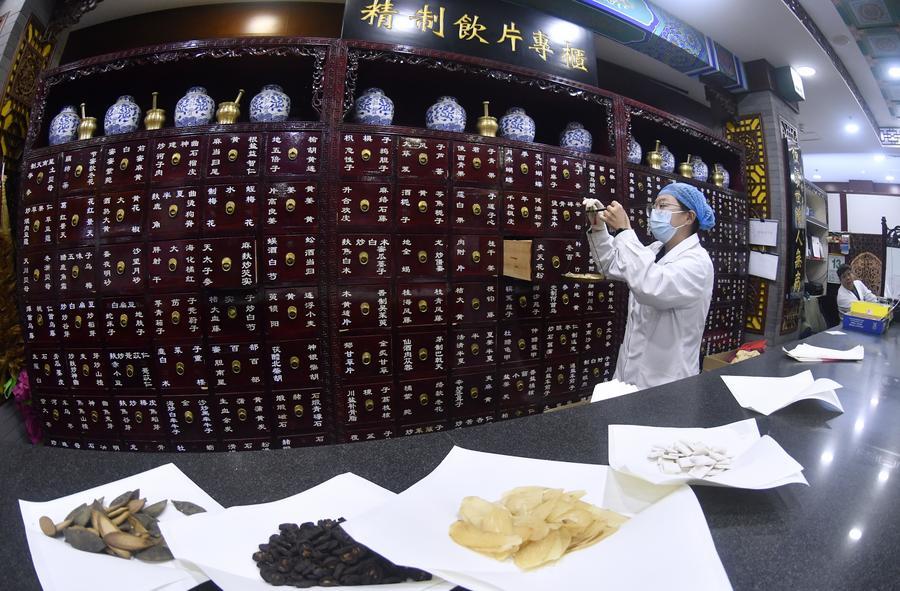
The Tong Ren Tang pharmacy, established in 1669, serves as a window for cultural exchange and display of TCM, drawing visitors of all ages.
The building itself retains its antiquated charm, with shelves inside the building stocked with a wide array of products.
Visitors can not only see a doctor, get prescriptions and purchase medicine, but also buy nutritional supplements, food items, cosmetics and herbal drinks.
In the cosmetics section, Guo Haiyan, who is in charge of product quality control, has introduced an anti-freckle cream, describing it as a highly effective product.
“We used to focus mainly on pharmaceuticals, but later we found that tourists in this area have a huge demand for cosmetics,” she said.
She also pointed to incense sticks, noting that they have gained popularity abroad in recent years.
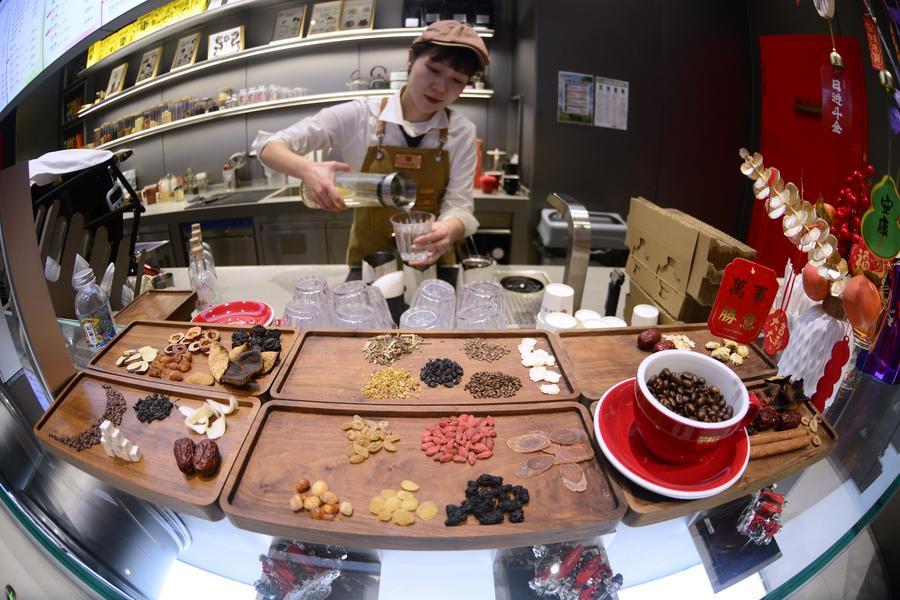
Herbal drinks are another distinctive offering. Tong Ren Tang has blended coffee with TCM ingredients to create beverages infused with herbal elements.
“Tourists can choose drinks suited to their body constitution for health preservation,” Guo said.
Near the beverage counter stands a spinning wheel, which allows visitors to play a puzzle game, guessing the names of TCM herbs based on picture prompts.
The store also sells TCM bracelets, sachets and other souvenirs, which can be worn to help prevent ailments.
Children can try on Hanfu — a traditional Chinese attire adorned with intricate embroidery — and experience TCM customs firsthand.
A tourist surnamed Lin from south China’s Guangdong Province brought his family to Beijing during the summer vacation. They visited the third floor, which houses a TCM culture exhibition center and serves as a venue for educational tours. His son and daughter showed great interest in handling traditional pill-making tools and observing various plant specimens.
An on-site VR display allowed visitors to don headsets and watch immersive demonstrations of how these tools were used to make pills in the past.
“Just like making tiny glutinous rice balls, the TCM practitioner adds water and herbal powder and shakes the mixture back and forth. It takes about 40 minutes to complete the process,” Guo said. “Factories usually have specialized machines for this, but we have preserved the traditional method here.”
At the TCM digital health cabin, visitors can use machines for basic health check-ups. They can also see a doctor for further diagnosis.
On the tables nearby, paper and pigments — the latter also made from TCM herbs or minerals — are available for children to paint. They can use TCM herbs and cloth to craft their own sachets.
Guo said that since the summer vacation began, the center has seen an influx of children.
There are many such TCM experiential centers across China. In Cangzhou, Hebei Province, just over two hours’ drive from Beijing, some schools have herbal gardens to help children learn about medicinal plants. In Chengdu, Sichuan Province in southwestern China, the Tianfu TCM city attracts large numbers of TCM enthusiasts from both home and abroad.
Back in Beijing, just a few minutes’ walk from Dashilar, a smart health experience center at the Beijing Fun complex offers visitors exercise routines similar to Baduanjin — a traditional form of qigong. The complex is a branch of Tong Ren Tang.
Visitors can also use AI-powered machines, which integrate wisdom from TCM with large language models, for health consultations.
“We aim to create a showcase window for TCM culture. New technologies can help us do a better job in promoting TCM culture,” said Guo. ■